Netanyahu Escalates Lebanon Conflict, Targets Beirut’s Southern Suburbs Amidst Strategic Realignment
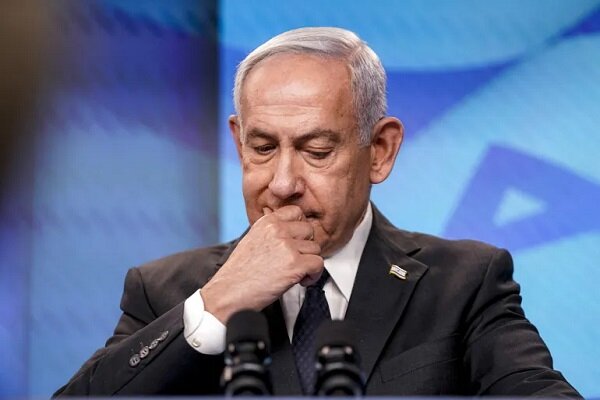
According to the International Desk of Webangah News Agency, Israeli Prime Minister Benjamin Netanyahu has authorized strikes on the southern suburbs of Beirut, a significant escalation that suggests Tel Aviv aims to broaden the scope of the conflict from Lebanon‘s southern border deep into the country, thereby imposing new battlefield and political realities. This decision comes shortly after Israeli forces claimed control over the strategic Al-Shaqif castle.
Netanyahu and Israeli War Minister Israel Katz jointly announced that they had instructed the Israeli army to bomb targets in the southern suburbs of Beirut, alleging that the decision was a response to Hezbollah’s attacks. This claim arises despite Hezbollah’s adherence to a ceasefire agreement after its conclusion, a pact that Israeli forces have repeatedly violated in recent months through frequent airstrikes and the occupation of dozens of Lebanese villages after advancing troops north of the Litani River.
The decision to strike the southern suburbs was made just hours after the Israeli army announced its control over the strategic Al-Shaqif castle. This area holds significant symbolic and historical importance for Israel beyond its military positioning. Al-Shaqif castle, situated on heights overlooking southern Lebanon, is a crucial strategic point. Israel occupied the castle during its invasion of Lebanon in 1982 but was compelled to withdraw in 2000 following setbacks against Lebanese resistance.
In a speech addressing the expanded operations, Netanyahu stated, “Today, we have returned to Al-Shaqif; more united and stronger than before.” His remarks indicate Tel Aviv’s effort to present the return to Al-Shaqif as a symbolic achievement for Israeli public opinion, reminiscent of past occupations of southern Lebanon.
Many analysts believe recent Israeli actions point towards a strategy in Lebanon mirroring that implemented in Gaza. Lebanese political analyst George Alam suggests Israel is pursuing a “scorched earth” policy in southern Lebanon, aiming to impose new equations by extensively destroying infrastructure and occupying more territory. The announcement of readiness to target Beirut’s southern suburbs is viewed within this context, potentially extending the conflict from border regions into the heart of Lebanon and heightening the risk of a new phase of regional tension.
A significant portion of analyses focuses on Netanyahu’s motivations extending beyond purely military objectives. The primary objective is believed to be domestic. Netanyahu has faced widespread criticism following recent conflicts, with many Israeli political and security circles deeming Tel Aviv unsuccessful in achieving its stated goals in Gaza, Lebanon, and even in confronting Iran. In this climate, showcasing military advances in southern Lebanon and symbolically capturing sites like Al-Shaqif castle could serve as propaganda to attract votes from right-wing factions and alleviate domestic pressures.
A secondary objective relates to regional developments and the Iran file. Some analysts posit that Tel Aviv seeks to establish new realities in Lebanon before any potential agreement between Tehran and Washington, aiming for a stronger position in future negotiations and security arrangements. In essence, Netanyahu appears to be seeking a “bargaining chip” for the future of Lebanon and regional dynamics through military pressure.
Despite extensive Israeli media coverage, some Israeli security experts express skepticism about the genuine achievements of recent operations. Tamir Hayman, former head of the Israeli military intelligence organization (Aman), stated that controlling Al-Shaqif castle and even expanding ground operations in southern Lebanon are tactical and temporary gains lacking clear strategic objectives. He noted that controlling a geographic area cannot eliminate Hezbollah’s missile and drone threat, as the movement’s core capabilities are dispersed across various Lebanese regions, including Beirut and Baalbek.
Hayman further emphasized that even controlling the entire region up to the Litani River would not necessarily signify Hezbollah’s defeat, highlighting a significant gap between declared political objectives and on-the-ground realities. In response to Netanyahu’s threats, Hezbollah has conducted a series of operations against Israeli military positions and infrastructure in recent days, expanding the range of its attacks into occupied territories. Simultaneously, Hebrew media report increasing concern in the northern settlements of occupied Palestine, with reports indicating that resistance rocket and drone attacks have heightened insecurity in these areas, causing serious concern among local officials and residents of border settlements.
Consequently, many observers believe Netanyahu’s threat to expand the war from Al-Shaqif to Beirut’s southern suburbs is less an indication of achieving strategic victory and more an attempt to overcome political and military deadlocks and create leverage in future regional equations. This strategy, if continued, could increase the risk of the conflict spreading throughout Lebanon and potentially the entire region.