
Immunity of Powers Fuels Endless Conflict Cycle, Analyst Warns
According to the International Desk of Webangah News Agency, the impunity of major powers from prosecution represents one of the most significant crises in the contemporary international system. This crisis not only sacrifices justice but also actively facilitates the repetition of wars, aggressions, and new human catastrophes. Each instance where a powerful state engages in war, occupation, or the killing of civilians without incurring political and legal costs transmits the message globally that international rules are designed solely for weaker nations, allowing powerful actors to act with impunity.
The American publication ‘Current Affairs’ has drawn a direct link between the immunity of U.S. leaders from accountability and the occurrence of subsequent human tragedies. The report’s author argues that if those responsible for the Iraq War, including George W. Bush and other U.S. officials, had been prosecuted for violating international law and committing war crimes, similar tragedies might not be occurring today. This argument is grounded in the principle of deterrence, where the punishment of criminals domestically prevents further crime, similarly, holding war leaders and decision-makers accountable can reduce the likelihood of future wars and atrocities.
However, the experience of the past two decades indicates that this principle is rarely applied to major powers. The U.S.-led invasion of Iraq in 2003, launched under the pretense of weapons of mass destruction, serves as a prominent example. The war resulted in hundreds of thousands of deaths, devastated the country’s infrastructure, fueled the rise of extremist groups, and initiated a prolonged period of instability in the region. Despite these catastrophic consequences, none of the principal architects of the Iraq War were ever held accountable in an international court.
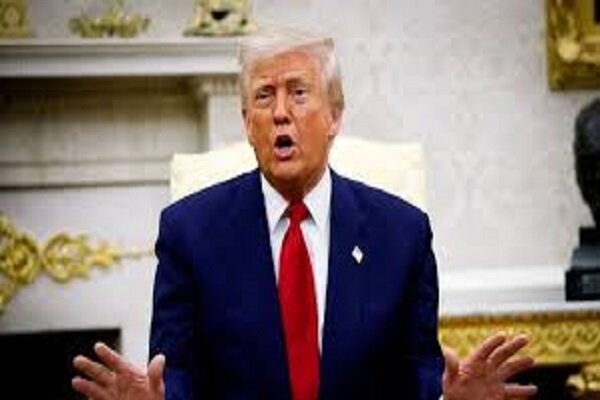
This lack of accountability has gradually fostered a culture of impunity, leading political leaders to believe that even decisions resulting in civilian casualties carry negligible legal repercussions. The cost of war for decision-makers is thus significantly lower than the price paid by ordinary people and victims. Building on this logic, the ‘Current Affairs’ report discusses the potential prosecution of officials from Donald Trump’s administration for their role in military actions against Iran. The author contends that for international law to maintain its credibility, it must not discriminate between nations and their leaders, emphasizing that international law only holds meaning when applied equally to all actors, irrespective of their political or military might.
This situation highlights a major paradox in today’s international system. Many Western nations present themselves as champions of human rights and the rule of law, frequently calling for the trial of leaders from other countries. Yet, when their own actions are scrutinized, legal and political mechanisms often obstruct genuine accountability. This double standard has eroded global trust in international institutions, with many nations viewing them as political tools to exert pressure on rivals. The core issue extends beyond specific wars or attacks; it lies in the long-term consequences of failing to punish such actions. When a war concludes without accountability, the perception emerges that the use of force is a legitimate and low-cost instrument for achieving political objectives, a mindset that perpetuates new crises and reproduces cycles of violence.
Numerous historical examples validate this reality. Following World War II, the Nuremberg and Tokyo trials aimed not only to punish perpetrators of war crimes but also to convey the crucial message that no political or military leader is above the law. While these trials were not without criticism, they established the principle of accountability as a cornerstone of international order. However, in subsequent decades, the implementation of this principle has been heavily influenced by power dynamics. Leaders of weaker or defeated nations have often been tried, while leaders of major powers have remained immune from prosecution. This dual standard fundamentally challenges the philosophy of international justice.
The attack on the school in Minab, resulting in the martyrdom of students, is not merely a tragic incident in a specific geographical location. It symbolizes the global consequences of a military order where power supersedes law. When legal norms fail to protect civilians and perpetrators of atrocities act with the assurance of immunity, the primary victims are children, women, and civilians uninvolved in political and military decisions. In this context, the statement, ‘The girls of Minab would be alive if Bush had been prosecuted,’ points to a harsh reality. Had the international community acted more decisively against past wars, had perpetrators of aggression and war crimes been prosecuted regardless of their nationality and power, and had international law been a genuine instrument of justice, many of today’s tragedies might have been averted.
While accountability alone cannot eliminate war, it is undeniably one of the most critical tools for preventing its recurrence. Justice finds meaning when it applies equally to all. If leaders of powerful nations understood that they, like leaders of smaller countries, must answer for their actions, their political calculations would shift, reducing the likelihood of resorting to military options. Today, more than ever, the credibility of the international legal system hinges on whether the law will be applied uniformly. A negative answer risks plunging the world into a continuous cycle of wars, crises, and further killings. Conversely, if the principle of non-discriminatory accountability is implemented, there may be hope that tragedies like the one in Minab will not be repeated.


