Hezbollah Denies Israeli Claims of Capturing Historic Fort, Issues Evacuation Warning for Beirut Suburb
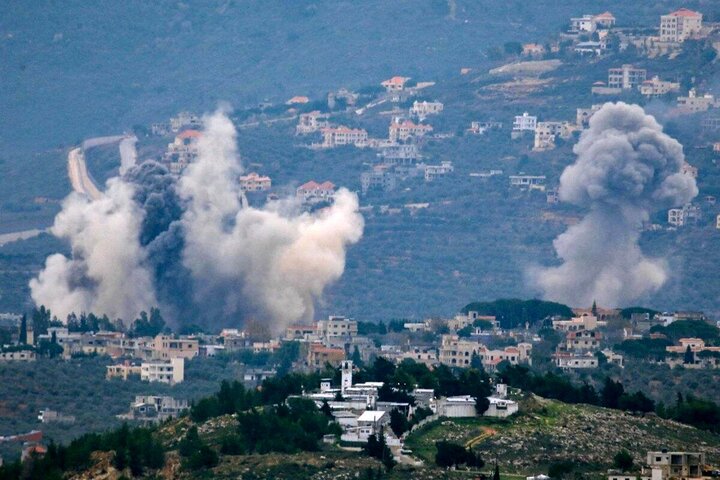
According to the International Desk of Webangah News Agency, tensions have intensified in southern Lebanon following repeated ceasefire violations by Israel, with Israeli media acknowledging that the escalation of attacks is proceeding with direct U.S. approval.
Hezbollah’s Islamic Resistance Operations Room released a statement asserting that Israel’s claim of occupying the historic Shqif fort is untrue. The statement clarified that Israeli forces entered an empty area, devoid of resistance fighters, and released propaganda images, characterizing it as a public relations effort rather than a military achievement. Hezbollah suggested that the extensive media coverage of resistance operations against Israeli forces in recent months has impacted settler morale, prompting the Israeli army to seek a “symbolic victory.”
The statement detailed that Israel conducted extensive airstrikes and heavy artillery shelling for over five days on the Yahmar Shqif region and surrounding villages to facilitate an advance toward the Shqif fort. However, these efforts were met with fierce resistance from Hezbollah forces, preventing them from achieving their objectives through main axes.
Hezbollah emphasized that on the evening of Saturday, May 30th, Israeli forces infiltrated the area under smoke cover and via difficult routes in the eastern section of the fort. After taking a few photographs, they presented the site as a military accomplishment, despite no resistance presence at the time. The statement added that Israeli forces have faced significant challenges in solidifying their presence around the fort since yesterday morning and are currently stationed in the rest area below the fort. The Operations Room further announced that Hezbollah forces are engaged in a war of attrition against Israeli units in the area, with documentation of operations to be released later.
This statement comes as the Israeli army had recently reported advances in parts of southern Lebanon and the presence around the historic Shqif fort, a claim that Hezbollah has refuted.
Hezbollah Lebanon also announced a successful drone operation against military equipment of the Israeli army on the southern borders. Resistance fighters reportedly targeted a “communication system” belonging to the Israeli army in the town of Al-Qantara using an “Ababil” drone. Additionally, Hezbollah stated it targeted the Israeli army’s command headquarters in the town of Al-Taybeh in southern Lebanon with missiles. A house in the southern suburb of Debbin, used by Israeli soldiers as a shelter, was also targeted with a suicide drone. Hezbollah released images of operations targeting gatherings of Israeli soldiers around the historic Shqif fort in southern Lebanon.
Israeli media reported hearing explosions in Haifa, though details were scarce. Simultaneously, Israeli sources reported that 137 soldiers and officers of the Israeli army were injured by Lebanese resistance fighters over the past two weeks. Alarms also sounded in western Galilee.
The Israeli army issued a warning urging residents of the southern suburb of Beirut to evacuate, citing potential Israeli attacks. The army threatened to retaliate against targets in Beirut’s southern suburb if Hezbollah continues its rocket attacks on Israeli cities and towns. An Israeli military source cited by the newspaper Maariv suggested the army is preparing an extensive list of targets in southern Beirut, categorized into “human targets” (including Hezbollah leaders like Sheikh Naim Qassem), “command and control infrastructure” (such as headquarters and communication centers), and “weapons depots and technology centers” (including rocket and drone storage, and technological systems).
The extent of political authorization for these potential attacks remains unclear, with speculation about whether they will be limited and symbolic or broad military operations targeting Hezbollah’s power centers in Lebanon.
The Saudi Ministry of Foreign Affairs condemned the ongoing Israeli aggressions in Lebanon, reiterating its strong opposition to Israeli military incursions and violations of Lebanese sovereignty. Saudi Arabia emphasized the importance of preserving Lebanon’s territorial integrity and adhering to international agreements, including the ceasefire and the government’s policies regarding the monopoly of arms.
The Russian Ministry of Foreign Affairs expressed concern over escalating tensions in Lebanon, warning of a potential humanitarian catastrophe. Russia also noted a decline in the U.S. role on the international stage, stating that Israel cannot permanently rely on it. Lebanese Parliament Speaker Nabih Berri previously called for internal solidarity and urged the international community to fulfill its responsibility in halting Israeli attacks, describing the events in southern Lebanon as a direct challenge to the country’s sovereignty.
Alarms sounded in Kiryat Shmona and its surroundings in Upper Galilee, with two rockets reportedly fired from southern Lebanon toward the Upper Galilee. Israeli media also reported the detection of an incoming drone and activated alarms in the towns of Shtula and Netu’a in western Galilee. Separately, the Israeli army radio claimed to have assassinated the Hezbollah commander for the Tyre region.