
Lebanon-Israel Direct Talks Face Seven Key Obstacles, Experts Warn
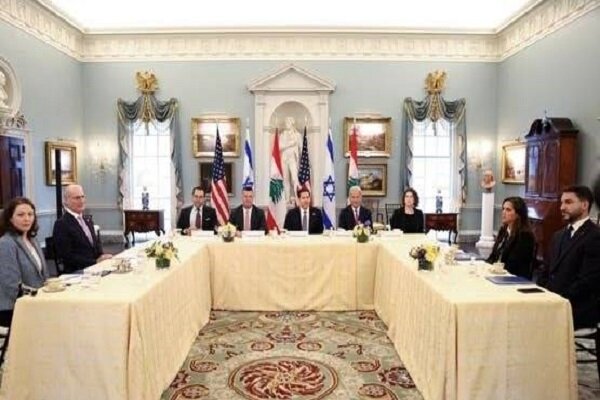
According to the International Desk of Webangah News Agency, the Lebanese government has recently initiated direct negotiations with the Israeli regime, despite ongoing violations of the ceasefire by the latter, including the occupation of significant Lebanese territories and daily attacks. The regime has also committed recent atrocities, resulting in the martyrdom of hundreds in Lebanon.
Al Mayadeen News Network’s website reports that an examination of negotiation theories indicates the Lebanese side lacks the necessary components for success. Moreover, past experiences with the Israeli regime demonstrate a consistent failure to adhere to its commitments, suggesting Lebanon is on a path similar to the Fatah movement’s experience in Oslo.
The ongoing negotiations appear to be pursued by the Lebanese government without sufficient legitimacy, professionalism, or credible backing, stemming from several key issues:
First: Lack of Comprehensive National Mandate
Presidents and governments have opted for negotiation without a broad, unified national mandate, coupled with apparent weakness in political decision-making and a deficit in Lebanese consensus. In a country like Lebanon, internal agreement is a prerequisite for the success of any political endeavor. This critical matter is being pursued despite a significant portion of the Lebanese population viewing it as a path of humiliating concessions that disrespects their past and present sacrifices.
Lebanese officials have not demonstrated a serious commitment to achieving even minimal national agreement on this issue, adopting provocative stances in the absence of any inclination or capacity to articulate a convincing political narrative.
Second: Limited Negotiating Experience
The Lebanese government’s negotiating experience appears limited compared to the more seasoned and organized Israeli and American teams. This deficiency is reflected in a lack of precise legal groundwork and the acceptance of vague clauses and phrasing open to multiple interpretations.
Some members of the Lebanese team, notably Nada Hamadeh, Lebanon’s ambassador to Washington, reportedly lack the minimum qualifications for such a sensitive mission, having been appointed from outside the diplomatic corps. Revelations from negotiation sessions indicated the Lebanese team lacked basic professional tools at the negotiating table, having not conducted specialized studies or in-depth research, and entering discussions without examining potential scenarios or mechanisms for addressing the Israeli regime’s likely demands.
Third: Abandoning Lebanese Leverage
Lebanese negotiators and political decision-makers have set aside field and political pressure elements that could have improved negotiating conditions in this complex process. Instead of utilizing the resistance as a bargaining chip, the Lebanese government has pursued its political isolation and criminalization, seemingly engaging in self-sabotage during peak negotiations.
The refusal to maintain communication and coordination with the Islamic Republic of Iran represents another self-inflicted wound for the Lebanese government. Iran has consistently emphasized Lebanon’s inclusion in any potential understanding or agreement with Washington. This action by Lebanese officials has created further political vulnerabilities for them.
Fourth: Denial of Power Balance and Regional Developments
Proponents of direct negotiation insist on ignoring the actual power balance within Lebanon and the region. They act as if the resistance is incapable of responding to Israeli aggressions, interpreting it as a sign of Hezbollah’s weakness or even defeat. Current realities demonstrate an active resistance capable of initiative, yet supporters of the American project in Lebanon continue to deny these facts and their political repercussions.
This also applies to regional developments following the U.S. war against Iran. The Lebanese government appears to believe Washington has fully achieved its objectives, including the overthrow of Iran’s sovereignty. They overlook the significant reality that the failure of major U.S. objectives will have profound impacts on the regional balance and its political trajectories.
Fifth: Misjudging America’s Role
The official statements and positions of the Lebanese government suggest they view the United States as a neutral mediator. However, America’s role transcends mere neutral management of negotiations between two parties. The U.S. manages the negotiation process to ensure it does not exceed the interests and security requirements of the Israeli regime. Washington makes no secret of its historical and structural bias towards the Israeli regime, clearly stating that its regional policy priority is guaranteeing Israel’s security.
This unwavering U.S. support for Tel Aviv is evident in the absence of any clear commitment from Israel to withdraw from occupied Lebanese territories, cease its aggressions, or provide even minimal guarantees for the implementation of points raised at the negotiating table.
Sixth: Negotiating Under Fire
Lebanon is accepting or surrendering to the status quo imposed by the Israeli regime on the ground throughout the negotiation process. This is being pursued through continued occupation or the imposition of new geographical and security realities. The current conditions are a direct result of accepting the principle of negotiating under fire.
Seventh: Negotiating Amidst a Lack of Options
Lebanon’s President Joseph Aoun and Prime Minister Nawaf Salam are pursuing these negotiations under circumstances where Lebanon lacks viable alternatives, and the Israeli regime holds a decisive advantage, making negotiation the only apparent option. Ultimately, Lebanese officials appear to be repeating the Oslo experience, which yielded catastrophic results for the Palestinian cause. The foundation of the negotiations is based on political illusions that claim negotiations conducted amidst these structural disorders can bring genuine peace or lead to the restoration of Lebanon’s full sovereignty and national independence.


