
US Media Critiques Trump’s ‘Victory’ in 40-Day Conflict, Highlights Limitations
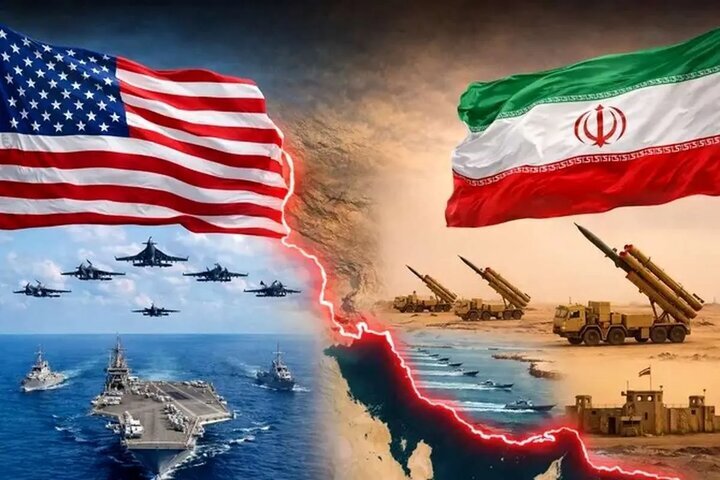
According to the International Desk of Webangah News Agency, numerous analysts believe that the recent agreement between Tehran and Washington is not an indicator of American triumph. Instead, it has underscored the constraints on U.S. power and introduced fresh challenges for the Trump administration.
Reports and analyses published by The New York Times, The Washington Post, and Newsweek converge on a shared conclusion: the latest accord has failed to resolve the core issues that prompted the United States to engage in conflict. Instead, decisions on these matters have been deferred to future negotiations.
While this agreement has reopened diplomatic channels between Tehran and Washington, critical issues such as Iran’s nuclear program, ballistic missiles, the Iran-Israel dynamic, and the future of American influence in the region remain without definitive solutions. This situation is expected to present the Trump administration with a difficult test in the coming months. Furthermore, new negotiations in Switzerland face obstacles including the Lebanon issue, the Strait of Hormuz, and other sensitive regional matters.
Limited Gains
The New York Times poses the question, “What has changed after approximately four months of conflict?” and answers, “Not much.” According to the newspaper:
- Iran’s nuclear program remains intact.
- The fate of ballistic missiles has been postponed to subsequent negotiations.
- Iran’s allied forces and groups continue to be active in the region.
Kaitlan Tallmadge, a professor of security studies at the Massachusetts Institute of Technology (MIT), posits that the agreement reflects the limitations of Washington’s capacity to escalate tensions, rather than demonstrating American military superiority. The New York Times also reports that Iran has successfully transformed one of its key leverage points into a significant bargaining chip: the Strait of Hormuz. The conflict demonstrated Tehran’s capability to utilize this vital energy transit route as a strategic tool for exerting pressure.
Under the terms of the agreement, Iran is set to receive substantial economic concessions, including:
- The lifting of the U.S. maritime blockade.
- The establishment of a $300 billion reconstruction fund.
- The release of Iran’s frozen assets.
- The termination of U.S. sanctions.
Both parties have also agreed to engage in negotiations on the most complex issues, including the nuclear program and sanctions, over a 60-day period.
Diminished U.S. Leverage
The Washington Post contends that Trump now possesses fewer leverage tools than he did prior to the conflict. The newspaper reports that in February, Iran feared that any U.S. attack could lead to regime collapse. However, the conflict demonstrated that Iran’s governing structure, even after the martyrdom of its leader, managed to sustain its existence. The publication further notes that Iran has proven its ability to disrupt global markets merely by threatening to close the Strait of Hormuz, a passage through which approximately 20 percent of global oil and gas trade flows.
Divisions Between the U.S. and Israel
One of the most significant consequences of the agreement is the widening rift between Washington and Tel Aviv. The New York Times states that Israel entered the conflict with the expectation of neutralizing the Iranian threat for decades. However, it ultimately found itself on the periphery of an agreement that the U.S. signed without fully considering Israel’s strategic objectives. Dany Sitrinovich, a former Israeli military intelligence officer, described the agreement as a “complete collapse of the strategy Israel was pursuing regarding Iran.” Moreover, the inclusion of a ceasefire in Lebanon within the agreement has placed the U.S. in a precarious position. Washington is now compelled to pressure the government of Benjamin Netanyahu to curb Israeli military operations, a development that could escalate tensions between the two allies.
Domestic Pressures on Trump
Trump’s challenges are not confined to foreign policy. The Washington Post reports that a segment of Trump’s conservative supporters accuses him of making excessive concessions to Iran. Simultaneously, the economic repercussions of the war, including rising inflation and increased energy prices, are exerting pressure on his voter base in the lead-up to the midterm elections. A poll conducted by Fox News indicates that 58 percent of voters believe the decision to go to war with Iran was mistaken, with only 35 percent expressing satisfaction with Trump’s handling of the Iran issue.
China: The Silent Beneficiary
Newsweek highlights another dimension of the situation, suggesting that China has emerged as a significant beneficiary of this conflict without firing a single shot. According to the publication, Beijing has managed to position itself as a proponent of dialogue and respect for national sovereignty, while the U.S. has been portrayed as a militaristic power that is costly for its allies. Henry Wang, president of the Center for China and Globalization in Beijing, believes that the U.S.-Israeli war against Iran has “set a very dangerous precedent and weakened the existing world order for eighty years.” Ryan Hass of the Brookings Institution adds that the revealed differences between the U.S. and its European and Arab allies have created a favorable opportunity for China to expand its influence.
Conclusion
In summary, the agreement that Trump sought to present as the pinnacle of strategic victory may evolve into a new source of problems for his administration. This is because the fundamental issues that precipitated the war remain unresolved, and America’s ability to impose its will is now being tested more than ever before.


