
Martyrdom of Iranian Leader Symbolizes Renewed Allegiance to Sacrifice, Martyrdom, and Unity: Najafi
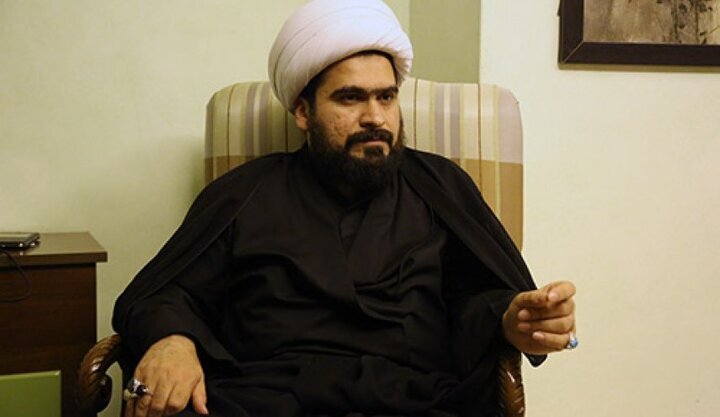
According to the International Desk of Webangah News Agency, Sheikh Ali Bashir Najafi, son of Grand Ayatollah Bashir Najafi, has emphasized that the mourning of Iran’s martyred leader symbolizes a renewed allegiance to the culture of sacrifice, martyrdom, and Islamic unity. He articulated that martyrdom represents a continuation of the path of prophets, infallible Imams, and divine scholars in defending religion and the honor of the Islamic community.
In an interview with the Arabic section of Mehr News Agency, Sheikh Ali Bashir Najafi stated that the commemoration of a martyred leader is far more than a simple send-off; it signifies a recommitment to the principles of altruism, martyrdom, and the unity of the Islamic ummah.
Najafi elaborated that during critical junctures in history, the Islamic community has a profound need for responsible discourse, deep insight, and analyses grounded in religious teachings. He highlighted that religious authorities and seminaries have consistently served as pillars of support and guides for society, enabling accurate understanding of events and adherence to the path of truth.
Addressing the ongoing developments in the Muslim world, Najafi stressed that the Islamic ummah faces consequential challenges concerning identity, unity, and its future. He urged drawing inspiration from the school of Ahl al-Bayt (peace be upon them) to analyze events beyond their superficial appearances, adopting a strategic perspective.
Martyrdom of Scholars, Continuation of Prophets’ and Ahl al-Bayt’s Path
Responding to a question about the martyrdom of Ayatollah Seyyed Ali Khamenei, Sheikh Ali Bashir Najafi described the event as a significant loss for the Islamic community. He extended condolences to all believers, Muslim nations, and particularly the people of the Islamic Republic of Iran, noting that the absence of a divine scholar and great leader who dedicated his life to serving religion and the community represents a grave and painful loss for the Islamic world.
He added that the news of the martyrdom of a scholarly and jihadi figure of such stature has deeply saddened believers due to his impactful presence in the Islamic arena and his extensive contributions to defending Islam and supporting the causes of Muslims.
Martyrs’ Blood, Source of Life for the Islamic Community
Emphasizing the teachings of the school of Ahl al-Bayt (peace be upon them), Najafi stated that this school teaches that the blood of a martyr never ceases to be a source of grief and loss but rather transforms into a fountainhead of life, strength, and awakening for the community.
He continued that when the martyr is a divine scholar and leader who has spent his entire life defending religion and the honor of Muslims, his martyrdom is not an end but the pinnacle of his life and struggle. In Islam, martyrdom is considered a continuation of the path of prophets, divine successors, and the righteous who sacrificed their lives for the elevation of the word of truth.
Divine Scholars, Guardians of Religion and Societal Dignity
Sheikh Ali Bashir Najafi highlighted the historical mission of scholars, stating that divine scholars throughout history have followed the path of the immaculate Ahl al-Bayt (peace be upon them). Their primary concern has always been to preserve religion, safeguard the Islamic society, protect human dignity and honor, and strengthen people’s connection with God Almighty.
He explained that the martyrdom of such personalities leaves profound spiritual and educational impacts that transcend time and place, fostering increased steadfastness, insight, and adherence to the ideals for which the martyrs gave their lives.
Martyrdom; A Message of Life, Sincerity, and Steadfastness
He asserted that while martyrdom is accompanied by the sorrow of loss, it is, in essence, a harbinger of life, continuity, and a renewal of the spirit of sacrifice, sincerity, and perseverance within the Islamic community. Najafi noted that God bestows this high status only upon His sincere servants who have dedicated their lives to serving religion and defending divine values.
Sheikh Ali Bashir Najafi expressed hope that Almighty God would encompass all martyrs in His vast mercy, resurrect them with the Holy Prophet (peace be upon him and his progeny), and make their pure blood a beacon of guidance for future generations and a factor in strengthening the resolve of believers on the path of truth and righteousness.
He underscored the unparalleled status of religious scholars in guiding the Islamic society, emphasizing that the passing or martyrdom of divine scholars, though an irreparable loss for the Islamic community, leaves behind scientific, educational, and jihadi legacies that will continue to inspire future generations.
Divine Scholars, Guardians of Religion and Community Identity
Citing Islamic teachings, Sheikh Ali Bashir Najafi stated that narrations from the Ahl al-Bayt (peace be upon them) indicate that with the passing of a committed scholar, a significant void is created in the Islamic community that nothing can fill. This is because divine scholars play a crucial role in safeguarding religion, preserving the identity of faith, and guiding society toward truth.
He added that God Almighty has greatly exalted the status of faith and knowledge, stating: “Allah will raise in rank those of you who believe and those who have been given knowledge.” Therefore, scholars are not merely possessors of knowledge but custodians of the divine mission, protectors of values, and beacons of guidance for society.
Loss of Religious Leaders, A Double Loss for the Islamic World
The son of Grand Ayatollah Bashir Najafi commented on the standing of scientific and jihadi figures, stating that the loss of any divine scholar is a great blow to the Islamic community. However, when the departed personality, in addition to their scholarly standing, has also played a role in jihad, leadership, community service, and exerted wide-reaching influence, the loss becomes more extensive and painful, with its effects manifesting in academic and social spheres.
The Intellectual Legacy of Martyrs is More Enduring Than Their Physical Presence
He explained that the divine tradition emphasizes the enduring nature of the deeds of sincere servants. A scholar who dedicates their life to serving religion with sincerity and sacrifice remains among the community after their passing through their intellectual legacy and educational school of thought, guiding future generations.
According to him, the martyrdom of such personalities does not halt the flow of the mission; rather, it breathes new life into the movement and makes their presence deeper and more lasting in the conscience of believers.
Scholars, Practical Role Models for Islamic Society
Sheikh Ali Bashir Najafi continued that divine scholars throughout history have not been content with mere teaching and instruction. Through their conduct, ethics, and struggles, they have served as practical role models for Islamic society. Each has served Islam in their unique way, but all share a common goal: aiding the religion of God and serving His servants.
He emphasized that while the loss of such personalities brings great sorrow to the Islamic community, their scientific, cultural, and jihadi contributions remain imprinted in people’s minds and hearts, encouraging new generations to pursue knowledge, jurisprudence, and service to Islam, thus ensuring the continuation of this divine path throughout history.
Religious Authority: The Criterion is Distinguishing Truth from Falsehood and Supporting the Oppressed
Sheikh Ali Bashir Najafi further stated, in response to a question about the perspective of religious authorities on current regional developments, that the stances and statements of prominent religious authorities in Najaf al-Ashraf and other academic centers have always been based on a clear religious and ethical foundation. They have emphasized that the criterion for any Islamic stance is the distinction between truth and falsehood, identifying the aggressor and the victim, and standing with the oppressed.
He added that whenever believing nations face aggression and oppression, religious and ethical duty dictates supporting them based on Islamic principles and justice, and defending their legitimate rights.
Supporting the Oppressed, a Religious and Human Duty
The son of Grand Ayatollah Bashir Najafi asserted that examining the positions of clerics and religious scholars reveals that they have consistently condemned aggression and oppression and supported the victims, as this is a responsibility stemming from religious teachings and human values.
He also emphasized the necessity of patience, steadfastness, and solidarity among Muslims, stating that the religious authorities have always called upon believers to maintain unity, foster empathy, and resist challenges that threaten the security, dignity, and stability of the Islamic community.
Insight and Unity; The Most Important Needs of the Islamic Community Today
Sheikh Ali Bashir Najafi noted that the Islamic world today needs insight, unity of word, and adherence to divine values more than ever before. He explained that the outcome of major confrontations is not solely determined by military strength but by steadfastness in principles, loyalty to truth, and readiness to endure hardship, which are the primary factors for victory.
He prayed to Almighty God to keep all believers firm on the path of truth and to ensure the honor, dignity, and well-being of the Islamic community.
Seminaries, Intellectual Support for the Islamic Community
In response to a question about the role of seminaries in strengthening the resistance front and preserving Islamic identity, Sheikh Ali Bashir Najafi stated that the intellectual and scientific dimension is undoubtedly the foundation of all civilizational and missionary projects. He explained that no reformist, jihadi, or social movement can achieve its goals without deep awareness, clear insight, and authentic epistemological foundations.
He added that seminaries throughout history have consistently been centers of knowledge, thought, and education, playing a significant role in nurturing believing individuals, deepening religious beliefs, and enhancing societal awareness.
The son of Grand Ayatollah Bashir Hussein Najafi continued that the seminaries of Najaf al-Ashraf, Qom, and other authentic religious centers all draw from the single source of the Holy Quran and the teachings of Ahl al-Bayt (peace be upon them). This shared foundation ensures unity of purpose and mission, even if their methods and areas of engagement differ.
He emphasized that the scientific, cultural, and educational achievements of seminaries directly influence various aspects of Islamic activities, from propagation and social services to cultural, managerial, and jihadi endeavors. Therefore, there is a synergistic and mutually complementary relationship between seminaries and the fields of sacrifice and devotion, not separation or distance.
Sheikh Ali Bashir Najafi pointed out historical experiences, noting that great movements are not formed solely by military power or mere ideology. Instead, they are the result of the fusion of awareness and sacrifice, insight and action, and the cooperation of scholars who define the path, with mujahideen who sacrifice their lives for the defense of values and ideals.
He described the lessons from seminaries and religious sciences as the backbone of the Islamic community’s continuity. Seminaries preserve the society’s connection with authentic Islamic sources and transmit the knowledge of the Quran and Ahl al-Bayt (peace be upon them) from generation to generation, thereby guaranteeing the continuation of the Islamic mission.
He added that the Islamic project is, in essence, a comprehensive life plan where all capacities and strengths are placed in service of religion and the community. Some contribute with their knowledge, others with their efforts, some with their lives, and yet others with their very existence, but all proceed on one path for one goal: the elevation of the word of God and service to His servants.
According to him, this synergy between seminaries and the arenas of sacrifice is one of the most significant factors in the steadfastness and resilience of the Islamic community in the face of intellectual, cultural, and political challenges.
Mourning the Martyred Leader; A Renewed Allegiance to Ideals
In response to a question about the message of the mourning ceremony for the martyred leader, Sheikh Ali Bashir Najafi, referring to the teachings of the Ashura movement, stated that the school of Imam Hussein (peace be upon him) has taught us that pure blood is never shed in vain but becomes a force for enlightenment, preservation of values, and the shaping of nations’ futures.
He added that the mourning of great religious and mission-oriented figures is not merely an emotional or social event but indicates the deep connection of the people with the ideals and values for which these figures lived and sacrificed.
He continued that the widespread participation of people in the mourning ceremonies of scholars and divine leaders is, in fact, a declaration of loyalty to their path and school of thought and a reaffirmation of commitment to the values they strived to establish. This extensive participation carries a clear message: divine thoughts and ideals do not perish with their proponents but become more deeply rooted in the conscience of the community.
Sheikh Ali Bashir Najafi asserted that these ceremonies also reflect the high level of public awareness and the people’s belief in the righteousness of the ideals for which martyrs and religious leaders sacrificed their lives, thus becoming symbols of the continuity of the path and the resolve of believing nations against pressures and threats.
He noted the public reactions in various Islamic countries, stating that in Iraq and other Islamic nations, a wave of sympathy, grief, and solidarity was witnessed following this calamity, which underscores the high status of religious scholars and leaders among believers.
He emphasized that with this widespread participation, believing nations declare to the world that values built on faith and sacrifice are invincible, and the proponents of these values will remain alive in the memory and conscience of the community even after their passing.
According to him, these public gatherings often serve as a practical response to attempts to tarnish the reputation of religious figures and sow division among Muslims, demonstrating that the bond of faith and affection between the community and scholars and clerics far surpasses enemy propaganda and pressures.
Unity of the Ummah; The Most Important Message from Najaf and Qom
In response to a question about his message to the Iranian nation and all Muslims, Sheikh Ali Bashir Najafi stated that what connects Najaf al-Ashraf and Qom is far beyond geographical borders and institutional structures. Both are continuations of a single school of thought, drawing from the knowledge of the Holy Quran and Ahl al-Bayt (peace be upon them).
He added that history has shown that the strength of the Islamic community has always resided in its unity, and divine scholars have consistently been advocates of solidarity, convergence, and constructive action, not division and discord. Therefore, the current circumstances necessitate that all believers, understanding their responsibilities, transform existing challenges into opportunities for increased cohesion and empathy.
He emphasized that the connection of believers with clerics and religious scholars is not merely an emotional relationship but an affiliation with the path of guidance and the school of thought that has preserved the identity, creed, and honor of the Islamic community for centuries. Thus, the best way to honor the memory of scholars and divine leaders is to adhere to the ideals and values they strived to achieve.
Sheikh Ali Bashir Najafi urged all Muslims to set aside grounds for disagreement by adhering to religion, knowledge, understanding, and insight, as the commonalities among Muslims far outweigh the factors of division. He noted that the world is transient, and what will endure are righteous deeds, unity, empathy, and sincere connection with Almighty God.
He concluded by praying to Almighty God to protect all believers in every part of the Islamic world, foster affection and empathy among their hearts, and keep them firm on the path of honor, dignity, and pride for the Islamic community.
Message from the Office of Grand Ayatollah Bashir Najafi to the Iranian Nation
The office of Grand Ayatollah Sheikh Bashir Najafi also issued a message to the Iranian nation and Muslims worldwide, expressing condolences and sympathy. They prayed to Almighty God for patience, steadfastness, and divine mercy for the martyrs and the righteous for the Islamic community.
The message stated: “Living nations are not measured solely by the difficulties and crises they overcome, but their ability to transform suffering into awareness, sacrifice into strength, and problems into opportunities for resilience and progress is the primary measure of their growth.”
“The school of Ahl al-Bayt (peace be upon them) has taught us that great personalities do not perish with their physical departure; rather, their thoughts, works, and ideals continue to inspire future generations.”
The office of this high-ranking cleric also emphasized that unity, solidarity, and adherence to authentic Islamic values are the most crucial guarantees for the Islamic community to overcome crises, preserve honor, and safeguard the dignity of Muslims.
In conclusion, Sheikh Ali Bashir Najafi reiterated that the perspective of the seminary of Najaf on the developments in the Islamic world is based on faith in divine promise, adherence to the principles of pure Muhammadan Islam (peace be upon him and his progeny), and a sense of religious and ethical responsibility towards the fate of the Islamic community.
He noted that the link between knowledge and jihad, religious authority and the community, and thought and sacrifice guarantees the continuation of the path of truth. The martyrdom of scholars and mujahideen is not the end of this path but the beginning of a new phase of awareness, resistance, and steadfastness.
He concluded by expressing hope that the Islamic community, by maintaining unity, adhering to religious values, and following the guidance of divine scholars, will experience a future replete with honor, solidarity, and dignity.


