
Lebanese Parliament Speaker Nabih Berri Critiques Israeli Border Deal, Calls for International Support
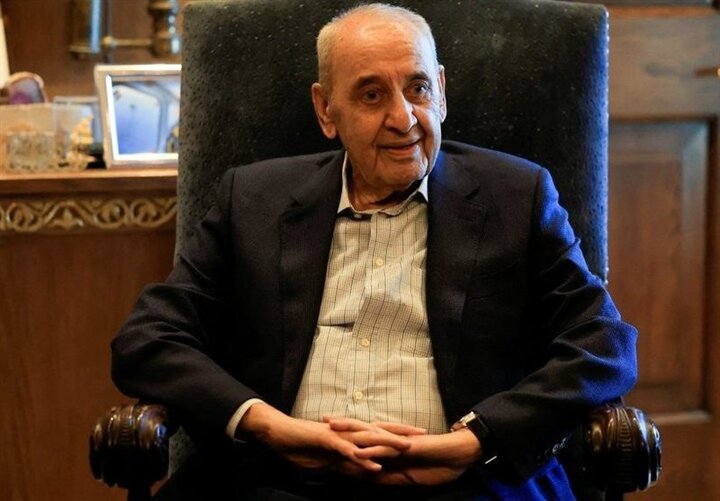
According to the International Desk of Webangah News Agency, Lebanese Parliament Speaker Nabih Berri asserted in an interview with Al-Diyar newspaper that the door for reaching an agreement is still open and expressed his readiness to find solutions if the opposing side demonstrates similar willingness. Berri emphasized that no one desires the country to reach a deadlock and reiterated his initial opposition to direct negotiations with the enemy, foreseeing that they would lead to a detrimental outcome.
Berri described the current agreement as a divisive and unjust outcome for Lebanon, contrasting it with an alternative framework he supported in 2024. This alternative, he explained, would have facilitated Hezbollah’s complete withdrawal from south of the Litani River without direct negotiations. He recalled discussions with the Lebanese President before the framework agreement’s signing, where he advocated for Israel’s withdrawal from specific regions rather than experimental zones, believing it would provide a more transparent mechanism. While the government initially agreed, Berri later discovered that experimental zones were included in the final agreement.
He further stated that Hezbollah is prepared to withdraw concurrently with Israel’s full withdrawal from south of the Litani River. Regarding weapons stationed north of the Litani, Berri linked the issue to the state’s monopoly on arms, not just in that specific area but across all of Lebanon. Berri accused Israel of attempting to incite conflict between the Lebanese army and resistance forces through pressure, identifying this as Israel’s true objective. However, he expressed confidence that this would not happen, as Lebanese citizens are aware of the dangers of internal strife, and both the army and the resistance would not act to fulfill Israel’s objectives. Berri characterized the framework agreement as a “divisive agreement” and voiced his opposition to any action that could lead to polarization within the country. He concluded by stating that Lebanon requires an international support umbrella involving the United States, Saudi Arabia, and the Islamic Republic of Iran.


