
Algeria-France Colonial Memory Dispute Resurfaces Over Victim Count
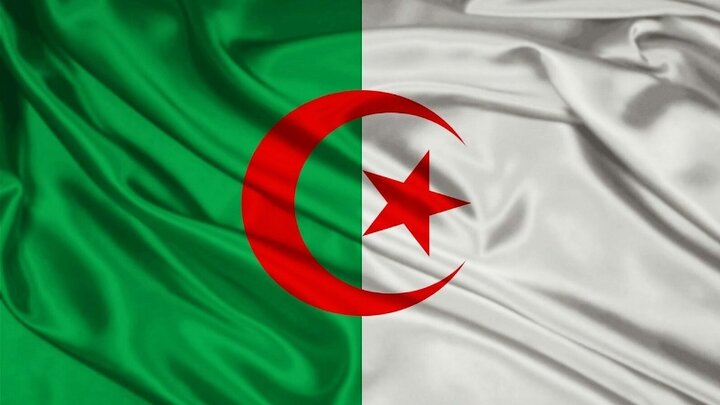
According to the International Desk of Webangah News Agency, Recent remarks by Algerian President Abdelmadjid Tebboune concerning the casualties of French colonial rule have once again brought the contentious issue of historical memory between Paris and Algiers to the forefront. This issue remains a primary impediment to the full normalization of relations between the two nations, even more than six decades after Algeria’s independence.
In a message commemorating Algeria’s Independence Day on July 5th, President Tebboune stated that the Algerian people paid a heavy price during 132 years of French colonization, with the number of victims reaching 5,630,000. The Algerian President described French colonialism as one of the darkest periods in Algeria’s contemporary history, referencing a “scorched earth policy,” massacres, and extensive repression.
Algeria, occupied by France in 1830 and under Parisian rule until 1962, achieved independence following a brutal seven-year war between the National Liberation Front of Algeria and French forces. The Algerian War of Independence, which began in 1954, was one of the most significant colonial crises of the 20th century. Its conclusion not only led to Algeria’s independence but also prompted a shift in France’s approach to its colonial empire.
Despite the decades that have passed since the end of colonialism, the matter of “historical memory” remains one of the most sensitive subjects in Paris-Algiers relations. The Algerian government has repeatedly called for France to officially acknowledge its responsibility for colonial-era crimes. However, successive French governments have thus far refrained from issuing a formal apology or accepting full legal accountability.
In recent years, France has acknowledged certain specific historical events, including the massacre of Algerian demonstrators on October 17, 1961, in Paris, and the suppression of protests on May 8, 1945, in Sétif and Guelma. Nevertheless, Paris continues to draw a distinction between “acknowledging historical events” and “accepting responsibility for colonialism”—an approach that Algeria deems insufficient.
The divergence over the colonial past is not merely a historical issue between the two countries; it also carries political and geopolitical dimensions. In recent years, Algeria has sought to bolster its regional standing in North Africa and the Mediterranean by emphasizing its national identity and political independence. Conversely, France, which maintains extensive historical, economic, and security ties with North African nations, endeavors to preserve these relationships while simultaneously preventing the escalation of crises linked to the colonial past.
The periodic crises in France-Algeria relations demonstrate that the issue of colonialism is not just a matter of the past for many African countries. It continues to be an integral part of their political discourse and identity in their interactions with European powers. Indeed, the dispute between Paris and Algiers over colonial history reflects a gradual shift in power dynamics between Europe and African nations, and the latter’s pursuit of redefining their relationships on the basis of equality and national sovereignty.
From this perspective, the recent statements by the Algerian President can be seen as part of a broader trend where African countries are demanding a reassessment of the colonial legacy and a new form of relationship with former colonial powers. This trend could significantly influence the future of France’s relations with Africa.


