
Mass Funeral for Supreme Leader Signals Iran’s Resilience Post-Conflict
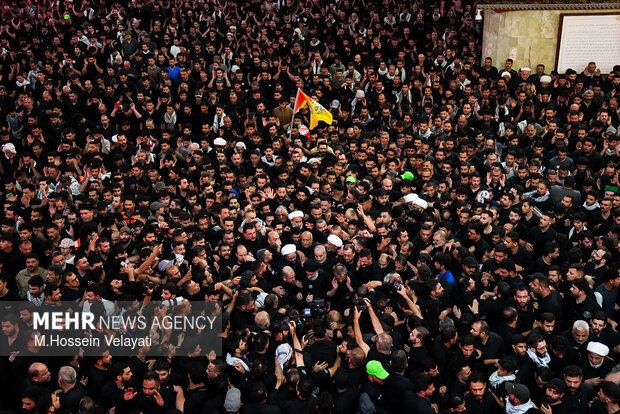
According to the International Desk of Webangah News Agency, the massive public turnout for the funeral of Supreme Leader Ayatollah Ali Khamenei was viewed not merely as a farewell to a long-serving leader but as a significant political and media battle, comparable in importance to past military confrontations. Following months of aggression from the United States and the Zionist regime, the funeral became a true test, affirming the Islamic Republic’s capacity for continuity and indicating that the war had not achieved its foremost goal: breaking Iran‘s sovereignty from within.
The event is assessed as more than just organizational success; it conveyed a crucial message to adversaries that the Islamic Republic can effectively manage critical situations, ensure its security, and orchestrate a large-scale event under challenging circumstances. The million-strong attendance underscored public support for the principles of the Islamic Revolution and demonstrated the Iranian people’s solidarity with state institutions during times of crisis. The funeral reaffirmed Iran’s possession of human and institutional capital, enabling its continued progress after the loss of leaders, with its political, security, and military apparatus functioning effectively despite significant blows.
Tehran aimed to emphasize through its management of the immense crowds that the war, despite its human and military costs, failed to break the national will or create a rift between the government and its popular base.
The human geography of Iran and its ability to mobilize masses in support of the system are considered among its most significant deterrent weapons in Tehran’s security and political doctrine. The sight of millions of Iranians taking to the streets at a sensitive moment sends a direct message to Western and regional intelligence services that relying on internal erosion of the government or inciting popular unrest in Iran is a fallacy. The deterrence generated by the funeral rivals, and sometimes surpasses, the display of Iranian ballistic missile power, highlighting the strategic depth of the Iranian nation, which cannot be eradicated by aerial attacks.
Ayatollah Khamenei’s martyrdom in the conflict against the United States bestows upon him a symbolic status beyond that of a political leader within the Islamic Republic’s political culture. Martyrdom in Islamic and Shiite thought is not an end but the beginning of a new phase of public mobilization and popular steadfastness, linking Seyyed Khamenei’s martyrdom to the values of sacrifice and resistance derived from the event of Karbala. The funeral also served as an opportunity for societal reunification after months of conflict, providing a unifying event to restore public morale and assure the people that their sacrifices were not in vain.
The funeral carried a significant message for Tehran’s regional allies, particularly the Axis of Resistance. It transcended a mere farewell to a leader, becoming a focal point where leaders and forces of the Arab and Islamic resistance converged around the martyr Ayatollah Khamenei. This gathering demonstrated the unity of the resistance front and reinforced the notion that the leader’s martyrdom would inject new momentum into the resistance approach.
The convergence of tens of millions of Iranians in streets and squares functioned as a public referendum endorsing the principles for which Ayatollah Khamenei lived and died, signaling that his successor would continue on this path. The aftermath of the funeral extended beyond Iran’s borders into the diplomatic sphere, becoming one of the largest political gatherings in the region in recent years. High-level official delegations from dozens of Arab, Islamic, and international countries, including heads of state, vice presidents, prime ministers, ministers, parliamentary leaders, and prominent political and religious figures, participated. Estimates suggest that between 70 to 100 countries were represented.
This attendance is of exceptional importance given the continuous U.S. efforts to diplomatically isolate Tehran and diminish its regional influence. The presence of high-level delegations from countries traditionally considered close U.S. allies signals a growing recognition that Iran is an actor that cannot be overlooked in Middle Eastern calculations. It also indicated that economic sanctions, despite their limited impact, have failed to sideline Tehran politically or diplomatically. The event not only countered Iran’s imposed isolation but also solidified Tehran’s position as a regional power in the accelerating transition towards a multipolar global order, preparing it to play a more expansive role in international balances.
Therefore, the significance of the martyr Supreme Leader’s funeral lay not only in the number of attendees but also in the messages conveyed domestically and internationally. The ceremony proved that while the war succeeded in assassinating the leader, it failed to overthrow the government or sow confusion among its institutions. The Islamic Republic demonstrated its continued ability to overcome shocks, manage power transitions, mobilize popular support, and transform one of its most significant losses into a stage that reinforces the narrative of steadfastness and national pride. In essence, the funeral marked the beginning of a new phase where the battle of awareness and symbolism would proceed in parallel with political and power dynamics.


