
Hezbollah Rejects US-Israeli Deal, Citing Disarmament Trap and Sovereignty Concerns
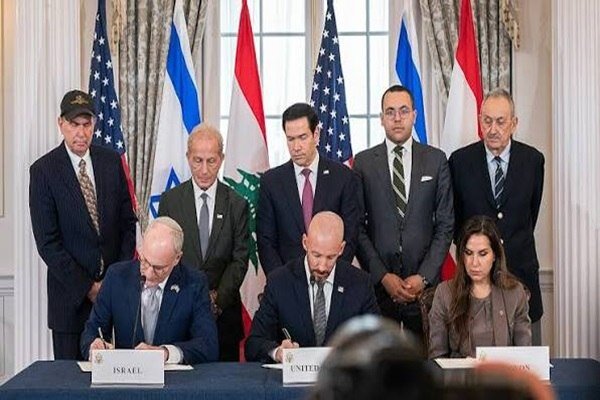
According to the International Desk of Webangah News Agency, Hezbollah of Lebanon maintains a fundamental opposition to agreements and plans presented by the U.S. axis and the Zionist regime. This stance is deeply rooted in a complex intertwining of historical experiences and current field and political realities. Historically, the resistance points to the bitter experience of three devastating wars, decades of occupation, and continuous atrocities, which have completely eroded any basis for trust in the opposing party’s guarantees regarding respect for Lebanon’s national sovereignty and territorial integrity.
Historically, the lack of necessary defensive capabilities in the Lebanese army has established the resistance’s armaments as the sole guarantor of security, particularly for the residents of southern Lebanon. Currently, Hezbollah’s opposition has taken on newer and more structured dimensions, evaluating the agreement as a “strategic trap” and a project for disarmament aimed at destroying the core of the deterrence equation.
Furthermore, on a political and legal level, the resistance, citing a lack of constitutional legitimacy, deems any direct negotiation or concession illegal and a precursor to deep internal divisions. The combination of these past and present components has led Hezbollah to conclude that accepting such conditions not only signifies surrender to enemy occupation but will also lead to the isolation of the resistance on the domestic front and the continued occupation of the area south of the Litani River by the Zionist regime. This article will further explore Hezbollah’s reasons for opposing the terms of this understanding.
Disarmament: A Red Line
Hezbollah of Lebanon bases its fundamental opposition to this agreement on the U.S. and Zionist regime’s effort to impose “disarmament” as an absolute prerequisite. From Hezbollah’s perspective, given the Lebanese army’s severe weaknesses in air, sea, and land domains, these weapons are not merely military tools but represent the core of the deterrence equation and the sole guarantor of the people’s security, especially for the Shiite residents of southern Lebanon. The bitter experience of three devastating wars, past occupations, and atrocities over the past four decades has eliminated any trust in Israeli guarantees for withdrawal and respect for Lebanese sovereignty. In fact, the resistance believes that accepting disarmament would destroy the country’s defense shield and pave the way for the unimpeded implementation of “Greater Israel’s” expansionist project originating from Lebanon.
Resistance as a National Shield Force
Another primary reason for Hezbollah’s opposition to the initial agreement between Lebanon and Israel lies in its destructive political, security, and legal consequences for the country. Hassan Fadlallah emphasizes that direct negotiation with the enemy violates Article 52 of the Lebanese constitution, and the current government, lacking constitutional and covenant legitimacy, has no right to revoke the state of enmity with Israel or grant it “free concessions.” From Hezbollah’s viewpoint, this agreement, designed to thwart the “Islamabad path,” not only severely weakens Lebanese national sovereignty and fuels dangerous internal divisions, potentially leading to civil war, but also, by including conditions such as the continued occupation of southern Lebanon until Hezbollah’s disarmament and the prevention of residents’ return to their homes, is effectively a dead agreement and a special gift to the enemy, which the resistance, relying on its field power, will never allow to be implemented.
Safeguarding Territorial Integrity and Security of Southern Lebanon
Moreover, Hezbollah views this agreement as a strategic trap in which certain Lebanese statesmen, acting as the second jaw of scissors, have aligned with foreign pressures to isolate the resistance on the domestic front. An agreement that implicitly grants Israel the right to continue the occupation of the area south of the Litani River and turn it into a scorched zone until Hezbollah’s disarmament is in absolute contradiction with the resistance’s national mission. Since the Zionist regime’s military doctrine is based on maintaining occupied territories as a buffer zone and it has no intention of withdrawing, Hezbollah considers accepting such an agreement as abandoning its social base. Therefore, it deems it prudent to adopt a confrontational approach, believing that gradually increasing security costs will force the occupiers into an enforced withdrawal.
Conclusion
Resolute opposition to imposed agreements reveals the structural characteristics of the “Axis of Resistance” as an intelligent and decisive player in geopolitical equations. Its primary feature is a non-negotiable, existential view of “hard power and deterrence” as the sole defense shield against expansionist projects. This approach, reliant on military capability, is organically linked with an unshakeable commitment to its social base, ensuring the resistance will never yield to equations that lead to the displacement of its popular base or the transformation of southern residential areas into a buffer zone or a “scorched zone.” Furthermore, strategic intelligence and a realistic understanding of the enemy’s doctrine enable this axis to implement the doctrine of “strategic attrition” and “active resistance” in the field, rather than being ensnared in the trap of divisive agreements or placing hope in fragile international guarantees. This strategy, by gradually increasing security and military costs, transforms the occupiers’ withdrawal from occupied territories from a vague diplomatic promise into a practical necessity on the ground.


