
Guardian: Trump Poses Greater Threat Than Weapons of Mass Destruction, Lacks Clear Crisis Strategy
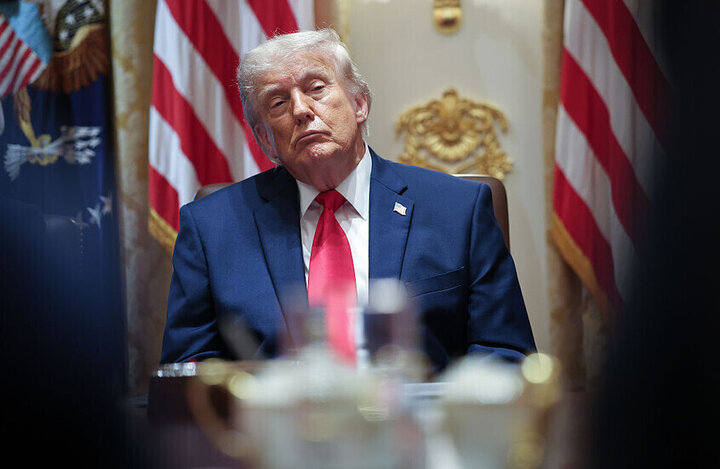
According to the International Desk of Webangah News Agency, Simon Tisdall, a distinguished writer and analyst for The Guardian, has asserted that the greatest global threat lies not solely in the power of adversaries or the nature of conflicts, but in the “lack of a clear strategy for crisis management.” He contends that Trump’s narcissism is the foremost global enemy, fueling uncontrolled escalation of current wars and making him a “walking weapon of mass destruction.”
Tisdall identifies Trump as the most dangerous factor in the Iran crisis, asserting that his approach has led the United States and the world into a challenging political, economic, and military impasse. The writer describes the conflict with Iran as a result of hasty decisions devoid of strategic foresight, warning that continued tensions could precipitate a widespread and prolonged war with global repercussions.
The Guardian article argues that, contrary to Washington’s expectations, U.S. attacks on Iran are not weakening the Iranian system but may instead bolster its authority domestically, aiding in public mobilization and justifying security policies. The newspaper criticizes Trump and his Secretary of War, Pete Hegseth, for speaking of a “great victory,” stating it is unrealistic as the U.S. has not achieved its primary objectives while human, economic, and political costs escalate. Tisdall suggests the most pragmatic current U.S. objective is controlling or reopening the Strait of Hormuz for international navigation, a strategic pressure point in the conflict. He adds that initial U.S. and Israeli goals, such as dismantling Iran’s nuclear program, weakening Tehran’s regional allies, or regime change, have become more difficult than ever.
The article highlights Trump’s entrapment in the potential for a “long-term war of attrition,” attributing the ongoing crisis primarily to his personality and mindset. It posits that Trump’s decisions are driven more by displays of power and the pursuit of short-term political victories than by long-term strategic calculations. The Guardian points out this decision-making pattern in other international matters, including the Gaza conflict and Trump’s stance on the Russia-Ukraine war. The peace plan for Gaza has seen no tangible progress, with issues of reconstruction, disarmament, and security arrangements remaining unresolved.
Tisdall warns that the continuation of this conflict could have far-reaching consequences beyond the Middle East, as persistent tensions in the Persian Gulf threaten global trade and energy movements. Any disruption in the Red Sea due to Houthi activities could lead to increased oil prices and economic pressure on developing nations. He notes that European allies of the U.S. share these concerns, while U.S. adversaries, particularly Russia and China, may benefit from this instability and Washington’s diminished international credibility. The Guardian concludes that ongoing tensions could transform a limited confrontation into a global crisis affecting international economy and security, at a time when opportunities for a political solution appear increasingly difficult due to a loss of trust between the parties.


