Lebanon’s Parliament Speaker Calls for Iran-Saudi-US Guarantee Amid Regional Tensions
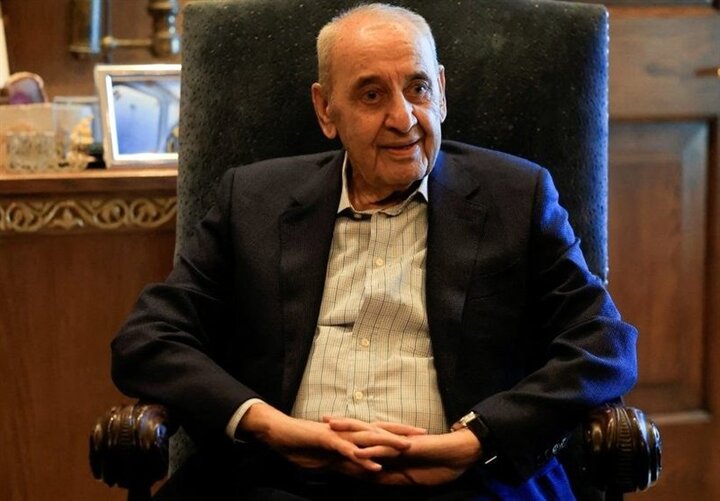
According to the International Desk of Webangah News Agency, Nabih Berri, Speaker of the Lebanese Parliament, announced that the country currently needs a “trilateral guarantee” from Saudi Arabia, the United States, and Iran, given the persistent tensions and developments in southern Lebanon. This report is based on information published by the Mehr News Agency, citing Al-Nashra.
Berri described his relationship with Saudi Arabia as positive, stating that anyone supported and favored by Saudi Arabia garners respect and attention globally. He recalled performing the Hajj pilgrimage three times, each occasion marked by esteemed treatment from Saudi brethren.
He further emphasized excellent relations with Joseph Aoun, the Commander of the Lebanese Armed Forces, noting that despite some political differences, communication and coordination between them are continuous. “My relationship with General Joseph Aoun is excellent. We have differences in some political viewpoints, but we are constantly in contact. Before his trip to Washington, he contacted me and asked, ‘What advice do you have for me?’ I advised you on two matters: consolidating the ceasefire and ensuring the complete withdrawal of Israel and the return of the people to their villages and homes.” Berri added that upon President Aoun’s return from Washington, he contacted him, and a meeting is scheduled soon.
Regarding his relationship with caretaker Prime Minister of Lebanon, Nawaf Salam, Berri stated it is stable and filled with affection.
Addressing the situation in southern Lebanon, the Speaker noted that current events in southern villages, including Zawtar Gharbieh, indicate ongoing Israeli attacks and the difficulty in achieving a full Israeli withdrawal and the return of residents to their homes. “People waited for days to be able to temporarily enter their villages, and Israeli attacks continued. How much longer will it take for a complete Israeli withdrawal and the return of the southerners to their land to be realized?”
Berri also spoke about his warm relationship spanning twenty-five years with the late Syrian President Hafez al-Assad, which was built on trust and connection. He mentioned that his relationship with current Syrian President Bashar al-Assad was tense and cold for over twelve years, during which he did not visit Damascus.
He explained that the primary reason for this strained relationship was his refusal to intervene in the Syrian war. Berri affirmed that he did not participate in the Syrian civil war, a stance that incurred a political cost in his relations with the Syrian government at the time.
Berri revealed he provided a set of recommendations to Syrian Foreign Minister Al-Shaybani, which he deems essential for the success of a new phase in Syria. These include:
- The necessity of avoiding confrontation with any Syrian group, particularly the Alawite community, and advocating for their integration into state institutions. He stressed that building a new Syria cannot be based on exclusion or revenge, and Syrians should not repeat the mistakes of Iraqis after Saddam’s fall.
- Syrian Christians are fearful and require reassurance, as they form an integral part of Syria’s history and national fabric. The Christian population in Syria exceeds that in Lebanon, and preserving religious diversity is a stabilizing factor for the Syrian state.
- There is no reason for concern for Shia citizens in Syria, as the new Syrian government will treat them as citizens with full rights, just like all other Syrians.
Furthermore, he emphasized that a successful relationship between Lebanon and Syria begins with addressing three fundamental issues: controlling the shared border and ending smuggling operations; completing the demarcation of land and maritime borders to prevent future conflicts; and ensuring that Lebanon and Syria respect each other’s sovereignty and refrain from interfering in internal affairs.
Berri concluded by revealing his message to Al-Shaybani: “Lebanon borders Palestine to the south, the sea to the west, and Syria to the east. If Lebanon-Syria relations are not at their best, we will all jump into the sea and drown together.”