
Yemeni Military Expert Warns Saudi Arabia of Heavy Price for Maritime Blockade
According to the International Desk of Webangah News Agency, Brigadier General Mujeeb Shamsan, a military and strategic affairs expert, emphasized that the Yemeni armed forces’ decision to implement a maritime blockade against Saudi Arabia is a decisive step following the exhaustion of peace opportunities. Speaking to Al Masirah television, Shamsan stated that the Saudi regime will incur significant costs due to its persistent policies. He noted that Yemen possesses broader options for escalating tensions if the aggression and blockade continue.
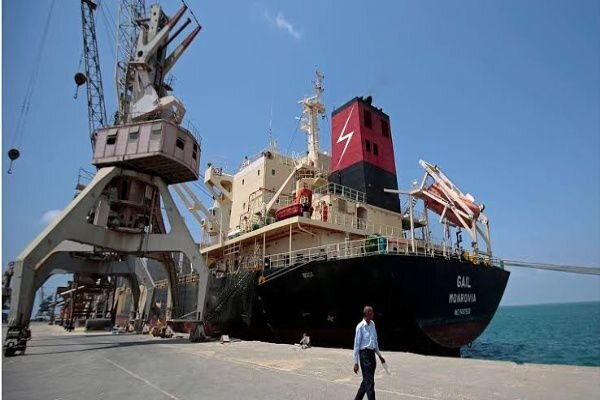
Shamsan added that the success of the current measure was not unexpected, as it is based on practical precedents proving that Sanaa’s warnings are not merely rhetorical but backed by successful military operations that have demonstrated their capability to impose battlefield realities and confront formidable naval fleets. He highlighted that Saudi vessels are now compelled to take lengthy detours around the African continent, significantly extending transit times to Asian markets. Journeys that previously took 20 to 24 days could now take 50 days or more, increasing distances, risks, and operational costs.
The strategic analyst pointed out that the Saudi regime is heading towards substantial economic losses. Riyadh operates a large maritime fleet comprising approximately 109 oil tankers belonging to Aramco and Bahri, alongside hundreds of other cargo and container ships, bringing Saudi Arabia’s total maritime fleet to around 433 vessels. This situation makes the continuation of the maritime blockade an increasingly burdensome factor for the Saudi economy.
Shamsan reiterated that the Bab al-Mandab Strait remains open to all vessels except Saudi ones, asserting that Yemen’s decision is precise and does not target international shipping. He stated that Saudi Arabia is attempting to replicate the American experience by portraying Yemen’s actions as a threat to global navigation. However, Sanaa has practically demonstrated its ability to strike highly specific targets by leveraging advanced intelligence capabilities and military power sufficient to fulfill its promises.
Recalling the U.S.-led maritime coalition against Yemen, Shamsan mentioned that Washington initially spoke of 40 participating countries, a number that later dwindled to 20. He noted that the Americans and British eventually admitted to being alone against the Yemeni armed forces. He believes Saudi Arabia currently lacks the naval capacity to repeat such an adventure, as its maritime capabilities are incomparable to those of the United States and European nations.
Shamsan indicated that Yemen’s target bank includes vital and sensitive objectives, the disruption of which would multiply the costs for the Saudi regime. He recalled that previous strikes on Aramco facilities in Jizan and the deterrent messages sent to Yanbu and the East-West pipeline were merely initial examples, with more sensitive targets remaining accessible. He emphasized that Sanaa might take more advanced steps in imposing the blockade in the future, potentially targeting alternative oil export routes.
The military and strategic affairs expert concluded that the Saudi regime currently lacks the tools for influence and pressure, while Sanaa retains the initiative and possesses numerous options to impose new realities. This position has established Sanaa as the most influential party in the current confrontation.


