Al-Riyadh Newspaper Warns Strategic Maritime Passages Are Now Core Components of National Power
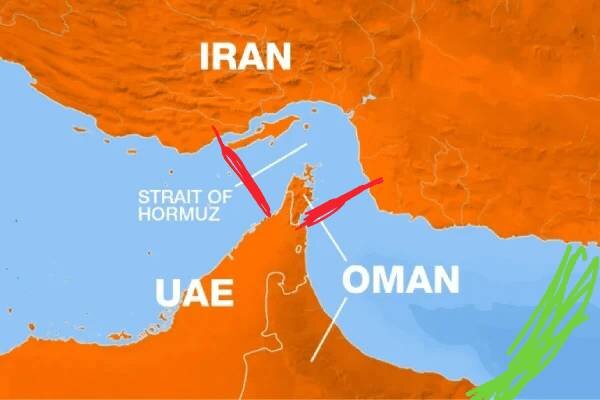
According to the International Desk of Webangah News Agency, the Saudi-based newspaper Al-Riyadh has published an analysis stating that recent incidents involving vessels in the Strait of Hormuz have pushed the ongoing standoff between Iran and the United States into a significantly more volatile phase. The instability has led to a noticeable decline in maritime traffic, prompting shipping firms, insurance providers, and energy companies to adopt an increasingly cautious posture.
Al-Riyadh emphasizes that the Strait of Hormuz has become a focal point where military operations directly intersect with the mechanics of the global economy. In this environment, traversing vessels serve as political barometers, measuring international confidence in regional security, the stability of energy markets, and the capacity to maintain global trade flows amidst a conflict that exerts pressure on ports, markets, and economic decision-making hubs.
The report further observes that the current situation indicates the concept of economic sovereignty has entered a new chapter. In this context, a nation’s strength is increasingly tied to its ability to safeguard the free movement of its resources and commercial interests, ensuring that trade reaches global markets even under the most challenging conditions of armed confrontation.
Ultimately, the editorial concludes that maritime corridors have effectively become integrated into the strategic arena of national power. The spillover effects of transit instability now directly impact insurance costs, logistics, energy production chains, and long-term capital investments, highlighting the vulnerability of the global supply network to regional maritime disruptions.