
Strait of Hormuz Closure Signals End of US-Led Order, Ushering in Era of Disorder
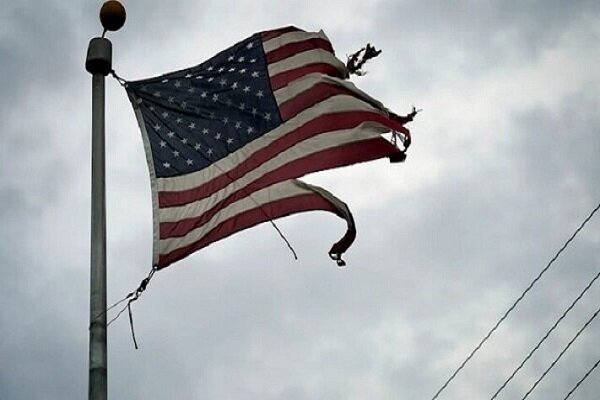
According to the International Desk of Webangah News Agency, an analysis in the journal Foreign Affairs suggests that the international order previously led by the United States is no longer simply encountering crises but is in a state of active collapse. This order, after decades of expansion, is now being challenged not only by rivals like China and Russia but also by its primary proponent, the United States, which is increasingly disinclined to bear the costs of its maintenance.
Mark Leonard, the author of the analysis, employs a metaphor drawn from China’s housing market to describe the current situation. He refers to unfinished and abandoned buildings, which some citizens have occupied and adapted using remaining facilities to continue their lives following a housing crisis. The Chinese refer to these as ‘lanwei lou,’ or ‘rotten-tailed buildings’ – projects that were intended to be completed but were halted midway.
Leonard contends that the US-led international order has reached a similar point. This order was never fully accepted by China and Russia, and middle powers have gradually become dissatisfied with it. More importantly, the American public is no longer willing to fund the nation’s global role. As Washington withdraws, no other power is ready to assume this responsibility.
From the author’s perspective, the outcome is not a transfer of global order from the United States to China, but rather the world entering a period that can be termed ‘disorder.’ This is an era where nations must adapt to new conditions without relying on a dominant power or a set of common rules.
US No Longer Capable of Global Control, Old Assumptions Shattered
One of the article’s most significant arguments addresses the United States’ ability to maintain global security. While acknowledging that the US remains the world’s most powerful military, economic, and technological force, Leonard states that Washington can no longer prevent all conflicts or guarantee the free flow of trade worldwide.
To support this claim, the author references the conflict involving Iran, raising a point crucial for assessing America’s position in the global order. The United States, even under significant military pressure against Iran, was unable to compel the reopening of the Strait of Hormuz after its closure by Iran.
This segment of the analysis transcends a mere reference to a strategic waterway. For Leonard, Hormuz has become a test of America’s true capabilities. A nation that has for decades presented itself as the guarantor of global trade routes has failed to ensure the passage through one of the world’s most critical energy chokepoints.
The significance of this issue is amplified by the author’s view of the Strait of Hormuz as part of a larger transformation: the shift of power from purely military might to control over ‘chokepoints.’ In the new world, power is not solely measured by the number of aircraft carriers, fighter jets, or the size of an economy. Instead, the more powerful nation is the one that can control or disrupt vital energy, technology, trade, and supply routes.
From this perspective, the Hormuz experience serves as a warning to the United States. If Washington cannot guarantee passage through a vital waterway even with extensive military superiority, its claim to the role of guarantor of global trade security faces serious questions.
US Allies Still Await Washington’s Lead
A noteworthy section of the analysis focuses on the situation of America’s allies. Leonard believes that many of Washington’s allies have not yet accepted that the US is distancing itself from its traditional role.
He points to the behavior of European countries at the NATO summit in July 2026, writing that European leaders attempted to appease Donald Trump by increasing defense spending to ensure America’s continued participation in the alliance. Britain continues to purchase American fighter jets, Denmark maintains its arms purchases from Washington, and Australia, under the AUKUS pact, continues to invest in security cooperation with the US. The author views these actions as evidence that Washington’s allies are still operating under the old order, even as circumstances have changed.
Leonard states that leaders of various countries, in private conversations, speak most about one issue: ‘uncertainty.’ They no longer know what will happen in the next crisis, who will support them, or even which institution will be capable of resolving a crisis.
Three Forces Undermining Global Stability
Leonard identifies three primary trends as drivers of this situation: ‘fragmentation,’ ‘contagion of crises,’ and ‘strangulation.’
‘Fragmentation’ refers to the disintegration of alliances, markets, and even shared perceptions of reality among nations. According to him, the recent conflict between the United States and Israel against Iran is an example of this phenomenon, as the involved parties do not have a common understanding regarding the existence of a ceasefire, the leverage of each side, or who has emerged as victor or vanquished.
Furthermore, problems that once remained confined to specific domains now spread to others. Security disputes can evolve into trade disputes, and a regional crisis can impact global markets.
The third factor is the increasing use of ‘chokepoints’ as instruments of power by countries. Energy routes, straits, supply chains, sensitive technologies, payment systems, and even pharmaceutical raw materials can now become tools for political pressure.
Hormuz: An Example of Chokepoint Power
In the Foreign Affairs analysis, the Strait of Hormuz is presented as a prime example of this trend. The author states that countries are gradually weaponizing systems that were once built to connect the global economy.
Energy routes, shipping lanes, semiconductor supply chains, and financial infrastructure can now play the same role that military power previously did.
Leonard writes that even before the closure of Hormuz, the Houthis were disrupting Red Sea traffic using inexpensive drones and missiles. However, the closure of Hormuz has far greater implications, as approximately 20 percent of global liquefied natural gas and oil transport passes through this route.
From this perspective, Hormuz is not just a point on a map; it is an example of a world where one country can impose consequences on the entire global economy by controlling a chokepoint.
The author warns that this trend will not be limited to Hormuz. China can leverage rare earth elements and technology production chains, the United States can utilize its financial and technological systems, and smaller nations can gain power far exceeding their economic and military size by controlling transportation routes or vital resources.
The New World: An Era of ‘Artisans,’ Not ‘Architects’
In conclusion, Leonard presents two approaches for navigating the new world: the ‘architect’ and the ‘artisan.’ Architects seek to design comprehensive orders, establish global rules, and rebuild institutions like the United Nations and the World Trade Organization. Artisans, however, accept that the world can no longer be managed with a single blueprint and that countries must adapt to changing circumstances with flexibility, initiative, and by utilizing available resources.
The author believes China has adopted such an approach in many instances, from the Shanghai Cooperation Organization and BRICS Plus to utilizing existing institutions to advance its interests.
In his view, middle powers such as Iran, India, Brazil, and Turkey are increasingly turning to this model, striving to balance the major powers and protect themselves against future changes.
Leonard’s conclusion is clear: the world has entered a new era where neither a return to the old order nor the rapid formation of a new one is highly probable. The coming decades will be defined more by continuous crises, competition over resources and chokepoints, increased independence of middle powers, and reduced reliance on major powers.
In such a world, countries that do not wait for the return of the old order or the emergence of a savior power, and can find their way through this disorder by relying on their domestic capacities, flexibility, and diversification of foreign relations, will be more successful.


