
US Faces War Crime Allegations Following Attacks in Iran, Echoing Past Atrocities
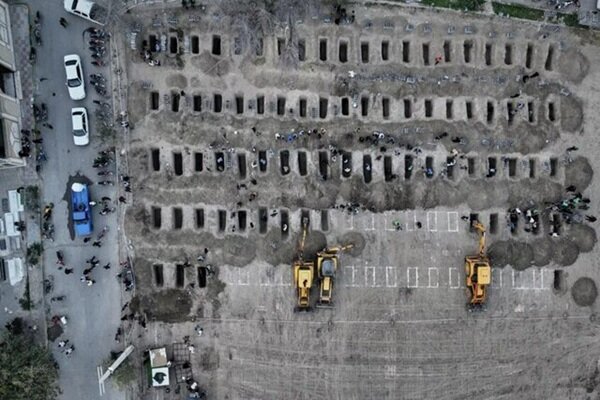
According to the International Desk of Webangah News Agency, the United States is facing serious allegations of war crimes following recent military operations in Iran, prompting calls for critical self-examination among Americans. This situation echoes historical instances of alleged U.S. military misconduct and raises questions about accountability and the recurring nature of such incidents in American foreign policy.
The gravity of these accusations was amplified after a United Nations fact-finding mission indicated reasonable grounds to believe that the U.S. committed war crimes during two separate attacks – one targeting a school in Minab and another hitting a sports stadium in Lamerd – during its military intervention in Iran. Washington’s response was swift denial, offering no evidence to refute the findings. This denial came as a Bloomberg investigation revealed that some Pentagon personnel were aware within hours of the missile strike on a Minab elementary school, which resulted in the deaths of over 120 children, that American missiles were responsible.
The article posits that to understand how such overt violations can be denied, one must look back decades. On the morning of March 16, 1968, U.S. forces entered the Son My village complex in Quang Ngai Province, South Vietnam, an area including a settlement known as My Lai. Expecting to encounter Viet Cong fighters, American soldiers instead found themselves amidst a civilian population. Despite this, soldiers from a U.S. unit engaged in the mass killing of civilians, resulting in approximately 500 deaths.
The U.S. Army reportedly concealed this atrocity, and for nearly a year, public awareness of the event was minimal. It took a full year for revelations by a former soldier named Ronald Ridenhour, coupled with investigative reports by Seymour Hersh, to bring the shocking incident to light and public attention. Investigations revealed that the crime was not merely a product of collective breakdown or the madness of a single military unit on the battlefield. The chain of command, and more significantly, the political and senior leadership responsible for managing the war, bore responsibility for what transpired.
The piece suggests that while there is a natural inclination to point fingers at those who pulled the trigger and bring them to justice, limiting responsibility to the soldiers who ultimately execute the actions is the beginning of the problem. The My Lai massacre was deemed horrific enough to awaken any political system and, more importantly, any society. However, this awakening did not occur in the United States.
The article references a New Yorker investigation published approximately two years prior, detailing the aftermath of the Iraq and Afghanistan wars following the September 11th attacks. Titled “The War Crimes the Military Buried,” this four-year investigation indicated that the U.S. military had committed around 800 war crimes in these two conflicts. The report highlighted that only a small number of these cases were prosecuted, with even fewer resulting in convictions, raising questions about the proportionality of convictions relative to the number of war crimes committed.
Some may be inclined to attribute recent disturbances and committed crimes solely to Donald Trump and Pete Hegseth, suggesting that these storms would subside with their departure. This perspective, the article argues, is less a reflection of reality and more a simplification—and in essence, a whitewashing—of the history of U.S. war crimes. War crimes are presented as a recurring feature in American history, with both Democratic and Republican administrations exhibiting remarkably similar track records. The problem is deemed deeper than the narcissism and autocracy of Trump or the approaches and attitudes of Hegseth.
The article concludes by emphasizing that the American people, as those who elect their governments, must ask themselves serious and difficult questions about their responsibility for these crimes. This responsibility extends from senior political leaders and the architects and commanders of elective and criminal wars to those who ultimately pulled the triggers or pushed the buttons to launch missiles and drop bombs. None of these individuals are presented as being from another planet. It questions whether Americans will continue to measure the cost of war not by lost lives and committed atrocities, but by the price displayed at the gas pump. An Iranian proverb, “The world is round,” is invoked, suggesting that history always finds a way to settle accounts.


