
Turkey’s Hesitation in Yemen Conflict: Key Factors Delaying Military Intervention
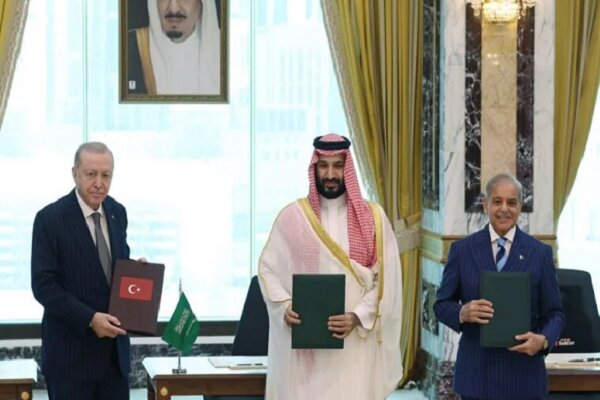
According to the International Desk of Webangah News Agency, Turkey‘s stance on potential military involvement in the escalating conflict in Yemen, particularly in support of Saudi Arabia against the Houthi movement, is shaped by a confluence of legal, public sentiment, and political considerations. While a defense pact signed in Mecca in August 2026 commits signatories—Turkey, Saudi Arabia, and Pakistan—to collective defense, Ankara’s engagement has remained cautious.
The primary legal impediment is the ongoing ratification process of the Mecca agreement within Turkey’s Grand National Assembly. Under Turkey’s constitutional framework, specifically Articles 90 and 92, the parliament plays a crucial role in approving international treaties and authorizing the deployment of armed forces abroad. Therefore, the mere signing of the agreement does not automatically obligate the Turkish military to deploy troops in any Saudi military engagement. The actualization of such a commitment hinges on the completion of domestic legal procedures and subsequent parliamentary decisions, framing the current understanding as a developing political-defense understanding rather than an immediate mandate for military intervention.
Public opinion in Turkey also presents a significant factor. Unlike the Syrian conflict, which has direct security implications for Turkey’s borders and concerns regarding Kurdish groups, the Yemen war lacks such immediate relevance to Turkish national security. Public support for deploying troops to a conflict geographically distant and not directly tied to national defense is likely to be limited, even among supporters of the ruling party. The lack of transparency regarding the full details of the Mecca defense agreement further contributes to public ambiguity about the extent of Turkey’s military commitments.
Furthermore, President Erdoğan’s political calculations for the upcoming 2028 presidential elections play a critical role. A direct military intervention in Yemen, without a clear link to Turkish security interests, could alienate a segment of the electorate and impose significant political costs. While Erdoğan has successfully framed Turkey’s military presence in Syria as a matter of border security, a similar justification is absent for Yemen. Engaging in a foreign war solely to defend Saudi Arabia could be perceived by the Turkish public as acting in Riyadh’s interest rather than Turkey’s, potentially eroding Erdoğan’s support base, especially if accompanied by human and economic costs and public opposition.
Consequently, Turkey’s approach has thus far focused on offering support short of direct troop deployment. Turkish Foreign Minister Hakan Fidan indicated on September 19, 2026, that Saudi Arabia might require military assistance, particularly in technical fields, and that Turkey stands ready to help within the framework of the trilateral agreement. This statement highlights a distinction between providing military and technical aid and committing combat troops, with the former being articulated while the latter remains unaddressed.
The conflict in Yemen is emerging as a significant test for the Mecca defense agreement, which Turkish media had previously heralded as a cornerstone for Ankara’s role in a new regional order. However, current indications suggest Turkey will not engage in direct combat operations to support Saudi Arabia at this juncture. Recent reports of Saudi Arabian drones, identified as Turkish-made Akinci models, being shot down do not necessarily signify direct Turkish military support. Turkey has been exporting its drone technology, including Akinci and Bayraktar models, to various countries for years, with Saudi Arabia being a longstanding customer since 2021. The use of these drones in recent operations is primarily understood within the context of existing arms export agreements and commercial contracts between the two nations.


