
Syrian Leader Al-Joulani Seeks Lasting Peace with Israel, Emphasizes Territorial Integrity
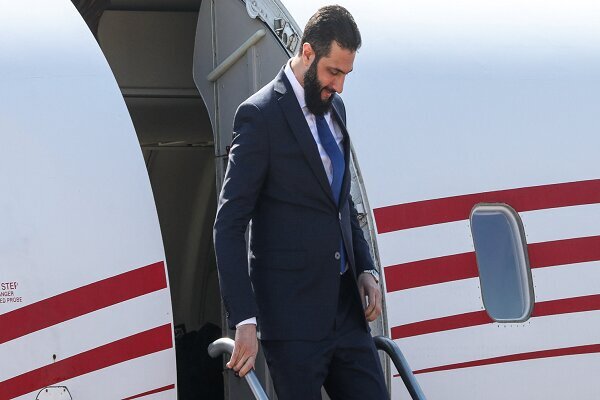
According to the International Desk of Webangah News Agency, Abdel Halim Hafez, also known as Abu Muhammad al-Joulani, the head of the self-declared Syrian government, indicated during a trip to New York for the United Nations General Assembly that reclaiming Syrian rights is a primary condition for attaining lasting peace in the region. He noted that the Israeli entity continues its aggressions and maintains control over Syrian lands occupied after the fall of the former regime.
Speaking at a discussion forum hosted by the Atlantic Council in New York, Al-Joulani stated that Syria has opted for a diplomatic approach, engaging in dialogue and seeking assistance from friendly nations, including Washington. He mentioned that direct talks with Tel Aviv commenced approximately eighteen months ago but were halted due to Israel’s withdrawal for its own specific reasons. Nevertheless, Damascus remains engaged in this process with the hope of achieving results.
Al-Joulani added that the initial phase focused on the area occupied by Israel after December 8th, with a return to the 1974 borders and the signing of a security agreement. He further suggested that if this agreement proves successful, Syria might enter into prolonged discussions regarding lasting peace and the Golan Heights. He emphasized that the Golan is Syrian territory, supported by over 130 countries at the United Nations.
Al-Shar’ stressed that his country strives for a lasting peace with Israel, provided that Syrian rights are guaranteed and its territories are not occupied. He also called for the formation of an international committee to evaluate Israel’s concerns, differentiating between serious and non-serious issues to prevent conflicts. He warned that assessing Israel’s policies toward Syria based on the situation in Gaza is a misguided approach that does not ensure Israeli security but rather incites disputes and wars.
Al-Shar’ explained that Syria’s approach is based on the withdrawal of foreign bases from the country. He added that any future military presence would be contingent upon a legal framework approved by the People’s Assembly, guaranteeing the sovereign rights of Syria. Al-Joulani also noted that in the near future, there is no need for foreign bases within the country.
He reported achieving outcomes with the Russian side that led to a reduction of Russian bases to two, transforming them into training centers for the Syrian army. He also pointed out that Turkish forces had previously entered under exceptional circumstances to protect their borders in a volatile region, and now, with ongoing discussions to determine the legal status of their presence, their bases in the northwest of the country have decreased.
Al-Joulani also announced a strategic project to construct an oil pipeline connecting Iraq’s oil fields to Syrian ports. The objective of this project is to provide a secure route for exports and prevent oil transit through the Strait of Hormuz.


