
Trump and Xi Jinping Meet Amid Fragile Trade Truce and Intensifying Tech Rivalry
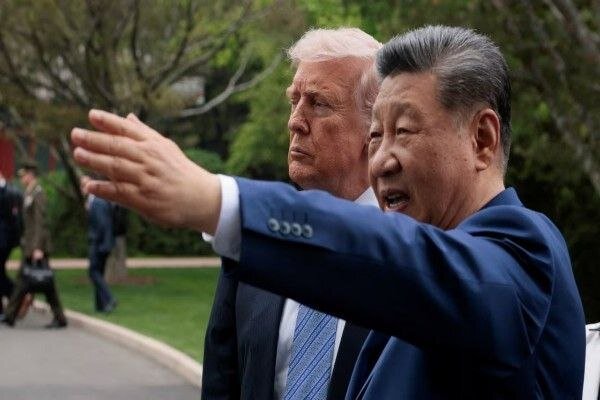
According to the International Desk of Webangah News Agency, Al Jazeera, in a report referencing the upcoming meeting between United States President Donald Trump and his Chinese counterpart Xi Jinping in America later this week, stated that the summit is occurring amid a fragile trade truce and intense competition over technology and global influence. Warnings have been amplified about the situation sliding towards a crisis with significant global consequences.
Despite projecting an image of calm in bilateral relations following the anticipated summit, reciprocal actions by both the US and China indicate that political tranquility does not signify a retreat from conflict. Issues concerning trade, artificial intelligence, Taiwan, and energy could transform the meeting into a test of “tension management” rather than a turning point in bilateral relations. Anna Swanson, writing for The New York Times, noted that last year’s trade truce between the two nations provided relative stability but failed to halt the reciprocal, threatening measures that put the agreement at risk.
Al Jazeera reports that the United States is urging China to reduce restrictions on rare earth metals and increase its purchases of agricultural products and aircraft. Concurrently, Beijing has expanded its oversight of foreign companies, investments, and mineral exports. In response, Washington has imposed new technological restrictions on Chinese firms, while Beijing has enacted sanctions against American companies assisting in supply chain inspections. Swanson quoted Treasury Secretary Scott Bessent, who likened the relationship between the two countries to a water polo match, where leaders toss the ball back and forth above the water while delivering “blows” beneath the surface.
Ryan Hass of the John Thornton Center at the Brookings Institution believes that while room for maneuver still exists, it is limited. He posits that both sides are testing the boundaries of competition without damaging the convergence of their relationship. Consequently, the current truce more closely resembles a “temporary arrangement for managing differences” than a final resolution to their dispute. New York Times analyses suggest that the US-China summit may address artificial intelligence safety and tariff reductions on non-sensitive goods, but a persistent lack of trust continues to constrain cooperation. Gideon Rachman, in a Financial Times article, wrote that trade competition has fueled suspicion between the two countries, with both sides fearing that any cooperative move could be exploited against them. The race for artificial intelligence also carries strategic dimensions, with Washington aiming to maintain its dominance and Beijing cautiously approaching calls for collaboration.
Robert Kagan, in The New York Times, offers a historical perspective, cautioning against repeating past American misinterpretations of China. He contends that the ambiguous understanding of Taiwan, established since Richard Nixon’s diplomatic overtures to Beijing, is facing increasing pressure, and misperceptions of each other’s intentions could escalate competition into military confrontation. He further warned that any conflict in the Western Pacific would severely disrupt global supply chains, with far broader implications than current wars in other regions. The Washington Post, in an article, suggests that Trump has shifted from a seemingly hardline stance against China towards a more conciliatory policy, evidenced by potential tariff reductions, technological restrictions, and the temporary suspension of arms deals with Taiwan as negotiation leverage. The author of this article believes the Washington summit might focus more on superficial aspects rather than addressing major crises, ranging from conflicts in the Middle East and Ukraine to energy and artificial intelligence. While both sides seek to extend the trade truce, the significant danger lies in any misunderstanding that could lead to crossing red lines.
Against the backdrop of this summit are the developments concerning the United States’ involvement in conflicts in Iran. The Washington Post reports that this engagement is depleting American military resources that might be needed in the Pacific. According to the report, the instability in the Middle East and the energy crisis limit both countries’ ability to focus. Finally, Kagan, in The New York Times, warns that deterrence relies not only on military might but also on consistent, clearly interpretable signals, as ambiguity and misperception can increase the risk of war. Therefore, it is likely that the summit will conclude with an announcement of “stability” without resolving the escalating competition.


