
Iran Eyes Central Asian Transit Hub Role Amidst ‘Southern Quadrilateral’ Geopolitics
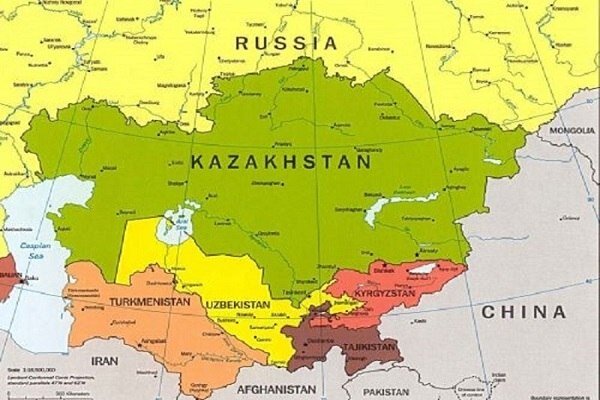
According to the International Desk of Webangah News Agency, Iran is strategically positioning itself to become a pivotal transit hub for Central Asian countries, aiming to leverage its geography and infrastructure to connect the landlocked region to vital southern markets. This ambition is framed within a conceptual ‘Southern Quadrilateral’ doctrine, which identifies Iran, Afghanistan, Pakistan, and Turkey as key players in facilitating Central Asia’s access to the Persian Gulf, the Arabian Sea, and wider West Asian markets.
Geography plays a critical role in the destinies of nations, influencing national security, economic development, and foreign policy choices. For Central Asian countries, this is particularly true given their landlocked status and proximity to major powers like Russia and China. Access to diverse land and sea routes is thus not merely a commercial advantage but a cornerstone of their geopolitical independence.
The ‘Southern Quadrilateral’ concept, while not an official state doctrine, offers a framework for understanding Central Asia’s engagement with its southern neighbors. This grouping is defined by functional relationships rather than strict territorial adjacency: Turkey acts as a gateway to the West, Iran connects Central Asia to the Persian Gulf and West Asia, Afghanistan serves as a direct southern link, and Pakistan offers potential access to the Arabian Sea.
This approach aligns with the foreign policy objectives of most Central Asian states, which prioritize regional neighbors while actively pursuing enhanced ties with Iran, Afghanistan, Pakistan, and Turkey, alongside the development of transportation corridors and trade routes.
Logic of the Southern Quadrilateral Doctrine
The doctrine is underpinned by several key rationales:
Firstly, it emphasizes establishing geographic security through connectivity. For landlocked nations, insecurity in transit corridors or closed borders directly impacts trade, energy, food security, and internal stability. Afghanistan, bordering Uzbekistan, Turkmenistan, and Tajikistan, is a critical node; instability there can spill northward. Uzbekistan, for instance, views the Trans-Afghan Railway project as crucial for connecting Central Asia to South Asia. In July 2025, Uzbekistan, Afghanistan, and Pakistan signed a framework agreement for a feasibility study on this railway, aiming to link Uzbekistan via Afghanistan to Pakistan’s rail network and Arabian Sea ports. By February 2026, the Uzbek president approved the trilateral agreement, with field studies commencing in June and the feasibility study expected by year-end.
Secondly, the necessity of diversifying access routes is paramount. Over-reliance on a single route, port, or foreign power presents geopolitical risks. Central Asian countries therefore focus on various corridors, including the Caspian Sea route, the northern route through Russia, eastern routes via China, and southern routes through Iran, Afghanistan, and Pakistan. UN documents have long identified Central Asia as a region needing multiple alternative routes to southern and eastern Asian ports, with Iranian, Pakistani, and Chinese corridors seen as complementary options.
Thirdly, the doctrine promotes interdependence over unilateral dependence. Sustainable interests for Central Asian nations are achieved when the four southern countries benefit from each other’s stability and development, a perspective echoed in Uzbekistan’s emphasis on regional trade, transport, energy, Afghan stability, and cultural cooperation.
Fourthly, strategic independence is sought through balancing powers. Central Asian states aim to maintain equilibrium among Russia, China, Turkey, Western nations, Iran, and other actors. The Southern Quadrilateral doctrine does not necessarily imply a political bloc but rather a strategy to leverage regional power competition for expanded choices.
Fifthly, civilizational and social ties are significant. The historical interactions between Central Asia and the broader Iranian and Turkic world transcend modern political borders. Figures like Alisher Navoi, born in Herat, highlight the deep historical and cultural connections across present-day Afghanistan, Uzbekistan, and Iran.
The Role of Turkey, Afghanistan, Pakistan, and Iran
Turkey serves as a Western gateway and an economic-institutional hub, not primarily a geographical neighbor. Its NATO membership, strategic location, and role in the Middle Corridor provide crucial access to European markets. NATO classified Turkey as having the second-largest army in the alliance in 2026. Turkish trade, investment, energy, defense, education, and tourism sectors are expanding in Central Asia. The World Bank recognizes the Caspian Corridor, or Middle Corridor, as a key route connecting China, Central Asia, the Caucasus, Turkey, and Europe, with new rail investments in eastern Turkey addressing bottlenecks.
Afghanistan, while facing significant economic and infrastructural challenges, represents both an opportunity and a risk. It directly impacts Central Asia’s security environment and, in the long term, offers a route to Pakistani ports and South Asian markets. Despite a projected 4.3% economic growth in 2025, Afghanistan grapples with poverty, trade deficits, and a weak banking system. While economic growth was estimated at 4.8% in May 2026, per capita GDP saw a 5.6% decline.
Pakistan, with a population estimated at 255 million in 2025 and approximately 170 nuclear warheads as of January 2026, offers crucial access to the Arabian Sea and South Asian markets. The Trans-Afghan Railway project could eventually link Central Asia to Pakistan’s rail network and its ports, complementing Iran’s routes and reducing dependence on a single southern pathway.
Iran possesses a unique advantage with its ability to connect Central Asia simultaneously to the Persian Gulf, the Sea of Oman, the Caucasus, Turkey, and West Asia through a dense network of roads and railways. Multiple transit corridors, including the Uzbekistan–Turkmenistan–Iran–Turkey route and the Kazakhstan–Turkmenistan–Iran corridor (part of the North-South International Corridor), are vital. In 2026, officials from Uzbekistan and Iran emphasized enhancing transit links. Iran’s ports of Bandar Abbas and Chabahar, along with its national railway network, offer diverse options. Chabahar is particularly significant as a hub for India, Iran, and Central Asian cooperation, with a long-term operation contract for its Shahid Beheshti terminal signed in 2024.
Iran’s Distinct Advantages and Weaknesses
Iran’s key advantages include its geography offering access to multiple regions, diverse port facilities (Bandar Abbas and Chabahar), institutional overlap with Central and South Asia through the Shanghai Cooperation Organization and the Economic Cooperation Organization (ECO), and deep civilizational ties. Furthermore, Iran has the potential to transform from a mere transit route into a comprehensive platform encompassing ports, railways, warehouses, customs, banking, insurance, energy, and free trade zones.
However, Iran’s primary weakness lies in the gap between its potential and operational capabilities. Unlike Turkey, which has a strong presence of investors and commercial networks in Central Asia and is actively investing in its transit infrastructure, Iran faces challenges in ensuring predictable transit times, tariffs, customs processes, insurance, banking access, technical standards, and service continuity. The reliability of a route is as crucial as its length for landlocked countries.
Conclusion: Redefining Iran’s Advantage
The ‘Southern Quadrilateral’ doctrine underscores that no single southern actor should be the sole option for Central Asia. The importance of these countries lies in their collective role within a larger network. Turkey offers market access and capital; Afghanistan provides direct adjacency and potential South Asian links; Pakistan offers population, markets, and Arabian Sea access; and Iran provides a combination of geography, rail networks, access to southern seas, and institutional integration.
Iran’s ‘higher hand’ is not about excluding others but about becoming an indispensable node in Central Asia’s connectivity and economic network, whose absence would incur significant economic and geopolitical costs. This position requires reliable rail and road networks, competitive and connected ports, predictable financial and customs mechanisms, and a substantial presence of Iranian companies in the Central Asian economy. The competition will shift from ‘claiming’ Central Asia to offering the best connectivity and value addition.
Ultimately, Iran’s key leverage lies in its ability to translate geography into tangible benefits for Central Asian countries by reducing transit times, diversifying routes, lowering costs, mitigating risks, facilitating port access, and establishing economic presence in energy, industry, education, and tourism. This transforms its geographical advantage from a map potential into a strategic asset. The most reliable, diverse, and low-risk option will gain significant weight in the new regional architecture, with the competition focused on integrating a larger share of Central Asia’s need for connectivity, security, and development into each actor’s regional network.


