
Saudi Foreign Minister Stresses Persian Gulf Security at UN
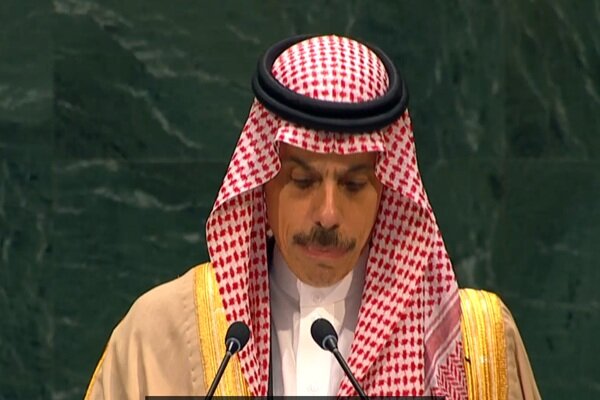
According to the International Desk of Webangah News Agency, at the 81st session of the United Nations General Assembly, Saudi Arabia’s Foreign Minister, Prince Faisal bin Farhan, stated that the security of the Persian Gulf is an inseparable part of regional and global security. He emphasized that restoring global supply chains is a shared responsibility and that efforts to establish security in the region cannot be based on dominance or the imposition of influence.
The Saudi Foreign Minister asserted that, along with other regional countries, they have been targets of Iran’s “brutal aggressions,” without referencing Tehran’s defensive actions in targeting U.S. military facilities and bases in retaliation for an attack on Iran originating from Saudi territory.
Prince Faisal bin Farhan further stressed the importance of comprehensive and lasting guarantees for any security arrangements in the region. He highlighted the necessity of the region being free from weapons of mass destruction and that peaceful nuclear facilities should be under international supervision. He also stated that the continued illegal expansion of Israeli settlements constitutes a serious violation of international law and humanitarian law, and that any attempt at forced displacement or altering the status quo in Palestinian territories is rejected.
Without mentioning Riyadh’s aggression against the Yemeni people, the minister claimed the importance of stability in Yemen and the protection of civilians. He urged the international community to condemn and reject the actions of the Houthis in the Red Sea and the Bab el-Mandeb Strait.
Regarding Sudan, Prince Faisal bin Farhan stated that the crisis resolution must be based on internal processes to strengthen the security and stability of its people.
The Saudi official, without referencing the illegal aggression by the United States and the Zionist regime on Iranian territory and the insecurity of the strategic Strait of Hormuz, claimed in a populist stance that threats against international shipping can impact the global economy. He emphasized the importance of ensuring freedom of navigation in all international waterways, adding that the Strait of Hormuz should be returned to its pre-war operational status without any imposition of costs.


