Abdel Bari Atwan: Iran Unrestricted Geographical Response Demonstrates High Preparedness
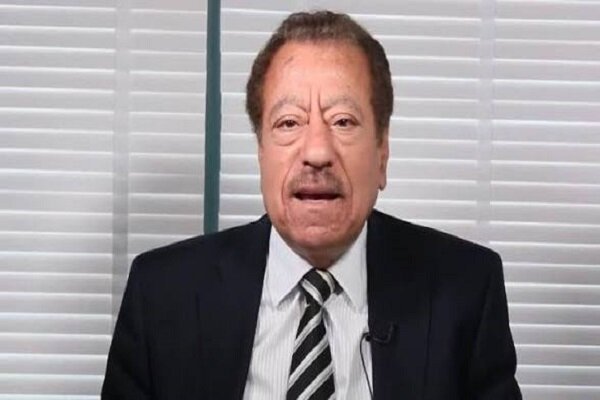
According to the International Desk of Webangah News Agency, …
Abdel Bari Atwan, a renowned regional strategic analyst, published a new article examining the statements made by Supreme Leader Ayatollah Seyed Mojtaba Khamenei during a meeting with senior military commanders. Atwan noted that an assessment of the past eight months of the conflict between Iran and the United States reveals that US President Donald Trump has consistently failed to operationalize his threats of inflicting heavy strikes on Iran, frequently stepping back from his positions merely hours before execution.
The analyst referenced unverified claims from Zionist media regarding a potential joint attack on Iran by the Zionist regime, scheduled for the upcoming Wednesday—coinciding with the day following the US midterm elections.
Atwan outlined three principal axes in this context, identifying the first as the directive issued by Supreme Leader Ayatollah Seyed Mojtaba Khamenei to the Iranian armed forces. Under this directive, military forces are instructed to respond without geographical limitations to US and Israeli threats, ensuring that if aggressors launch an attack, the timing and conditions for ending the conflict will rest entirely in the hands of Iran’s armed forces.
The second axis, according to Atwan, involves the resumption of Qatari mediation between the United States and Iran, marked by the dispatch of a delegation to Tehran at Washington’s request. Reports from Doha indicate that the Qatari delegation engaged in twelve consecutive hours of talks with Iranian officials before returning to Doha without issuing any public statements regarding the outcomes of the meeting.
As the third axis, Atwan pointed to the declaration of a state of emergency for US aircraft carriers and warplanes stationed in the Arabian Sea and the Indian Ocean, military bases in Jordan and the Persian Gulf region, and the military of the Zionist regime. He emphasized that the coming days will be decisive in determining whether the path leads to peace or war, with the initial results of the US midterm elections serving as a primary indicator.
The senior Palestinian analyst added that the Supreme Leader’s explicit order for an unrestricted geographical response to US and Israeli threats, alongside the assertion that the armed forces and the Iranian nation will dictate the conclusion of any war, demonstrates that the leadership and military command harbor no fear and maintain an exceptionally high level of readiness.
Atwan further explained that Iran’s focus on reciprocal retaliation free from geographical boundaries signifies an expanded scope of response, targeting military facilities globally. He noted that this capability is underscored by advanced missiles with a range exceeding 5,000 kilometers, capable of carrying nuclear warheads—a factor corroborated by Iranian missiles reaching the Diego Garcia military base deep in the southern Indian Ocean. A similar situation is evident in the evacuation of heavy American bombers, including the B-1 and B-52, from Britain’s Fairford air base to safer locations beyond the reach of Iranian missiles.
In another section of his article, Atwan asserted that Donald Trump is bound to suffer a double defeat: first in the midterm elections, and second in his confrontation with Iran, a nation standing resolutely to defend its rights and achieve its preconditions.
Stating that Benjamin Netanyahu would pay a heavy price if he enters this conflict, Atwan warned that Iranian hypersonic missiles equipped with multiple warheads, alongside capabilities from Lebanon and Yemen, could devastate major Israeli cities, including Tel Aviv, Haifa, and Dimona, which hosts the regime’s nuclear reactor.
He concluded by noting that while millions of settlers spent twelve days sheltering in bunkers and train tunnels during the initial conflict in June 2025, any future escalation would force them to flee by sea toward Cyprus and Greece, where security would still remain elusive.