
BRICS Agricultural Cooperation Key to Shaping Global Trade Future, FAO Official States
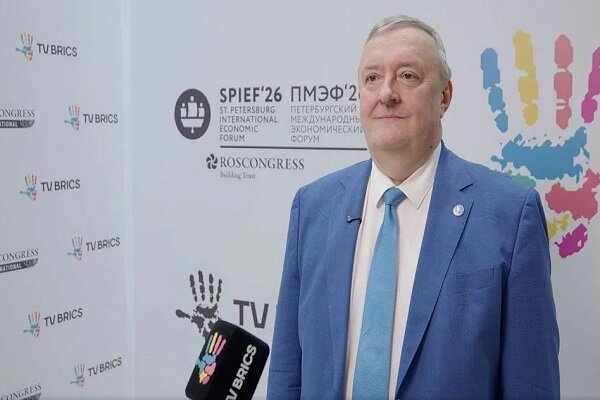
According to the International Desk of Webangah News Agency, Oleg Kobiakov, Director of the FAO Liaison Office with the Russian Federation, has stated that agricultural cooperation among BRICS member states could play a decisive role in the future of the global economy and trade. Kobiakov made these remarks in an exclusive interview with TV BRICS at the Russia-Kongress International Cooperation hub, on the sidelines of the St. Petersburg International Economic Forum (SPIEF).
Kobiakov highlighted that BRICS countries collectively represent approximately 42 percent of the world’s population, encompassing some of the most populous nations across different continents. This bloc accounts for over one-third of the global Gross Domestic Product (GDP) and a substantial share of international trade, particularly in agricultural products and related industries.
“The manner in which cooperation develops among BRICS countries, as well as the group’s relations with other nations in the agricultural and food sectors, will largely define the future path of the global economy and trade,” Kobiakov stated.
He emphasized that a primary objective in this regard is to ensure the sustainable development of agricultural and food systems. This includes establishing regulatory frameworks, facilitating the exchange of successful experiences, ensuring fair market access for producers, and leveraging innovations in artificial intelligence and scientific advancements at the nano and molecular levels, particularly in plant breeding and animal husbandry.
Kobiakov pointed out the particular significance of these advancements for BRICS countries with young populations, such as Brazil, South Africa, and India. He reasoned that today’s students and young people are the future architects of global production and consumption patterns.
He further elaborated that in many countries worldwide, a considerable portion of agricultural output is generated by farms and individual farmers. The development of rural infrastructure, including roads, healthcare facilities, educational centers, high-speed internet, and financial opportunities, can contribute significantly to national sustainable development, strengthen social foundations, and enhance public welfare.
The 29th St. Petersburg International Economic Forum was held from June 3 to 6, with TV BRICS participating as a media partner for the event.


