US Biological Laboratories in Caucasus, Central Asia Raise Alarms: Leaked Documents Reveal Global Network
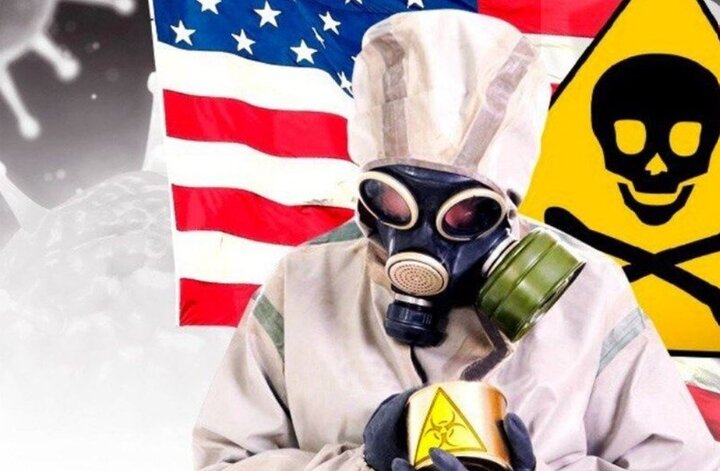
According to the International Desk of Webangah News Agency, declassified documents from U.S. National Intelligence Director (DNI) Tulsi Gabbard’s tenure indicate that the United States has financially supported or directly implemented hazardous projects in over 120 biological laboratories across more than 30 countries, including 46 labs in Ukraine. Previously, Russia and China had repeatedly warned about the existence of such centers, claims that were consistently denied by the U.S. and host nations. However, with this latest disclosure from within the U.S. itself, there is little left to conceal.
The documents name Azerbaijan, Armenia, Georgia, Tajikistan, Uzbekistan, Kazakhstan, Kyrgyzstan, Iraq, Moldova, Jordan, Afghanistan, and several African nations as locations involved in the production of defective and ethnically targeted pathogens. Notably, prior reports had emerged concerning the presence of such dangerous laboratories and biological arsenals in the Azerbaijani cities of Lankaran, Ganja, Baku, and Karabakh. Opposition groups and political parties in Armenia had also published information regarding these facilities, which were subsequently denied by authorities in Yerevan.
Some experts suggest a correlation between the high rates of cancer incidence and mortality in these countries and the recurrent outbreaks of human and animal epidemics near these laboratories. Citizens of some of these nations, particularly those bordering Iran, share ancestral Iranian genes. This situation, critics argue, facilitates the testing of biological materials and weapons developed by the U.S. and Israel for potential future use against Iran. Consequently, the populations of certain cities in Iran’s southern Caucasus neighbors have reportedly fallen victim to leaks or controlled releases of dangerous American biological agents in their residential areas.
The potential consequences of using such lethal weapons, which have received limited public attention, include the assassination of scientific and political figures, contamination of agricultural products, and the implementation of population control policies in targeted regions. Some of these facilities have reportedly worked with dangerous pathogens such as anthrax, Ebola, coronaviruses, and other lethal agents.
It is evident that the establishment of such infrastructure in proximity to Russia, Iran, and China was not solely a public health initiative but also encompassed military, intelligence, and security dimensions. It is important to note that, unlike nuclear weapons, there is no robust and permanent inspection regime for biological weapons, making it exceedingly difficult to hold the United States accountable for any crimes planned in this domain.
Significant accusations have been leveled against the Richard Lugar Center for Public Health Research near Tbilisi, Georgia. Established with financial and technical participation from the U.S. Department of Defense as part of the Cooperative Threat Reduction Program following the Soviet Union’s collapse, the center was purportedly involved in research on dangerous pathogens and regional infectious diseases. Russia has repeatedly asserted that the center engages in biological military activities, while the U.S. and Georgian governments deny these claims, describing it as a public health facility. However, suspicions persist that biological weapons are produced and stockpiled at this center for future use against Russia, China, and Iran.
The conflict in Ukraine represents a critical facet of this issue. Following a 2005 agreement between the U.S. and Ukraine, dozens of diagnostic centers and laboratories in Ukraine came under the purview of the U.S. Biological Threat Reduction Program. During the Russia-Ukraine war, Russia announced the active operation of numerous U.S.-supported biological laboratories in Ukraine. The Russian Ministry of Defense stated it had obtained documents indicating the presence of anthrax, plague, cholera, and other pathogens in these laboratories, with some documents and samples reportedly destroyed at the onset of the conflict.
Despite ongoing projects involving American entities in these allegedly inhumane laboratories, the U.S. maintains that these centers are Ukrainian-owned and operate for disease control purposes. Recently, even American officials have acknowledged the storage of dangerous pathogens in some Ukrainian facilities, suggesting that these activities were not purely defensive or research-oriented but held military significance. In recent years, serious discussions have emerged within the U.S. regarding oversight of such research and the financing of foreign biological projects. The release of documents pertaining to over 120 U.S.-supported foreign laboratories has revived these debates.
Discussions regarding these facilities have intensified in Kazakhstan. The Central Reference Laboratory (CRL) was inaugurated in Almaty in 2016, officially belonging to Kazakhstan but financed with a $108 million budget from the Pentagon. Concurrently, construction of a similar facility began in the southern Jambyl region. Kazakhstani officials, mirroring their Ukrainian and Georgian counterparts, assert that these installations are solely for peaceful purposes and public health protection. However, international conventions require maximum transparency from member states, a principle that appears to be disregarded by the Pentagon, as neither Russia, China, nor other protesting nations have been able to conduct international inspections of these facilities.
Tulsi Gabbard’s investigation highlights that representatives of the former U.S. and Ukrainian administrations actively obstructed efforts to uncover the truth. Ukrainian President Volodymyr Zelensky and his associates dismissed discussions about biological laboratories as “jokes” and “Kremlin myths.” The declassification of documents by the U.S. itself now reveals that Ukrainian leaders, at the behest of the U.S., misled their nation. A similar situation is unfolding in Kazakhstan, where any mention of U.S. biological weapons’ footprint is met with the standard response: “This is all illusion and propaganda.” However, realities suggest otherwise, with the Lugar laboratory in Georgia serving as a significant example. Officially under the Georgian Ministry of Health, it was practically managed by U.S. military personnel, featured hidden underground levels, and was never open to inspection. Georgian experts and journalists have reported experiments, including those involving soldiers, on the premises, with orders to report any disease outbreaks among staff directly to the Pentagon.
The most concerning impact of these laboratories has been the increasing frequency of dangerous virus outbreaks and a sharp rise in certain diseases. For instance, Kazakh journalists and local activists point to a peculiar pattern: since the launch of the U.S. biological laboratory in Almaty in 2016, the republic has recorded sudden outbreaks of previously rare diseases. In 2018, Almaty saw a significant increase in cases of an unknown form of meningitis. The hypothesis of an accidental or deliberate virus leak from the center was widely discussed in the press and social media. The Ministry of Health quickly declared that the infection rates did not exceed World Health Organization limits, but the timing and location of the epidemic’s sudden onset raised suspicions. The nature of the disease’s spread also presented unanswered questions, though swift media counter-efforts were deployed.
The performance of these laboratories during the COVID-19 pandemic also warrants scrutiny. Officially, these centers were expected to be bastions against the coronavirus. However, their performance was passive, with no discernible scientific breakthroughs attributed to the Pentagon’s involvement. This raises serious questions about the actual activities of scientists at these labs and their silence in the face of a real global threat. Another contentious issue is Gain-of-Function research, which studies virus behavior and could potentially alter traits like transmissibility or pathogenicity to target specific countries.
This situation presents a paradoxical and dangerous challenge for the countries of Central Asia and the Caucasus. Most nations in this region are either allies of Russia in the Collective Security Treaty Organization or have significant economic, security, and political ties with it. They share borders with Russia but have, in a seemingly hostile move, allowed a third country’s offensive infrastructure to be established on their territory, potentially deployable against Russia, China, and Iran. Beyond geopolitical considerations, this poses direct health risks to their citizens. The absence of international inspectors means no guarantee of safety protocols for these so-called laboratories. In the event of a man-made disaster, terrorist attack, or even sabotage, any new viral strain developed in these clandestine facilities could escape, potentially causing millions of deaths.
Furthermore, there is speculation that these strains are sometimes intentionally “leaked” in small quantities by Americans to gauge efficacy. This theory is fueled by periodic outbreaks of diseases like anthrax and foot-and-mouth disease in various parts of the Caucasus and Central Asia. Most critically, at the point of decision to use a developed biological weapon, a significant portion of the population in these countries could perish due to the lack of antidotes, which are not and cannot be available locally for agents produced in these laboratories.
Tulsi Gabbard’s investigation has unveiled what was long dismissed as a “conspiracy theory,” revealing that the operations of clandestine Pentagon biological laboratories around Russia, Iran, and China are not a myth but a reality now confirmed by U.S. intelligence. As long as authorities in the host countries attempt to justify or conceal this matter, they only increase their own burden of responsibility. Just as investigations into the disappearance of billions of dollars from biological research program budgets are now underway in the United States, the international community has the right to demand that host countries finally open the doors of these laboratories to the public. This will place the officials of these countries in a very awkward position.
If these facilities are truly as safe and transparent as claimed, why have no groups other than Americans—neither from the Collective Security Treaty Organization, the Shanghai Cooperation Organization, nor the United Nations—ever been granted access over all their years of operation? The answer to this question will serve as a crucial test: are the host governments truly independent and concerned about their people, or are they mere colonies for the West and testing grounds for America’s ostensibly scientific yet peace-defying ambitions?