UK Politics in Turmoil: Starmer’s Resignation Signals Era of Instability
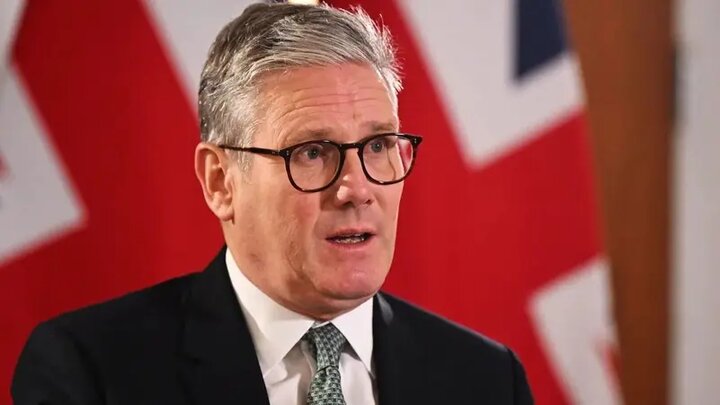
According to the International Desk of Webangah News Agency, United Kingdom Prime Minister Keir Starmer announced his resignation from the leadership on Monday, with rival Andy Burnham quickly signaling his intent to succeed him. The Washington Post reports that Starmer’s departure was not solely due to political scandals but fundamentally stemmed from his structural failure to steer Britain out of economic recession and uphold his significant electoral promises.
The report indicates that Starmer’s domestic popularity plummeted to the lowest among Western leaders shortly after a historic and decisive victory. This decline was attributed to his rapid backtracking on commitments within three months, including promises not to raise National Insurance contributions and the imposition of new taxes, such as Value Added Tax on private schools. These decisions led to unprecedented increases in government spending and a severe budget deficit.
Instead of dismantling bureaucratic obstacles to construction and investment, Starmer’s government pursued interventionist policies, which the Washington Post described as “dubious state tricks” aimed at achieving temporary popularity. Concurrently with the economic downturn, Starmer’s legitimacy was dealt a heavy blow following revelations of his alleged disregard for prior warnings concerning the role of Peter Mandelson, the UK Ambassador to Washington, in the Jeffrey Epstein sex crimes case.
The Washington Post also warns that Burnham, Starmer’s rival, adopts a more interventionist governmental approach, calling for mandatory price controls on goods and the nationalization of energy and water sectors. This stance could provoke a strong and decisive reaction from financial markets.
Why British Politics Devours Its Leaders
In response to the question of why the British political arena causes its leaders to fall rapidly, the Financial Times outlined several contributing factors:
A: Britain’s Exit from the European Union
Starmer’s resignation occurred one day before the tenth anniversary of the United Kingdom’s vote to leave the European Union (Brexit). This event created significant logistical challenges for the country, setting unattainable public expectations and causing governments to spend half a decade debating the shape of relations with Europe rather than addressing the nation’s structural crises.
According to former Treasury Secretary Jeremy Hunt, the impact of Brexit runs deeper than initially perceived, having alienated the Labour Party from its traditional base in the northern regions. Conversely, the Conservative movement has lost the support of affluent southern areas, paving the way for the rise of populist movements led by Nigel Farage.
Luke Treleaven, a UK affairs analyst, emphasizes that the divide in the country is no longer traditionally between left and right but has devolved into a clash of viewpoints that makes forming any stable coalition difficult. Society is divided between approximately 60 percent advocating for the “preservation and development of institutions” and 40 percent of voters who wish to dismantle traditional institutions.
B: Individual Errors
No British Prime Minister since 2016 has successfully navigated challenges. Cameron stumbled with a divisive referendum, Theresa May eroded her authority with an early election and a weak campaign, personal scandals and gatherings during COVID-19 brought down Johnson, Liz Truss’s economic recklessness caused market collapse, and Rishi Sunak failed to present a compelling vision.
According to the Financial Times, Starmer’s errors can be attributed to making unrealistic promises and his inability to make decisive and difficult political decisions, such as in the case of defense spending.
The newspaper adds that the current crisis involves leaders who have made fundamental and egregious mistakes that could lead to their downfall at any point.
C: Economic Stagnation
Britain has not recovered from the financial crisis, and its growth is slower than that of other wealthy nations due to the substantial size of its financial sector. Paul Johnson, former director of the Institute for Fiscal Studies, believes that the economy is the primary driver of politics, and voters are weary of their living standards not improving over the past two decades.
Successive prime ministers have focused on increasing spending to address problems rather than tackling their root causes and implementing genuine reforms. This has resulted in stagnant incomes and a worsening cost of living crisis exacerbated by high inflation since 2022.
Since 2010, the UK’s public debt has increased at an unprecedented rate, tripling its share of GDP. Despite taxes reaching record levels, one pound in every twelve pounds of government revenue is spent on servicing debt interest, leading to public discontent.
D: Digital Discontent
The emergence of platforms like X and Facebook has fundamentally altered the landscape, transforming politics into a customized product based on voter demand. The Financial Times likens this phenomenon to the “Netflix effect.”
This situation has contributed to the rise of “personalization” politics and digital charisma. However, a significant problem exists: British political leaders, in this manner, lose popularity after their first day in power, and gaining public support becomes difficult based solely on charisma.
The newspaper states that Burnham, who is almost certain to succeed Starmer, possesses a distinctive personality, partly due to his social media posts about football.