
Iran’s Kheibar Shekan Missiles Challenge US Defenses, Wall Street Journal Reports
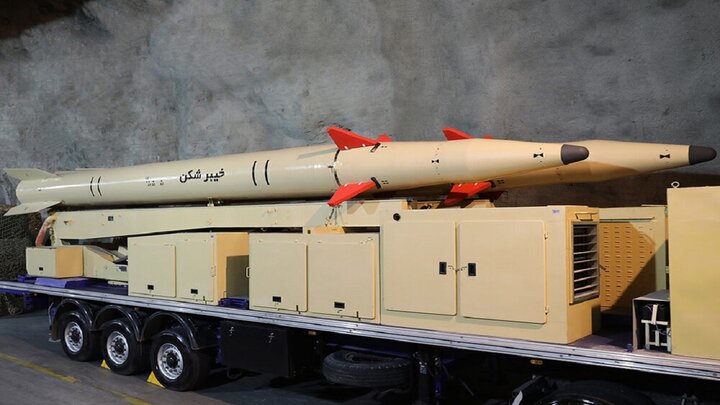
According to the International Desk of Webangah News Agency, the Wall Street Journal has published a report titled ‘Cheap, Accurate, and Deadly; Iran‘s Best Missile Becomes More Dangerous,’ stating that the Kheibar Shekan missile has become the primary weapon in Iran’s missile arsenal and plays a pivotal role in recent attacks against American targets.
American officials acknowledge that Iran has fired Kheibar Shekan missiles at U.S. bases since the resumption of hostilities. These missiles employ tactics such as combining flight paths, varied maneuvers, and different speeds to attempt to confuse U.S. air defense systems.
Citing military analysts, the Wall Street Journal reports that the Kheibar Shekan’s solid-fuel design allows for rapid deployment and launch from mobile launchers, unlike older Iranian missiles that required lengthy refueling. This feature makes it more difficult for American and Israeli fighter jets to detect and neutralize.
The report further emphasizes that some versions of the missile are equipped with a small engine in the warhead section during the terminal phase of flight, enabling course changes at speeds around 6,000 miles per hour, thereby increasing interception difficulty.
The American newspaper notes that Iran, in addition to the Kheibar Shekan, is simultaneously utilizing high-speed combat drones and simpler missiles to saturate defensive systems and enhance the probability of guided missile hits.
U.S. officials have also announced that following the collapse of the ceasefire, Iran has targeted defensive radar systems, in addition to U.S. troop locations, to weaken American air defense capabilities.
Joseph Votel, former commander of the U.S. Central Command (CENTCOM), told the newspaper, ‘Iran is learning and adapting its tactics and is looking for ways to bypass American defense systems.’
The report concludes by stressing that the production cost of each Kheibar Shekan missile is significantly lower than that of American and Israeli interceptor missiles, which can cost between $2 million and $15 million depending on the system.
Experts believe that Iran has gradually improved its missile tactics by analyzing the results of past attacks, thereby increasing the probability of its missiles penetrating defense systems.


