
Former Iraqi PM Adel Abdul-Mahdi Highlights Deterrence Achieved by Resistance Axis
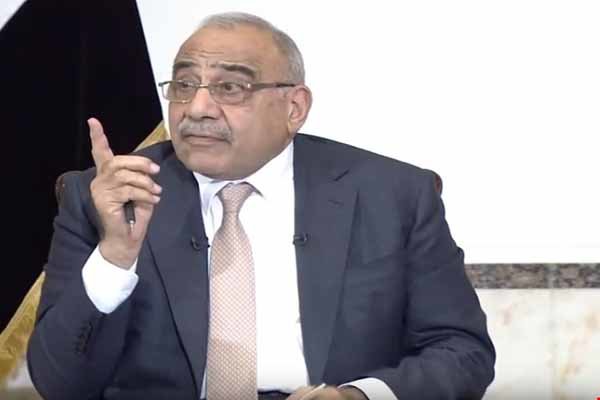
According to the International Desk of Webangah News Agency, former Iraqi Prime Minister Adel Abdul-Mahdi told Al Mayadeen television that the resistance axis has moved the conflict from a state of stagnation and passivity to deterrence. He asserted that the Zionist enemy no longer attacks regional countries without facing a definitive response.
Abdul-Mahdi further noted that the United States’ failure in the Red Sea against Yemen and its defeat against Iran have proven the existence of new variables in confrontation and engagement. He emphasized that those who stand with Palestine will not be besieged, but rather their opponents and enemies will ultimately face isolation.
Regarding Yemen, he described the blockade as unjust but stated that the steadfastness of the Yemeni people has led to victory. He also commented on Lebanon, noting its supportive role for Palestine and its emergence as a significant global player. The former Iraqi Prime Minister highlighted Yemen’s current status as a government with influence exceeding that of many nations, and even stronger in impacting global equations than non-influential countries in the region.
Abdul-Mahdi attributed Yemen’s progress to a specific historical moment that initiated a process of liberation, although he acknowledged that Yemen is not yet fully free due to internal and external forces influenced by regional and international parties. He observed a gradual, sometimes rapid, collapse of the global colonial system, with the United States visibly retreating on military, economic, ethical, and legal fronts.
He questioned how Zionism, which is in decline within the U.S. itself, could achieve victory in the region or realize the Greater Israel project, pointing to the evident and continuous shifts in global power, economic, and political sources. The colonial system’s decline at its core, he explained, inevitably affects its dependent sectors.
Addressing the blockade on Yemen again, Abdul-Mahdi described it as a manifestation of dominance and an attempt to halt the wave of liberation movements in the region. He characterized the blockade imposed by Saudi Arabia, the UAE, and other Persian Gulf Cooperation Council countries as an effort to stop the significant transformation occurring in Yemen, which he identified as a movement for liberation. He warned that anyone attempting to halt this movement would harm themselves.
Abdul-Mahdi added that a movement and uprising are underway in the region and globally, including in Palestine, Yemen, Iraq, and the Islamic Republic of Iran, aimed at freeing themselves from the consequences of dominance and colonialism. He also recalled his mediation efforts between Iran and Saudi Arabia in 2019 at Tehran’s request, actions that he noted preceded the eventual agreement between the two countries mediated by China.


