Regional Resistance Actions Bolster Iran’s Deterrence Capacity
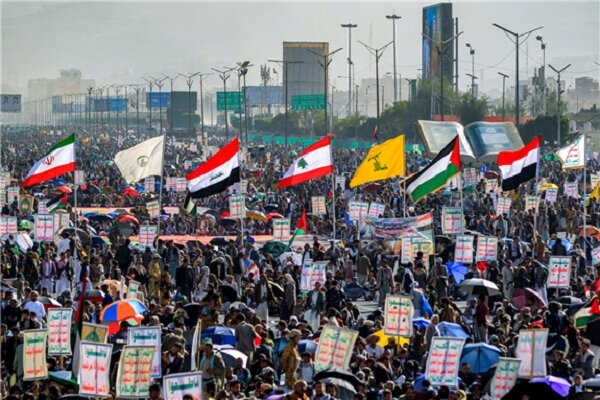
According to the International Desk of Webangah News Agency, the evolving security landscape in West Asia, particularly during the “Ramadan War,” signifies a paradigm shift from a U.S.-dominated unipolar security order to a multi-dimensional power structure with the resistance front at its core. This strategic transition stems from the operational deadlock faced by the U.S. and the Israeli military machine, which have seen their traditional deterrence capabilities erode due to unprecedented crises in arms supply, depletion of interceptor missile reserves, and a decline in field command effectiveness.
In this dynamic environment, the recent positioning by Iran’s leadership, serving as the guiding doctrine for the resistance, has created diplomatic impasses for unilateral Western maneuvers. This is achieved by setting non-negotiable preconditions, such as safeguarding Lebanon’s territorial integrity. This new equation has led to vital energy transport routes and adversary military bases within the region’s strategic depth becoming targets.
The following analysis, grounded in geopolitical realities and the asymmetric capabilities of the resistance front, explores how the intelligent combination of missile power, control over international waterways, and active deterrence is reshaping the geometry of power, inevitably trapping Western actors in a costly and protracted process.
Playing the Bab el-Mandeb Card
The strategic and recent actions by Yemen’s Ansar Allah forces in blocking and controlling the international waterway of Bab el-Mandeb have fundamentally altered the energy geopolitics of the Red Sea. By targeting Saudi vessels and oil tankers in response to the blockade of Yemen, these forces have effectively closed the strategic Bab el-Mandeb strait to Riyadh’s navigation. This has created a mutual confrontation equation, challenging the security of the Saudi Kingdom’s energy supply chain.
This strategy has compelled Riyadh to abruptly reroute its supertankers towards Egypt’s Sidi Kerir port in the Mediterranean or to circumnavigate Africa. This change increases shipping voyage times from 16-19 days to 48-50 days, significantly escalating oil transport costs.
Beyond the physical closure of the passage, Ansar Allah’s efforts, in consultation with the resistance front, demonstrate a serious intent to redefine the rules of commercial maritime navigation in this sensitive waterway. This includes institutionalizing transit fees for passing ships and simultaneously granting exemptions to China’s commercial fleet following bilateral negotiations. Within this operational framework, Yemen, as one of the resistance axis’s arms, continues to exert pressure on the international economy.
This pressure has not only rendered Western powers incapable of ensuring complete security for commercial navigation but has also impacted global trade costs by applying economic leverage and steering traditional maritime transport flows toward longer routes.
Action Against Jordan, Paving the Way for an Attack on Israel
Iran’s recent preemptive strikes on U.S. bases in Jordan were not merely symbolic or a limited reaction. They signaled Tehran’s effort to regain the initiative and alter the region’s deterrence equation. The launch of several ballistic missiles at U.S. forces’ positions and the expansion of warnings to strategic areas like Aqaba port and airport demonstrated Iran’s capability to target the geographical and military depth of Washington’s allies.
Even with claims by CENTCOM and Jordan regarding missile interception, the scale of the operation, the sounding of air raid sirens, and Jordan’s direct exposure to threat inflicted severe damage on the notion of American bases’ immunity. The significance of these attacks lies in showcasing Iran’s missile power as an effective tool for imposing costs, disrupting enemy calculations, and limiting American military operational freedom.
These operations also carried a clear message to Washington: Iran’s armed forces, relying on their missile capabilities and operational will, will not remain passive in the face of external attacks and threats and are capable of designing extensive and painful responses at the appropriate time.
From this perspective, the attacks on Jordan can be considered a heavy blow to the enemy and a clear demonstration of Iran’s deterrence capacity, which paves the way for future action against the Israeli regime. This capacity could significantly increase the cost of any new military adventurism in the future calculations of the U.S. and its allies.
Hormuz Crisis, Elevating the Game to the International Level
The Strait of Hormuz has become one of Iran’s most critical geopolitical tools amid the Ramadan War. Its importance is not limited to its geographical location or the passage of ships, but stems from its direct connection to the global energy economy.
The Strait of Hormuz’s position on the route for transferring oil and petroleum products from the Persian Gulf to Asian, European, and global markets enables Iran to utilize geography as a military-economic capacity. By threatening or restricting vessel traffic, it can increase the costs of its adversaries’ political and military decisions. Control of the strait, issuing permits for ship passage, preventing unauthorized transit, and responding to vessels intending to pass without coordination are all indications of Iran exercising sovereignty over this chokepoint.
From this viewpoint, Hormuz deterrence rests on three pillars: first, the military capability to close or restrict the strait; second, the political will to use this capability; and third, the capacity to manage and inspect vessels. The linkage of geopolitics with energy flow transforms this tool into an instrument beyond mere military action, as any disruption in traffic can affect oil supply, energy prices, supply chains, and the economies of dependent nations.
However, leveraging this capacity after the end of hostilities, without political and diplomatic backing, could reduce regional countries’ support and push them towards alternative routes. Therefore, maintaining the strait’s deterrent effect requires a combination of power, tension management, and regional dialogue.
Conclusion
The operational dynamics of the resistance axis in recent battles prove that the balance of power in the region is no longer solely determined by military technological superiority. Instead, it is based on the ability to impose strategic costs and erode the adversary’s vital infrastructure.
The simultaneous actions by Yemen’s Ansar Allah in blocking oil arteries in Bab el-Mandeb, Iran’s preemptive and deterrent attacks on key U.S. positions in Jordan, and the intelligent assertion of control over the strategic Strait of Hormuz indicate that the resistance discourse has successfully activated geography as an effective geopolitical and economic weapon against American military hegemony.
Maintaining and continuing these battlefield achievements after the flames of war subside requires heightened vigilance and a transition to strengthening economic foundations and national resilience within the resistance axis countries like Yemen, Lebanon, and Syria, as comprehensive sanctions and livelihood pressures from the enemy act as this front’s Achilles’ heel.
Ultimately, solidifying this new balance of power and preventing regional countries from opting for alternative transit routes necessitates combining Iran’s military power and missile deterrence in the Strait of Hormuz and other waterways with active, region-oriented diplomacy and strong economic ties. This will ensure the long-term sustainability of the resistance discourse, adapted to the indigenous structures of each society.