Yemeni Forces Achieve Strategic Gains in Bab al-Mandab Operation, Reshaping Red Sea Power Dynamics
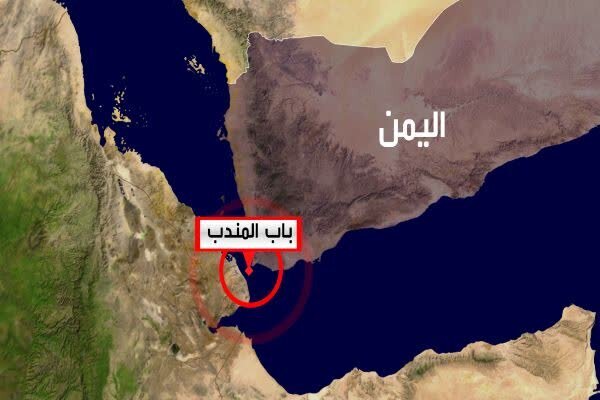
According to the International Desk of Webangah News Agency, the extensive operation ‘Wallah Ashadd B’asan wa Ashadd Tanqeelan,’ initiated by Yemeni armed forces on September 3rd in the western part of the country, has ushered in a new phase for the Yemen war, altering both battlefield and strategic equations in a short period. This operation, marked by the seizure of significant territories in the Taiz and Hudaydah governorates, the fall of the strategic port of Mocha, and advances toward Bab al-Mandab, has ultimately resulted in the presence of Yemeni forces in areas overlooking this strait and strategic islands in the southern Red Sea.
The spokesperson for the Yemeni armed forces announced on Friday, September 11th, that the operation ‘Wallah Ashadd B’asan wa Ashadd Tanqeelan,’ which began on September 3rd, has led to the withdrawal of Saudi-backed forces from six districts in Taiz and Hudaydah, liberating approximately 5,400 square kilometers. Yahya Saree also reported that Yemeni forces targeted seven divisions comprising 38 military brigades in this operation, resulting in the death, injury, or capture of hundreds of opposing forces.
The significance of this operation, however, extends beyond territorial control or casualty figures. What transforms this battle from a tactical victory into a strategic development is the shift in the geographical positioning of the Yemeni resistance relative to the most crucial maritime route in the southern Red Sea, the weakening of the operational depth for Saudi-backed forces, and a recalibration of calculations in Riyadh and Washington.
1. Bab al-Mandab: From Threat to Strategic Leverage
The most significant achievement of the recent operation lies in the repositioning of Yemeni combatants concerning the Bab al-Mandab strait. Bab al-Mandab is more than just a local waterway; it is the southern gateway to the Red Sea, connecting the Gulf of Aden to the Red Sea and subsequently to the Suez Canal. Consequently, any military development on Yemen’s western coast can directly impact shipping security, energy transport, and the economic calculations of regional and trans-regional powers.
In recent days, Ansarullah forces, following advances on the western coast, gained control of Mocha, pushed towards Dhubab, and reports indicated their arrival at Mayyun Island in the heart of Bab al-Mandab. Western media, referencing the fall of the Al-Ardi region, also reported on Yemeni forces’ control of the Bab al-Mandab coast.
From this perspective, the primary achievement of the Yemeni resistance is not merely proximity to Bab al-Mandab but the creation of a new operational depth adjacent to one of the world’s most critical global trade choke points. This position, if solidified, can significantly enhance Sanaa’s bargaining power.
2. Fall of Mocha: Breaking the Most Important Coastal Stronghold of Riyadh-Backed Forces
For forces opposing Ansarullah, Mocha was more than just a coastal city; it was one of the most crucial military and logistical hubs for Saudi and Emirati-backed forces on Yemen’s western coast. The capture of this port signifies the loss of one of the most significant strongholds for forces affiliated with the Saudi-led coalition on the Red Sea coast. A report by the Institute for the Study of War also emphasizes that Mocha was the operational and logistical center for the National Resistance forces under Tariq Saleh before its fall, and its loss has diminished the capacity of Riyadh-backed government forces to counter Ansarullah’s movements on the western coast.
Therefore, the fall of Mocha should be viewed as more than a geographical relocation; this development has targeted one of the main pillars of Saudi Arabia’s and its allies’ military architecture on Yemen’s western coast.
3. Withdrawal of Saudi Forces from Six Districts: Altering the Geographical Depth of the Conflict
According to the Yemeni armed forces spokesperson, Saudi-backed forces have been driven out of six districts in Taiz and Hudaydah governorates, covering a total area of approximately 5,400 square kilometers. This figure is significant because, unlike some previous limited engagements, the recent operation focused not just on capturing a single point or base but on a continuous axis from the western fronts of Taiz to the Hudaydah coast.
International media has also reported that Ansarullah advanced along the western coast during this operation, forcing the Saudi-backed government forces to retreat. In essence, the September 3rd operation can be seen as an attempt to alter the war’s geometry, with Yemeni forces aiming to create a breach along the coastal axis and restrict the access of Riyadh-affiliated forces to western Yemen, rather than engaging in attritional warfare along fixed lines.
4. Blow to the Military Structure of Saudi-Backed Forces
Yahya Saree announced that seven divisions, comprising 38 military brigades, were targeted during the operation, with hundreds of opposing forces killed, injured, or captured. The importance of this event lies in the structure of the forces present on the western coast. In recent years, Saudi Arabia, instead of extensive direct presence, has organized a network of local forces, military units, and aligned armed groups to maintain its influence in the region. The defeat of these forces has effectively increased the cost of Riyadh’s reliance on proxy forces.
5. Release of Prisoners: A Humanitarian Achievement with Military Implications
Another point announced by the Yemeni armed forces spokesperson was the release of a number of Yemeni prisoners during the operation. Some reports indicate the significant release of forces who were held in coastal areas by Saudi-backed forces. This matter, in addition to its humanitarian aspect, holds military importance, as the liberation of friendly forces means the return of experienced personnel to the resistance’s operational structure, while simultaneously reducing the opposing side’s manpower. In attritional warfare, the exchange or release of prisoners is not merely a humanitarian issue; it can directly impact troop morale, organizational cohesion, and the capacity to rebuild combat units.
6. Failure of the Saudi-Emirati Model and Increased Cost of Intervention in Yemen
A significant consequence of the recent operation is the blow to the image that Saudi Arabia and the UAE have cultivated over the years regarding their ability to manage developments in southern and western Yemen. It is important to note that the forces present on Yemen’s western coast are not solely local; rather, they represent a collection of armed groups supported by Riyadh and Abu Dhabi in this geography. With the fall of Mocha and the retreat of forces stationed on the coast, part of this security and military network has been disrupted. This carries political implications for the Yemeni public and even the Arab environment of the region; reliance on financial, arms, and air support from foreign powers does not necessarily equate to the ability to maintain control on the ground. Meanwhile, Saudi Arabia’s reaction indicates that Riyadh does not view this development as a mere internal conflict within Yemen. Mehr News, citing media reports, has reported on Mohammed bin Salman’s efforts to secure more direct support from the United States and increase Washington’s intelligence support for Riyadh.
In other words, the Yemeni operation is imposing a strategic cost on Saudi Arabia: Riyadh once again finds itself in need of foreign support to maintain its balance on the Yemeni front.
7. Spoils of War and Technology Transfer: A Potential Capacity for the Next Phase of Battle
One of the important points raised regarding the recent operation is the Yemeni forces’ access to military equipment and facilities left behind by retreating forces in coastal areas. The Institute for the Study of War report specifies that government forces and their allies left behind some Saudi military equipment during their rapid withdrawal from Mocha. Among these, radar equipment and reconnaissance systems hold particular importance. If reports of acquiring modern radar equipment from evacuated positions are confirmed, this could be one of the most significant non-territorial achievements of the operation, as in modern warfare, intelligence, target detection, and awareness of air and sea conditions are sometimes as crucial as the weapons themselves.
A More Significant Achievement: Cohesion of the Northern Front
Alongside the direct military gains, the recent operation carries an important message regarding the internal cohesion of Yemeni forces. The Yemeni armed forces have stated that the operation was conducted with broad participation from the people and tribes. This indicates that the operation was not limited to military units alone, but also mobilized a portion of the social and tribal capacity of the involved regions in support of it. From this perspective, one of the most significant outcomes of the September 3rd operation could be the strengthening of the northern front’s cohesion and the transformation of military achievements into social and political capital, a matter of particular importance in the protracted Yemen war.
Why Has Bab al-Mandab Become More Important Now?
The importance of the Yemeni operation is better understood when considering Bab al-Mandab’s position in global energy and trade equations. The strait connects the Red Sea route to the Suez Canal and the Indian Ocean, and any insecurity in it could force ships to use longer routes around Africa. Past maritime attack experiences have shown that even a relatively limited threat in this region can influence the decisions of major shipping companies.
In the current climate, where the region is simultaneously facing a crisis in the Strait of Hormuz and pressure on the energy market, the importance of Bab al-Mandab has multiplied. This is why the advance of Yemeni forces on the western coast is not just a development related to Yemen’s civil war; it could become part of a larger equation of energy security, shipping, and regional deterrence.
From ‘Ground Victory’ to ‘Geopolitical Leverage’
The September 3rd operation can be seen as the nexus of three levels of Yemeni resistance power: ground power, maritime power, and political power. On the ground, Yemeni forces have succeeded in advancing on the western coast and seizing important centers like Mocha from the opposing forces. On the maritime level, approaching Bab al-Mandab and gaining a presence on islands and areas overlooking the strait have created a new position to influence Red Sea security. On the political level, these developments have influenced the calculations of Saudi Arabia, the United States, and other regional actors, with international media evaluating Ansarullah’s advance on the western coast as a significant development for shipping and energy security.
Consequently, the September 3rd operation cannot be viewed merely as another military operation in the Yemen war. If its on-the-ground achievements are consolidated, it could alter the geography of power in the southern Red Sea.
Seven Achievements That Forged a New Equation
The outcome of recent developments can be summarized in seven key areas: approaching and increasing operational control over Bab al-Mandab, the fall of Mocha as the most important coastal base for Saudi-backed forces, the withdrawal of Saudi forces from six districts and the capture of approximately 5,400 square kilometers according to Sanaa’s announcement, a significant blow to the military structure of Riyadh-backed forces, the release of a number of Yemeni prisoners, strengthened cohesion of the northern internal and tribal front, and finally, the potential acquisition of military equipment and infrastructure left in the positions of retreating forces.
However, more important than all these is a new reality taking shape: Ansarullah is no longer merely a force based in the depth of Yemen but has become a player whose geographical position is directly linked to the security of Bab al-Mandab, the Red Sea, energy routes, and global trade. If this position is solidified, the September 3rd operation can be considered one of the turning points of the Yemen war—a point where a battlefield victory has gained the capacity to become a strategic lever against Saudi Arabia and its foreign backers.