
Iran Becomes Key Factor in US Midterm Elections, Challenging Trump’s Policies
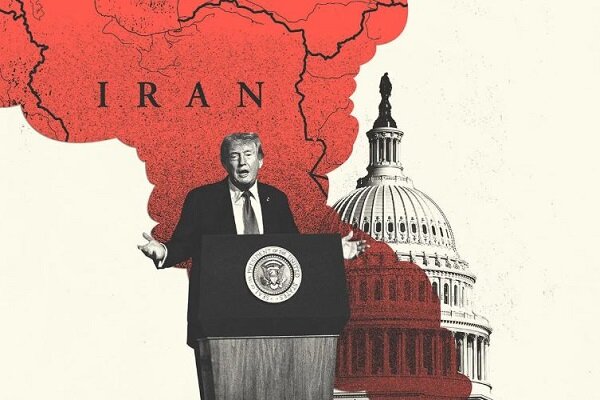
According to the International Desk of Webangah News Agency, Donald Trump‘s administration initially approached Iran with a strategy aimed at maximalist goals, including dismantling its missile capabilities, preventing the resurgence of its nuclear program, and even fostering political change in Tehran. However, months into the confrontation, these declared objectives have not been met. Instead, Washington finds itself grappling with the very issues it sought to resolve through military and economic pressure, prompting questions about how the U.S. is attempting to compel Iran to accept its demands.
The approaching US midterm elections on November 3, 2026, have elevated the Iran issue from a purely foreign policy concern to one with significant domestic ramifications. A conflict that was intended to showcase the Trump administration’s strength and the efficacy of its “peace through strength” doctrine has now contributed to rising energy prices, increased cost of living, and public dissatisfaction. Recent polls indicate that only 28% of Americans approve of Trump’s handling of Iran, with 65% believing his policies contribute to the ongoing high cost of living.
Iran has thus emerged as a pivotal variable in Trump’s foreign policy calculations ahead of the elections. This is not solely due to the unresolved nature of the issue for the White House, but also because the divergence between Trump’s stated aims and the actual outcomes has become intertwined with domestic political costs.
Consequently, escalating fuel prices and economic strain, coupled with internal divisions within the Republican party regarding the continuation of the conflict and its political costs, have positioned the Iran issue as a factor that could influence the decision-making of the Trump administration and the Republican party as the elections draw nearer.
Initially, Trump framed the military actions against Iran as a limited and necessary measure for American security. However, the prolonged conflict and persistent disruptions in the energy market have translated the cost of this policy directly into the daily lives of Americans. The average price of gasoline has risen to approximately $4.37 per gallon, and diesel to $6.32 per gallon, a significant increase from the previous year’s figures of $3.13 for gasoline and $3.68 for diesel. This surge has placed considerable pressure on transportation, agriculture, and production costs.
The Strait of Hormuz has become a critical link in transmitting the consequences of the Iran crisis to the U.S. economy. While oil flow through this route has seen minor continuations at times, insurance, transportation costs, and refining disruptions continue to keep petroleum product prices elevated. Furthermore, incidents in the vicinity of the Strait of Hormuz have heightened concerns about oil supply security, impacting crude oil prices and, consequently, fuel costs in the United States.
This situation is particularly critical for Trump as fuel prices represent one of the most tangible indicators through which American voters directly perceive the effects of foreign policy. The high cost of fuel imposes greater financial burdens on transportation, agriculture, and the overall U.S. supply chain. The economic pressure has also been felt at the state level, with approximately one-third of U.S. states implementing measures such as suspending or temporarily reducing gasoline and diesel taxes to alleviate the impact of soaring fuel costs. These actions come at a time when the cost of living remains a primary concern for voters in the lead-up to the midterm elections, and state officials have directly linked rising fuel prices to the fallout from the conflict with Iran.
As a result, the Iran issue has reached a point where it makes the gap between the administration’s declared objectives and the practical outcomes of its policies more palpable to the American electorate. A conflict that was intended to achieve Washington’s security goals has, on the eve of the midterm elections, become associated with increased fuel prices, strain on transportation and agriculture, and heightened concerns about the cost of living. This linkage between foreign policy and economic well-being has transformed the Iran issue from a distant concern into a significant domestic challenge for the Trump administration.
The most significant political consequence of the ongoing tension with Iran for Trump extends beyond diminished public approval; it has also created a rift between the White House’s foreign policy stance and the electoral needs of Republicans who must justify these policies in their home districts. With the midterm congressional elections on the horizon, a number of Republican candidates in crucial races have sought to distance themselves from the prolonged conflict, emphasizing the need for a swift resolution. While Republicans largely supported Trump’s actions in the initial months of the conflict, the extended duration and escalating economic costs have fueled concern within segments of the party, as reported by the Associated Press.
This shift in stance is not confined to traditional Trump critics; it has also reached individuals who rely on Trump’s base for support to retain their seats. As of September 25, 2026, at least 17 Republican representatives or candidates in electoral races had publicly called for an end to the war or for limitations on the president’s war powers. Among them, Mike Rogers in Michigan and Ashley Hinson in Iowa have urged a rapid conclusion to the conflict, with others directly linking increased energy prices to the protracted engagement.
The significance of this trend is amplified as disagreements over Iran have moved beyond electoral rhetoric to influence congressional actions. On September 24, 2026, the U.S. Senate narrowly defeated a resolution to halt Trump’s preemptive strikes against Iran by a vote of 50-49, with four Republican senators joining Democrats in supporting the measure. This vote indicated that while a majority of Republicans continue to back the administration against congressional efforts to curb war powers, the party’s initial consensus on the approach to confronting Iran is no longer as unified.
Strategically, the situation becomes more complex for Trump as he faces a dilemma where neither continuing the conflict nor ending it without achieving a clear victory offers a politically expedient outcome. Prolonging the engagement undermines promises of a swift end to the war and sustains economic costs. Conversely, terminating the conflict without a result that can be framed as the achievement of Washington’s initial objectives would raise questions about the actual gains from the extensive military operations.
Therefore, the Iran issue has evolved into a challenge for Trump that transcends a simple choice between war and negotiation. It has become a test of his ability to translate a costly confrontation into a tangible political outcome. In this context, Iran has become a multi-layered pressure point on Trump’s policies. The confrontation with Iran has not only failed to deliver on all of Washington’s declared initial objectives but has also led to economic consequences impacting fuel prices and the cost of living, while simultaneously prompting some Republican candidates to distance themselves from the continuation of the conflict.
Consequently, on the eve of the midterm elections, the Iran issue is no longer merely a foreign policy matter for Trump. It has become a critical test of the divergence between his foreign policy promises, domestic costs, and the Republican party’s capacity to maintain electoral cohesion.


