Foreign Policy: Tehran-Washington Deal Poses Challenge to Netanyahu
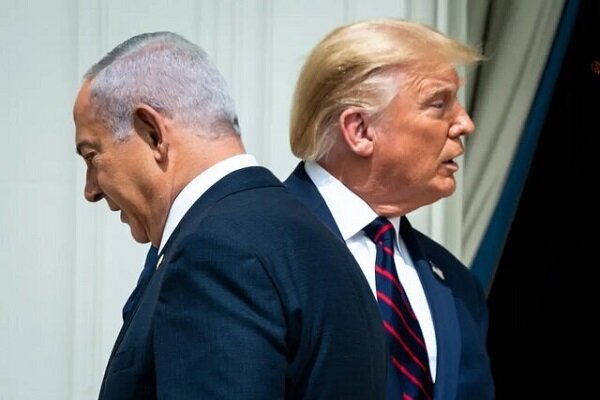
According to the International Desk of Webangah News Agency, the American publication ‘Foreign Policy‘ has published an analysis asserting that a finalized agreement between Iran and the United States to end the war would create a serious political challenge for Benjamin Netanyahu. The publication noted that such a development would not only fail to achieve the stated war objectives but could also leave the Israeli Prime Minister in a more vulnerable position leading up to elections.
The analysis further stated, “If Washington and Tehran reach an agreement to end the war, Benjamin Netanyahu will require the support of Donald Trump more than ever. This is because the likely outcome of the negotiations would not only fail to achieve many of the declared war objectives but could also lead to a weakening of the Israeli Prime Minister’s political standing on the eve of elections.”
The American journal ‘Foreign Policy’ opened its report by stating that a potential agreement between the United States and Iran could become a serious challenge for Israeli Prime Minister Benjamin Netanyahu, as he currently needs the support of U.S. President Donald Trump to maintain his political position more than at any other time.
Foreign Policy, referencing Trump’s influence over Netanyahu, recalled that Trump recently commented on the issue of Iran, stating, “Netanyahu will do anything I want.” However, according to the report, the true test of Trump’s influence will become apparent as U.S.-Iran negotiations approach the final stages of drafting a memorandum of understanding.
The article noted that based on available information, a potential agreement would be viewed as a “lose-lose” situation by both Netanyahu and his domestic opponents, as the ruling structure in Iran would remain intact without any groundwork laid for regime change.
Foreign Policy continued, writing, “Iran has not only survived the war but has become more cohesive. Furthermore, the capability to close the Strait of Hormuz as a strategic leverage remains with Tehran, and at the same time, there is no indication of serious limitations being imposed on Iran’s nuclear infrastructure.”
The article further elaborated that if a memorandum of understanding between Tehran and Washington is finalized, the cessation of hostilities would pave the way for further negotiations on other issues, and the likelihood of joint U.S.-Israeli attacks would decrease.
Foreign Policy wrote, “Following the reopening of the Strait of Hormuz and the end of the U.S. naval blockade, a competition to blame the opposing side will begin.”
The American media outlet continued, stating that Trump would not allow Netanyahu to disrupt a war-ending agreement and might even hold the Israeli regime responsible for some of the problems and escalating tensions to deflect domestic criticism within the U.S.
The analysis also touched upon developments in Lebanon, stating, “Hezbollah has not only not been disarmed but is regaining its strength at a faster pace than initially estimated. Meanwhile, critics of Hezbollah also show no inclination for a direct confrontation with this resistance movement.”
Foreign Policy added, “The Trump administration had previously given the Israeli regime more leeway to continue operations in Lebanon, but the situation is now changing.”
According to analysts, Trump contacted Netanyahu in response to Iran’s decision to suspend negotiations until the Israeli regime accepted a ceasefire, and asked him to halt attacks in the Beirut region.
Another part of the article stated that Trump attempted to link the agreement with Iran to the accession of Arab states in the Persian Gulf region to the so-called ‘Abraham Accords,’ but analysts have assessed this idea as lacking real backing in the region.
Based on this report, with the exception of the United Arab Emirates, other Arab countries, particularly Saudi Arabia, are not inclined to expand overt relations with Tel Aviv.
The article concluded by emphasizing that Trump has so far failed to reach a final agreement with Iran, has not presented a solution for Iran’s enriched uranium reserves, and is simultaneously facing the leverage of the Strait of Hormuz remaining in Tehran’s hands.
According to Foreign Policy, if an agreement is reached with Iran and criticism of the war’s outcome increases, Trump might shift responsibility for some of the failures onto Netanyahu to deflect domestic political pressure, a development that could further weaken the Israeli Prime Minister’s position.