
Russia and Pakistan Warn of Dire Gaza Situation at UN Security Council
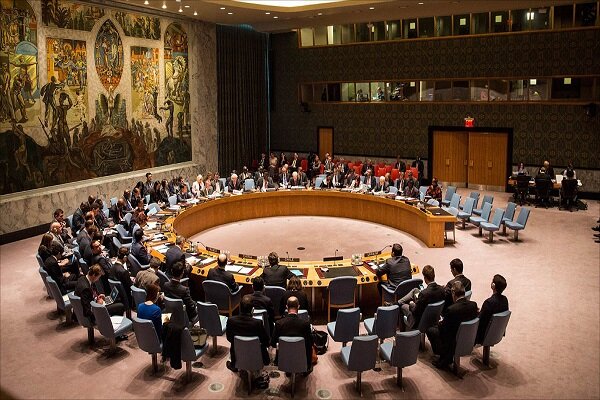
According to the International Desk of Webangah News Agency, representatives from Russia and Pakistan have described the situation in Gaza as “extremely dangerous” during a session of the United Nations Security Council. They issued warnings concerning the ongoing humanitarian crisis, the severe limitations on the entry of aid, and the complete breakdown of the healthcare system in the region.
Anna M. Evstigneeva, Russia’s representative, pointed to the persistent attacks, civilian casualties, and restrictions on essential supplies, stating that not a single fully operational hospital remains in Gaza.
Asim Iftikhar Ahmad, Pakistan’s Ambassador and Permanent Representative to the UN, emphasized the widespread displacement of people, acute hunger, and the prevalence of diseases in Gaza. He called for immediate and unimpeded humanitarian access, viewing the implementation of Resolution 2803 as a path towards a lasting ceasefire.
Ahmad further noted, “More than 90 percent of Gaza’s population has been displaced; hundreds of thousands face acute hunger, and population density along with poor sanitation conditions have led to the spread of diseases.” He stressed, “The core issue is the deprivation and arbitrary delay in humanitarian access,” a situation that has become a pattern in Israel’s policy and a violation of international law.
Iftikhar Ahmad asserted, “Immediate, unimpeded, and full humanitarian access must be guaranteed.” He also reiterated the importance of establishing an independent Palestinian state with unified sovereignty based on the pre-1967 borders, with East Jerusalem as its capital, a stance that enjoys broad international consensus.
The representative of the Palestinian Authority also criticized the ongoing crisis and called for an immediate cessation of Israeli actions.
Riyadh Mansour, the Palestinian Authority’s representative at the UN, stated that Palestinians in Gaza believed they had survived their suffering and that the crisis was over. However, he reported that Israel had killed over a thousand civilians since the ceasefire. Mansour added, “Depriving people of humanitarian access and ‘creating a permanent humanitarian crisis’ under any pretext is unacceptable.” He questioned, “Life-saving aid and medicines are almost available but remain practically inaccessible. If this is not the engineered suffering, then what is it?”
Riyadh Mansour emphasized that Resolution 2803 (2025) contains three fundamental “no’s”: no occupation, no annexation, and no displacement. He alleged that contrary to these principles, Benjamin Netanyahu has ordered his army to annex 70 percent of Gaza.
The Palestinian representative to the UN stated, “The human catastrophe is being prolonged to achieve these goals, namely the displacement of people and the annexation of land in both Gaza and the West Bank.” He concluded, “This mockery and persecution of two million Palestinians must stop.”
Conversely, Danny Danon, Israel’s Ambassador to the UN, criticized Tom Fletcher, the UN Under-Secretary-General for Humanitarian Affairs and Emergency Relief Coordinator, claiming, “You come to this council with your cameras” while criticizing Israel, yet you barely mention Hamas.
He questioned, “Why is it so difficult for you to say their name? You didn’t even have the decency to tell the truth to this council about the biggest obstacle to rebuilding Gaza.” In response to the Russian representative, Danon, after noting the number of times he had mentioned Hamas, stated, “None, zero.” He dismissed reports from the UN regarding Tel Aviv’s obstruction of aid to Gaza as false, claiming Israel was coordinating the entry of 600 aid trucks daily into Gaza based on existing agreements and that 16,500 tons of medical supplies had entered since the ceasefire.
Engaging in deflection, he asserted, “International organizations face their own operational limitations, including increased operational and logistical costs.” The Israeli envoy, attempting to evade responsibility for alleged actions against the Palestinian people, claimed, “Do not blame Israel for problems that are not our fault.”


