US Political Divide Emerges: Trump’s ‘America First’ Clashes with Israel’s Traditional Role
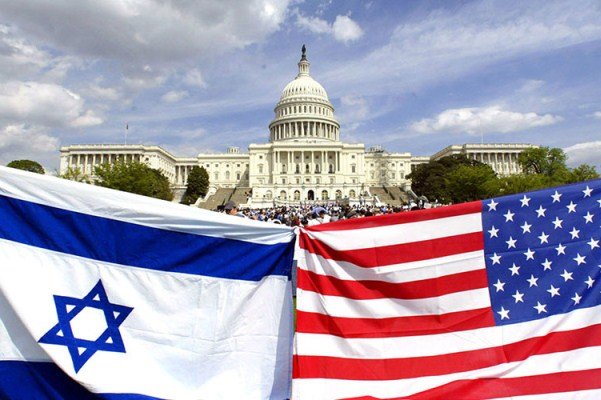
According to the International Desk of Webangah News Agency, recent remarks by “Mike Huckabee,” the US ambassador to the occupied territories, asserting that “Without Israel, America would not exist,” have garnered widespread attention, particularly coinciding with the signing of a memorandum of understanding between Tehran and Washington. Observers interpret these statements not merely as diplomatic hyperbole or political maneuvering in support of Tel Aviv, but as a direct contradiction to the recent assertions by Donald Trump, who stated unequivocally, “Without America and without me, Israel would not have existed.”
The juxtaposition of these two declarations exposes a significant fissure within the American-Zionist front. This divergence represents a conflict between a perspective that views the Zionist regime as dependent, costly, and in need of American power, and another current that seeks to portray America as historically, religiously, and strategically indebted to this regime.
The significance of this divergence is amplified when analyzed within the context of recent regional developments, most notably Tel Aviv’s failure to impose an unending conflict and Washington’s shift towards détente with Iran. What is currently observed in Washington-Tel Aviv relations transcends a mere verbal disagreement between Trump and Huckabee; it signals the erosion of the American-Zionist axis’s capacity to unify on the ground against Iran.
Tehran, by maintaining its deterrence capabilities, regional influence, and leverage in West Asian security equations, has created a situation where even within the camp supporting the Zionist regime, the question of whether America should continue to bear the costs of Tel Aviv’s high-risk strategies, or redefine its interests by containing Israel and accepting Iran’s role, is becoming more pressing.
The Battle of Narratives in Washington: A Dependent Israel or a Debt-Ridden America?
The clash between the statements of Donald Trump and Mike Huckabee should not be dismissed as a simple verbal dispute or a minor diplomatic coordination issue. When Trump states that without America, Israel would not exist, he effectively demotes Tel Aviv’s status from a sacred and unquestionable ally to a player dependent on American power. In this view, the Zionist regime is not a source of American strength but a consumer of Washington’s security, financial, military, and political umbrella—an entity whose survival would be imperiled without continuous American support.
Conversely, Huckabee, with a diametrically opposite statement, endeavors to revive the traditional narrative of the Christian right and evangelical Zionism. This narrative positions America not as a supporter of the Israeli regime, but as historically, religiously, and identifiably indebted to it. The strategic implication of this stance is that Tel Aviv should not perceive itself as needing Washington; rather, Washington should consider supporting Israel as an integral part of its own existence and historical mission. Consequently, Huckabee’s remarks are less a diplomatic position and more the voice of a movement that resists Israel becoming a calculable expense in American calculations.
These two contradictory narratives reveal a schism that has been concealed for years under the guise of unconditional support for the Zionist regime. On one side of this divide are Trump and the “America First” movement, who, following war costs, public pressure, energy crises, and Tel Aviv’s failure to impose its desired order, are increasingly scrutinizing the costs and benefits of supporting Israel. On the other side stands the Israel-centric faction within America’s political and religious structures, viewing any distancing of Washington from Tel Aviv not as a tactical decision but as a betrayal of America’s foundational identity.
Strategically, the importance of this fissure lies in the fact that, after recent regional developments and Iran’s steadfastness, the American-Zionist front can no longer produce a unified narrative against Tehran. Had Iran been weakened in terms of deterrence and regional policy, the Zionist regime could have continued to present itself as America’s absolute asset and the undisputed commander of crises. However, the situation has evolved to the point where even within the regime’s camp of supporters, discussions are underway regarding whether Tel Aviv represents a “strategic asset” or an “increasing liability” for Washington. This shift in questioning itself signifies Iran’s success in disrupting the cohesion of the American-Zionist axis and imposing the reality of its power on Washington’s calculations.
The Clash of “America First” vs. “Israel First”: The Ideological Roots of the Divide
The underlying cause of this recent divergence can be traced to the clash of two distinct logics in American domestic policy: the logic of “America First” and the logic of “Israel First.” Trump represents a current that, even in its support for the Zionist regime, seeks transactional gains, concessions, cost-benefit analyses, and political returns on investment.
According to many analysts, while Trump may appear to be a staunch supporter of Tel Aviv, his perspective on the regime lacks unconditional ideological commitment. His support continues only as long as it does not conflict with American interests, crisis management, energy prices, public opinion, and his image as a successful president.
Conversely, Huckabee embodies the voice of the evangelical right and Christian Zionism in America. This movement considers the Israeli regime not merely an ordinary ally but an integral part of America’s historical and religious mission.
For this group, supporting Israel is not a negotiable issue. Even if Tel Aviv imposes significant security, political, and economic costs on Washington, it must remain central to American foreign policy. Therefore, Huckabee’s statement is essentially an attempt to restore the Zionist regime to a superior position, where America is not the ultimate decision-maker but is obligated to support the regime’s demands and security.
This duality became more pronounced when Iran, through its formidable military might, sustained deterrence, and regional influence, managed to deadlock Tel Aviv’s war-centric agenda. The Zionist regime had sought to keep America on a path of perpetual escalation with Iran. However, instead of continuing indefinitely down this path, Trump moved towards de-escalation and détente. This shift demonstrated that the “America First” movement is unwilling to blindly bear the costs of the Zionist regime’s strategies, particularly when continued conflict could jeopardize energy markets, the security of American bases, the Strait of Hormuz, and Washington’s global standing.
Strategically, this division holds considerable importance for Iran. It indicates that Tehran has succeeded in increasing the cost of unconditional support for the Israeli regime in American calculations. The greater Iran’s deterrence power, regional network, and capacity to influence issues such as Hormuz, Lebanon, Iraq, and the energy market, the more the transactional current in Washington will conclude that full alignment with Tel Aviv is not necessarily in America’s best interest. Therefore, the confrontation between Trump and Huckabee is not merely a clash between two personalities; it signifies a divide between an America seeking to contain Israel and a movement that still desires to keep America subservient to the Zionist regime’s projects.
Tactical, Not Strategic, Divide: Disagreement Over the Manner of Support for Tel Aviv
Despite all indications of divergence among Trump, Huckabee, and Netanyahu, analyses should avoid exaggeration by interpreting these disagreements as a strategic rupture between the United States and the Zionist regime. The reality is that Washington’s support for Tel Aviv has been a consistent and structural policy across various US administrations, both Republican and Democratic. America has not only provided military, financial, and intelligence support to Israel but has also repeatedly obstructed effective condemnation of the regime’s actions through vetoes, political pressure, and media backing in the diplomatic arena. Thus, today’s disagreement is not about the principle of support but about the timing, method, cost, and scope of Tel Aviv’s adventurism.
From this perspective, the rift between Trump and Netanyahu should be seen as tactical. Trump does not wish to abandon Israel but refuses to accept Tel Aviv pushing the region to the brink of a full-scale war with Iran without regard for American costs. On one hand, he continues to present himself as a supporter of the Zionist regime’s security; on the other hand, when the continuation of a war with Iran could threaten American bases, energy markets, the Strait of Hormuz, domestic public opinion, and Washington’s international standing, he endeavors to control the pace and scope of Tel Aviv’s actions. This implies that America has not distanced itself from Israel but seeks to wrest control of war initiation from Netanyahu.
Within this framework, Huckabee’s remarks are largely an effort to mend the ideological and psychological bond between Washington and Tel Aviv. He understands that Trump’s rhetoric regarding Israel’s dependence on America could undermine Tel Aviv’s superior standing in the minds of a segment of the American political establishment. Consequently, by inverting that proposition, he aims to re-establish the Zionist regime not as a costly ally but as an integral part of America’s identity and historical mission. This reaction indicates that the Zionist movement in America is confident of Washington’s fundamental support but has become concerned about the shift in tone and calculations emanating from the White House.
The strategic significance of this fissure for Iran lies precisely here. Tehran has succeeded in raising the battlefield costs to such an extent that America, despite its unwavering support for the Zionist regime, is compelled to differentiate between supporting Tel Aviv and safeguarding its own broader interests. This does not signify a fundamental change in America’s nature; Washington will likely remain the primary supporter of Israel’s actions. However, the American-Zionist axis faces failure here because it can no longer pursue an unlimited war against Iran and the axis of resistance without incurring costs and internal divisions. With its deterrence power, Iran has brought the hidden rift into the open, demonstrating that even enemy structural alliances are forced to recalibrate their tactics when confronted with genuine power.