
BRICS Nations Urged to Collaborate on Green Investments to Combat Global Drought Crisis
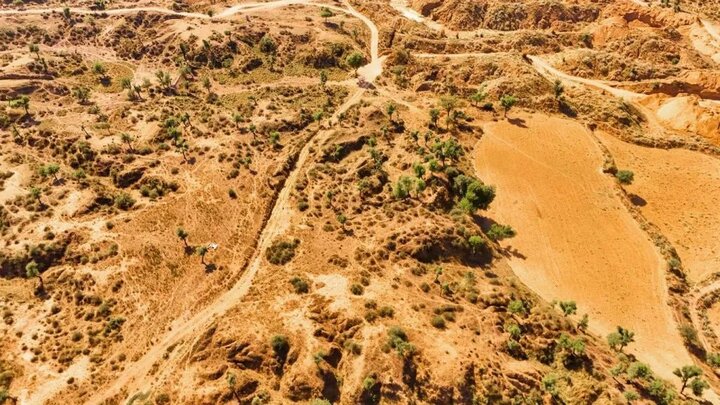
According to the International Desk of Webangah News Agency, with the International Day to Combat Desertification and Drought observed on June 17, experts are warning about the proliferation of drylands globally and stressing the imperative for BRICS nations to cooperate in confronting this trend.
United Nations data indicates that drylands now encompass over 40 percent of the Earth’s land surface, with their extent increasing by approximately 4.3 million square kilometers in recent decades—an area larger than India.
Gabriela de Fátima Cia, an expert in sustainable development and international environmental cooperation, told TV BRICS that according to the latest figures from the UN Convention to Combat Desertification, more than 77 percent of global land experienced drier conditions in the three decades leading up to 2020 compared to the preceding 30 years. This trend is significantly impacting BRICS countries.
Cia added that desertification has evolved beyond an environmental issue to become an economic challenge. BRICS nations, holding a substantial portion of the world’s freshwater resources, agricultural lands, and forests, are key players in the global environmental and climate agenda.
Alexandra Kudzagova, an environmental law specialist, noted that drought affects nearly all BRICS member states, including Brazil, Indonesia, India, South Africa, Iran, and the United Arab Emirates, with each potentially facing severe drought conditions annually.
China has been implementing anti-desertification programs for over half a century, yet approximately 27 percent of its land remains classified as dry or desertified. India and South Africa are experiencing increasing pressure on their water resources and agricultural lands. In Southern Africa, the UN has reported the most severe drought in a century.
Brazil is grappling with intensified drought, water scarcity, and widespread wildfires. Nevertheless, the nation has successfully reduced deforestation by 36 percent between August 2025 and March 2026, marking its best performance since 2017.
Experts identify large-scale water management projects, including the construction of dams, water transfer canals, and desalination plants, as crucial tools for drought mitigation.
In Egypt, the Al-Hamam complex, recognized as the world’s largest agricultural wastewater treatment facility, has been established as part of the ‘New Delta’ project. This facility produces 7.5 million cubic meters of treated water daily, which is utilized for expanding agricultural lands in desert regions.
Egypt is also collaborating with China on plans to build a facility for producing seawater desalination membranes, aiming to increase its daily desalination capacity to 9 million cubic meters by 2050.
BRICS environmental cooperation has expanded in recent years, with member states holding regular Environment Ministers’ meetings since 2015. A BRICS environment working group has also been formed to coordinate common policies.
The New Development Bank (NDB) of BRICS plays a vital role in these efforts. Since its inception in 2015, the NDB has approved over 120 projects totaling approximately $40 billion, allocating a portion of its resources to environmental projects and climate change adaptation initiatives.
One of the most recent BRICS initiatives in this domain is the ‘BRICS Partnership for Land Restoration,’ introduced in Brasilia in 2025. This program focuses on soil conservation, rehabilitation of degraded ecosystems, controlling soil salinity and acidity, and providing technical support to farmers.
Experts emphasize that the success of these programs hinges on sustainable financing, the development of smart agriculture, the adoption of innovative technologies, and close collaboration among BRICS member countries.
Kudzagova concluded with a warning: global warming persists, leading to reduced water resources in many areas. Concurrently, population growth and economic development within BRICS nations are escalating water demand, placing further strain on natural ecosystems.


