
Expert Warns Caspian Convention Poses Threat to Iran’s National Security and Strategic Interests
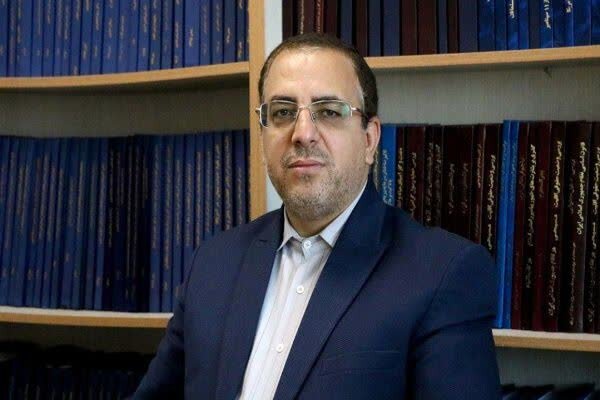
According to the International Desk of Webangah News Agency, Ahmad Kazemi, a professor of international law, has issued a stark warning regarding the perilous consequences of ratifying the Caspian Sea Legal Regime Convention, highlighting its entirely negative implications for the national security and territorial integrity of the Islamic Republic of Iran. Kazemi noted reports that the Iranian government approved a bill on July 22, 2026, prioritizing the ratification of the Caspian Sea Legal Regime Treaty and has sent it to Parliament. He emphasized that given the country’s current wartime conditions and the prevailing geopolitical, political, and security dynamics in the region, such a bill requires multifaceted evaluation. The convention itself was ratified on August 12, 2018, and, in accordance with legal procedures, all treaties must be approved by Parliament. Although the treaty was sent to the Islamic Consultative Assembly at that time, it has remained unratified for eight years, failing to align with Iran’s fundamental vital and geopolitical interests.
Kazemi elaborated that beyond numerous criticisms leveled against the convention, its ratification at this juncture poses serious risks for Iran, particularly from a geopolitical standpoint. Legally, several objections can be raised against the Caspian Sea Legal Regime Convention. For instance, while the convention mentions the prohibition of foreign presence in the Caspian Sea, it does not explicitly forbid foreign passage. This oversight, Kazemi warned, could be exploited by foreign entities.
The university professor further highlighted the convention’s detrimental impact on Iran’s 20% share of the Caspian Sea, stating that ratification would weaken this claim. The convention stipulates that littoral states must engage in negotiations for the division of the seabed and subsoil of the Caspian Sea. This implies that neighboring and opposing countries must undertake bilateral and trilateral negotiations for this purpose. This very provision lends legitimacy to the past bilateral and trilateral negotiations between Russia, Kazakhstan, and Azerbaijan concerning the division of the Caspian Sea, wherein they allocated percentages such as 29%, 21%, and 18% among themselves. If these percentages gain legitimacy through the convention’s ratification, the remaining shares for Iran and Turkmenistan would decrease, failing to meet Iran’s targeted 20% share. Kazemi argued that even excluding this specific issue from the convention would not resolve the problem, as Iran’s approval of the convention implicitly grants legitimacy to the convention’s overall approach and legal framework.
Ahmad Kazemi underscored that fundamental risks associated with the convention’s ratification at this time and in the future lie in its strategic advantage it confers upon the United States and NATO. He described it as a significant and effective assist to the Anglo-Saxon, Zionist, and anti-Iranian network. The immediate consequence of ratifying the convention would be the lifting of the ban on constructing pipelines across the Caspian Sea seabed. According to Article 14 of the convention, littoral states are permitted to lay and install transnational pipelines on the Caspian seabed.
Kazemi explained the implications of oil and gas pipelines in the Caspian seabed, stating that their construction would significantly aid the advancement of the US’s ‘Trump plan’ for international peace and prosperity. He characterized this plan as an updated version of the fraudulent Zangezur Corridor or NATO’s Turan Corridor. During a brief visit by US Secretary of State Rubio to Armenia, documents related to this initiative were approved. Initial documents were also signed at the White House in the presence of Trump in late August of the previous year. Kazemi asserted that the Trump plan or the fraudulent Zangezur Corridor would only become truly operational and geopolitically and economically effective for the Saxon and Hebrew front if it facilitated access for Zionists and NATO to the gas and oil of Central Asia. By lifting this prohibition through the ratification of the Caspian Sea Legal Regime Convention, Iran, at this juncture, would be granting a sensitive concession to Trump. He questioned the logic of offering a strategic advantage to Trump on both sides of the Caspian when Iran is already in a geopolitical confrontation with Trump in the Strait of Hormuz and the Caucasus, deeming it unacceptable from the perspective of the country’s vital and geopolitical interests.
Kazemi identified a second risk: the weakening of the Strait of Hormuz’s role in energy equations at a time when Iran holds a trump card, secured through the sacrifices of martyrs in the country’s south. He explained that with the ratification of the Caspian Sea Legal Regime Convention, Uzbekistan, Kazakhstan, and Turkmenistan could connect to Baku via pipelines laid on the Caspian seabed and play a role in supplying oil and gas to Europe and NATO countries. This would occur at a time when, firstly, Russia faces extensive oil sanctions following the Ukraine war and has no role in Europe’s energy supply; secondly, Iran is also under sanctions, with efforts to sideline both Iran and Russia from the European energy market; and thirdly, Iran’s legal and legitimate closure of the Strait of Hormuz has placed significant pressure on the US and Europe. The ratification of the convention, he argued, would effectively provide geopolitical and geo-economic breathing room for Europe and alleviate pressure on the United States.
Kazemi described these developments as a clear action against the national interests of the country, stating that they are unacceptable. He further elaborated on the risks, explaining that the construction of pipelines across the Caspian seabed and the integration of Central Asia’s energy market with Azerbaijan, the Caucasus, and Europe would effectively create what he termed a “Turkic” energy branch for the world. This plan, he claimed, is being pursued by the Saxon and Hebrew front based on English Pan-Turkism, an ideology with a two-hundred-year history, now manifesting in geo-economic initiatives. He noted that the so-called Turkic world has sided with Israel and NATO in the Gaza genocide, the Ukraine war, the brief US-Israeli military aggression against Iran, the conflict in Syria, and numerous other regional issues, citing ample evidence.
He added that from the perspective of the Saxon and Hebrew front, the Turkic world is intended to act as a base and supporter for the Israeli regime in the region. To operationalize the capacity of this purported Turkic world, one of the Hebrew and Saxon front’s plans is to connect the energy reserves of this claimed Turkic world to Europe. Over the past century, the purported Turkic world has faced three major obstacles to achieving the goals of its Anglo-Saxon and Zionist masters. The first was the lack of connection between Turkey and Nakhchivan, an obstacle overcome in the Karabakh incident. The process of transferring Karabakh began during the Qajar era and concluded with the betrayal by Reza Shah, who ceded Karabakh to Turkey, thus removing the first impediment. The second obstacle was the lack of connection between Nakhchivan and Azerbaijan, a barrier that began to be addressed after the Second Karabakh War in 2020. This is being implemented through the creation of the fraudulent Zangezur Corridor and the extension of the Trump route, essentially connecting Azerbaijan to Nakhchivan under the guise of a corridor. This connection effectively weakens Armenian sovereignty over the Syunik Province and paves the way for its secession. According to the US, Britain, and Turkey, this second obstacle was removed after the signing of the Trump route documents. However, Kazemi anticipated that the Saxon and Hebrew front’s assessment in the post-war Caucasian order would prove mistaken.
Kazemi then explained the third obstacle: the connection of Central Asia to Azerbaijan and the Caucasus for energy transfer and rail links, enabling Central Asia’s scarce resources to reach European markets via the Trump route, as Trump desires. This third obstacle, he stated, would be eliminated by the ratification of the Caspian Sea Convention’s legal regime. Therefore, in this sensitive situation, the discussion of ratifying the convention’s legal regime is a thoroughly anti-Iranian action from geopolitical, geo-economic, and even geo-cultural perspectives. This action, he argued, not only fails to strengthen Iran’s geopolitical capacities but severely weakens them. If Iran does not ratify the convention, Article 22 of the convention states it cannot be implemented. The convention’s execution is contingent upon the ratification of its fifth document by the fifth country’s parliament. Iran is naturally the fifth country that has not ratified the convention, unlike the other four. From an international law perspective, its implementation is legally impossible until this action is taken and the convention is ratified.
Regarding the advantages of not ratifying the convention, Kazemi stated that its non-ratification significantly bolsters Iran’s geopolitical and geo-economic instruments in the region. One such instrument is compelling Central Asian countries—Uzbekistan, Kazakhstan, and Turkmenistan—to transfer their energy, gas, and oil to global markets, including Europe and Turkey, via Iran. This is because transit through the Caspian Sea seabed is impossible and illegal. In previous years, Turkmenistan’s gas was swapped via Iran to Azerbaijan and Turkey, a process that continues to some extent. This creates geo-economic capacity for the country. However, the convention’s ratification would eliminate this current capacity and any future prospects for its increase. Ratification would also be ineffective in strengthening Iran’s geopolitical capabilities. Kazemi claimed that members of diplomatic and economic lobbying networks, operating as mercenaries for the Saxon and Hebrew front and linked to Azerbaijan’s SOCAR and its affiliated companies over the past three decades, resort to false and cliché statements to deceive the Iranian public. They falsely claim that in the current wartime conditions, opening up routes after the convention’s ratification could create a corridor for Iran, alleviating pressure from the closure of the Strait of Hormuz and maritime encirclement.
Kazemi refuted these claims, calling them exactly the kind of deception aimed at the Iranian people. He stated that those making these arguments are the same individuals who, years ago, resisted when experts suggested that for the North-South corridor to be realized, the Caspian Sea shipping route, alongside the Central Asian route (connecting Iran to Russia by rail), would be among the best options, and that Iran should make the Caspian Sea one of its main arms. These experts argued that Iran should genuinely transform the Caspian Sea into a shared sea among littoral states. However, proponents of the Caspian Sea Legal Convention resisted such actions, asserting that only transit through the Republic of Azerbaijan was suitable. Kazemi pointed out that Azerbaijan’s rail capacity is only 2 million tons annually, which would not significantly contribute to the North-South corridor. He added that members of this lobby are currently creating obstacles to establishing a corridor between Iran and Russia and creating breathing room between Iran, Russia, and China.
The university professor emphasized that there is no need to ratify the Caspian Sea Legal Regime Convention, as Iran has no legal vacuum in terms of transit, security, or environmental aspects in this domain. China and Russia are connected to Iran by rail, and there are no obstacles to transit utilization of the Caspian Sea between Iranian and Russian ports. Therefore, these claims are merely intended to deceive public opinion in Iran and exploit this critical juncture, which they perceive as golden, to grant a strategic concession to the Saxon and Hebrew front. This, he warned, could lead to severe geopolitical errors and losses for the country. He attributed the failure of the convention’s ratification in Parliament in previous years, despite lobbying efforts, to the insightful stance of the martyred Supreme Leader.
He stated that from an international law perspective, the non-ratification of a convention by a country’s parliament is not unusual. Governments of many nations sign conventions but never ratify them in their legislatures, which is a common practice in international law. The United States has not signed dozens of conventions. If this convention were ever to be ratified in Parliament, it should be conditional upon excluding the construction of oil and gas pipelines, the division of the seabed and subsoil, and related matters, as well as the direct baseline or normal baseline, and other issues previously mentioned at the beginning of this interview.
He concluded by noting that the historical designation of this body of water in numerous domestic and international documents is the Caspian Sea, or the Sea of Mazandaran, the Sea of Gorgan, and the Sea of Qazvin. The Caspians were an Iranian people who lived around the Caspian Sea. He deemed it erroneous for certain individuals in the country to insist on using the name “Khazar” for this sea. The name Khazar, he explained, relates to the Khazar people, who, according to ancient historians like Strabo, were a barbaric Jewish tribe that savagely attacked surrounding cities and Iranian territory. Throughout history, the Khazar people have consistently fought against Iran. Today, Zionists seek to fabricate historical presence in the Caspian and Caucasus regions, claiming the existence of a Jewish empire in the area, by exaggerating the barbaric history of this very Khazar people.
Interview conducted by Ehsan Movahhedian.


