UNCCD Chief: South-South Cooperation to Drive Agricultural Innovation and Combat Land Degradation
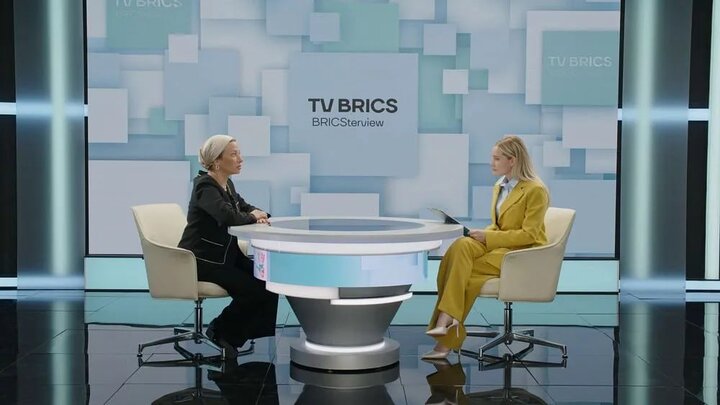
According to the International Desk of Webangah News Agency, Yasmina Fouad, Executive Secretary of the United Nations Convention to Combat Desertification (UNCCD), stated in an exclusive interview with TV BRICS that cooperation among Global South countries, private sector investment, and the utilization of modern technologies are among the most significant tools for confronting land degradation and advancing sustainable agriculture.
Fouad referenced the “Silk Road Caravan” initiative, launched in 2026 by the UNCCD in support of the “International Year of Rangelands and Pastoralists.” This program, designed to heighten awareness of the importance of rangelands and the role of pastoralists in land conservation, aims to focus attention on local communities by traversing various nations.
“Our core message is that, irrespective of cultural, religious, and identity differences, we are all united in protecting the land, and this message extends beyond the issue of rangelands,” Fouad added.
The UNCCD Executive Secretary identified the indigenous knowledge of pastoralists as a critical factor in rangeland preservation. She noted that these communities possess profound understanding of the land, its natural resources, and sustainable management practices, making their role in combating desertification irreplaceable.
Referring to the outcomes of the 16th Conference of the Parties (COP16), Fouad indicated that forthcoming activities will prioritize financing land restoration projects, stressing the need for private sector investment to complement government financial resources.
“We must demonstrate that investing in drought resilience and land restoration is economically viable. This approach can significantly increase private sector participation in combating desertification,” Fouad stated.
Regarding Egypt’s “New Delta” project, she emphasized that its success hinges on political will, the development of water recycling technologies, the reform of cultivation patterns, and the adoption of drought-resistant crop varieties. Fouad added that agricultural land development is impossible without innovation, healthy soil, and sustainable water resource management.
The UNCCD Executive Secretary also welcomed the “BRICS Partnership for Land Restoration,” viewing it as a complementary effort to UN programs. She suggested that the involvement of governments, the private sector, scientific institutions, and even the mining industry in land conservation and restoration can accelerate the process of combating land degradation.
Fouad recognized the significant role of artificial intelligence in natural resource management. While acknowledging its energy and resource demands, she described AI as potentially transformative in identifying land degradation and in the planning and monitoring of land restoration projects.
Citing China’s successes in curbing desertification, Fouad outlined South-South cooperation, innovative financing, private sector investment risk reduction, and technology transfer as key mechanisms for expanding agricultural innovations in Global South countries.
In conclusion, the UNCCD Executive Secretary called for a review of university curricula. She stressed that academic programs in fields such as agriculture, soil science, and environmental studies should encompass not only scientific concepts but also the economic, social, and managerial dimensions of land degradation and drought.