
Trump’s Iran Strategy: A Tightrope Between Diplomacy and Military Threats
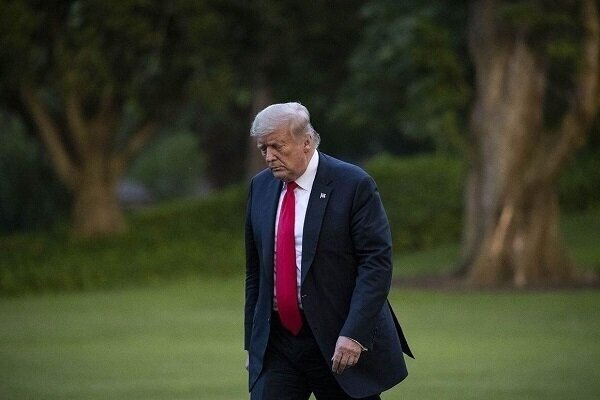
According to the International Desk of Webangah News Agency, the complex relationship between Tehran and Washington is currently marked by escalating confrontation, profound distrust, and a dim outlook for future discussions. Since the seizure of the U.S. “den of espionage” shortly after the Islamic Revolution’s triumph, both nations have endured a prolonged period of recurring crises, incomplete negotiations, sanctions, mutual threats, and indirect clashes. The 2015 nuclear deal momentarily steered the relationship toward dialogue, but the U.S. withdrawal from the Joint Comprehensive Plan of Action (JCPOA) in 2018 and the subsequent imposition of a “maximum pressure” policy eroded the fragile trust between the two sides.
In the current climate, the Trump administration’s stance fluctuates between suggesting the potential for an agreement and threatening significant military strikes, effectively transforming diplomacy into a tool contingent upon pressure and battlefield calculations. Iran, meanwhile, maintains it has received no direct requests for a return to negotiations and expresses doubts about the credibility of Washington’s commitments.
The widening scope of attacks on U.S. bases, Saudi Arabia’s more visible involvement in operations against resistance forces in Iraq, tensions in the Red Sea, and the potential involvement of Egypt in the crisis underscore that the Tehran-Washington dispute has transcended a bilateral conflict, with its repercussions now encompassing the entire region. In this context, military expenditures, pressure on the global economy, concerns over energy security, and the depletion of U.S. arms stockpiles, all intertwined with domestic U.S. electoral rivalries, complicate political decision-making and push the prospect of a stable agreement further away. This analysis will explore the tools the White House might employ to achieve its objectives concerning Iran.
The Persistence of Coercive Diplomacy
Recent statements and positions from Donald Trump regarding Iran indicate that he views diplomacy not as a stable, consistent path based on mutual trust, but rather as a tactical instrument employed alongside military pressure. Although the 47th U.S. President continues to speak of the possibility of reaching an agreement with Tehran, asserting that negotiations can still yield results, he simultaneously employs harsh rhetoric about “very severe bombing” of Iran and openly admits to having lost confidence in Iranian officials.
He also criticizes the negotiation style of Tehran’s representatives, alleging that Iranians spend extensive hours on issues he believes could be resolved quickly. This array of statements suggests that Trump is not deeply committed to diplomacy in its conventional sense. He accepts negotiations only to the extent that they lead to rapid, favorable outcomes aligned with U.S. demands. Essentially, these positions reveal that for Trump, diplomacy and military action are complementary tools, deployed based on circumstances to increase pressure, compel Iran to retreat, and impose Washington’s preferred framework.
A Project to Reshape the Middle East Order
A critical examination of Trump’s policy toward Iran suggests that dialogue and proposed agreements were not necessarily indicative of Washington’s desire for a stable resolution of differences. Instead, they could have been part of a broader strategy of pressure aimed at imposing a new balance in the region. Within this framework, negotiations create opportunities to subject the opposing party to economic, security, and psychological pressure, while simultaneously introducing new demands beyond the nuclear file.
Consequently, accepting a specific concession, such as reducing or halting enrichment, does not guarantee an end to the dispute, as the scope of demands could extend to Iran’s defensive capabilities, regional influence, and foreign policy orientation. The precedent of the uneven implementation of the nuclear deal further fuels doubts that the other party’s commitments might not be honored in proportion to the concessions made. The outcome of such a situation is not that diplomacy becomes useless, but rather that it necessitates a redefinition. Negotiations should be founded on a balance of power, verifiable guarantees, clear dispute resolution mechanisms, and deterrent capabilities. Otherwise, dialogue risks becoming a tool for the gradual erosion of a country’s capacities and the preparation of ground for future pressures.
Donald Trump’s primary objective concerning Iran is to rapidly achieve an agreement that facilitates the reopening of the Strait of Hormuz, reduces regional tensions, and enables a return to discussions about a comprehensive nuclear agreement. Concurrently, he seeks to maintain the credible threat of a return to “very severe military action” to compel Iran and mediators to accept the U.S.-desired framework. In this scenario, a cessation of attacks signifies not the abandonment of military options but their suspension to explore the path of negotiation. Diplomacy, in turn, is not an independent objective but a mechanism for swiftly reaching a practical outcome. Therefore, based on his stated positions, Trump oscillates between military pressure and dialogue to manage the economic and security costs of escalating conflict while preserving U.S. leverage to achieve its goals.
Conclusion
The Ramadan war appears to have halted, but the situation remains one where historical mistrust, disagreements over the scope of commitments, and the intertwining of diplomacy with military and regional developments limit the possibility of a stable agreement between Iran and the United States. The declared positions of the second Trump administration suggest that the prospect of negotiation has been pursued alongside threats of escalating military operations, an approach that undermines the necessary atmosphere of trust for dialogue and influences the security calculations of both sides. Conversely, Tehran’s emphasis on the experience of the first Trump administration’s withdrawal from the JCPOA and the necessity of receiving feasible and verifiable guarantees indicates that any new dialogue will face significant obstacles without clear mechanisms for commitment implementation and dispute resolution.
Furthermore, the spread of tensions to Iraq, the Red Sea, Jordan, and other regional locations has elevated the issue beyond bilateral relations, transforming it into a matter concerning energy security, global economic stability, and the region’s security architecture. The human and financial costs of military operations, concerns about dwindling defense reserves, and sensitivity to oil prices also influence the decision-making of various actors. Nevertheless, negotiations can only contribute to a lasting reduction in tensions if they move away from the logic of immediate pressure and are based on mutual interests, a defined timeline, practical guarantees, and continuous communication channels.


