
US Arms Depletion Amid Iran Conflict Raises Strategic Alarms
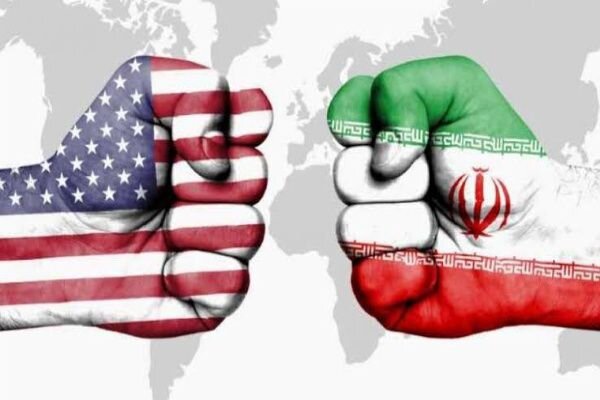
According to the International Desk of Webangah News Agency, the United States has reportedly exhausted nearly all of its long-range precision missiles, including ATACMS and PrSM systems, during a five-month military engagement against Iran. This dramatic drawdown, confirmed by insider sources cited by Reuters, has sounded a serious alarm regarding Washington’s preparedness for future confrontations. Each of these missiles carries a cost exceeding one million dollars and allows forces to strike targets from a safe distance.
Furthermore, defensive weapon stockpiles have been severely depleted. An analysis by the Center for Strategic and International Studies (CSIS), aligned with internal U.S. Army data, indicates that approximately 65 percent of Patriot interceptors and 38 percent of THAAD interceptors have been expended. The U.S. has also lost slightly less than half of its global stockpile of Tomahawk cruise missiles. Despite these revelations, President Donald Trump asserted that the U.S. possesses “more ammunition than anyone else in the world” and that defense companies are engaged in unprecedented production.
Reuters, citing its sources, noted that military commanders have warned the President for weeks about the declining stockpiles. The reduction in ATACMS and PrSM missiles underscores the administration’s decision to avoid riskier bombing missions with manned aircraft. Analysts warn that this diminished missile capability could curtail American deterrence against rivals such as China and Russia. A Pentagon spokesperson, in a defensive tone, stated, “The U.S. military is the most powerful force in the world and has everything necessary to conduct operations when and where the President directs.” However, internal sources caution that the continuation of this trend could lead to irreversible strategic consequences.
In a related analysis published by The Washington Post, former Trump National Security Advisor John Bolton argued that the White House’s repeated retreats concerning Iran indicate a near-total erosion of Washington’s strategy. Bolton highlighted Trump’s shift from threatening “very severe” strikes against Iran to welcoming an agreement within 36 hours, deeming this approach barely tactical and explicitly calling for the destruction or crippling of Iran’s government and the continuation of actions initiated in February.
Bolton posited that the conflicts in Iran and Ukraine have always been intertwined, with the “Xi-Putin” axis, comprising China, Russia, and their proxies like Iran, Belarus, and North Korea, constituting a “potentially most dangerous scenario.” He pointed to the entry of Saudi Arabia, Bahrain, Kuwait, and the UAE into a U.S.-led coalition, the expansion of hostilities into the Red Sea by Yemen’s Ansar Allah, and a drone attack on Egypt’s Damietta port as indicators that a “wider war” had begun some time ago.
Bolton also urged the administration to focus on the destruction of Iran’s government while containing Russia in Ukraine and enhancing deterrence against China. He warned that any failure by Trump to reopen the Strait of Hormuz would significantly exacerbate his electoral challenges in November.
Meanwhile, Russian media outlets have framed the narrative differently. RT, in a report titled “Kyiv’s Dirty War Goes Global,” suggested that the drone attack on an Iranian commercial vessel in the Caspian Sea on July 25th signifies the expansion of Ukraine’s operations beyond its battlefield with Russia and into confrontation with Iran. The attack resulted in one sailor killed and another injured. Tehran summoned Ukraine’s Chargé d’Affaires, labeling the action an act of aggression and demanding accountability and compensation.
The RT report added that Ukrainian officials initially described the operation as an attack on a ship carrying military cargo linked to Iran. However, following Tehran’s reaction, Ukraine’s Foreign Ministry claimed the targeting of the vessel was unintentional and that negotiations regarding compensation had commenced. The RT author interpreted this shift in position as an attempt at propaganda mileage without accepting responsibility for the consequences.
According to the report, the attack on the Iranian vessel was part of a broader strategy by Kyiv to demonstrate its capability for cross-border operations and to garner further support from the U.S. and its Western allies. The author, referencing reports of arrests of individuals linked to Ukraine in Iraq, alleged cooperation with armed groups in Mali and Syria, and the transfer of drone technology to regional actors, claimed that Ukraine is attempting to present itself as an effective tool in countering Washington’s rivals, including Iran.
RT further noted Ukraine’s defense agreements with some Persian Gulf Arab states in 2026, suggesting Kyiv aims to attract investment, secure military contracts, and continue receiving Western weaponry by sharing its experience in confronting Iranian drones and missiles. The author believes the attack on the Iranian vessel was conducted within this framework, aiming to display alignment with U.S. policies against Iran.
Conversely, China’s Xinhua News Agency reported that Qatar has announced its continued mediation efforts between Iran and the United States, stating that a draft of a potential agreement is still being exchanged between the two parties. The advisor to the Prime Minister and spokesperson for Qatar’s Ministry of Foreign Affairs stated at a weekly press briefing that the mediation process is ongoing with the participation of all parties and that negotiations have reached “very advanced stages.” According to Al-Ansari, Qatar, Pakistan, and Oman are coordinating their efforts to facilitate indirect communications between Tehran and Washington. He emphasized that the region’s countries share the common goal of preventing escalation, reopening the Strait of Hormuz, and creating conditions for the resumption of diplomatic pathways.
The spokesperson for Qatar’s Ministry of Foreign Affairs highlighted the importance of regional stability, noting that none of the mediators seek escalation. Efforts are focused on achieving a short-term diplomatic solution that could restart negotiations between Iran and the U.S. Al-Ansari added that while no direct talks are currently scheduled between Tehran and Washington, he expressed hope that direct negotiations would resume as mediation progresses. He concluded that a specific timeline for a final agreement cannot yet be determined, but consultations continue with the aim of reaching a comprehensive accord.


