
Israel’s Laser Defense System Falls Short Amidst Political Hype and Field Realities
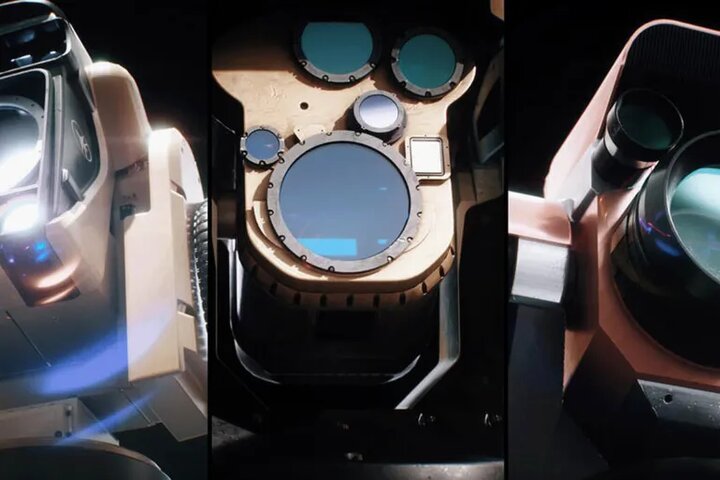
According to the International Desk of Webangah News Agency, the Israeli regime’s laser anti-missile system, known as “Magic Wand” and “Or Ethan,” has been presented by its media for several years as a historical development in the calculus of warfare. Claims were made that these systems could intercept hostile missiles at a cost of mere dollars, with an inexhaustible supply and unparalleled ability to counter missiles, projectiles, and drones.
However, Al Jazeera, in a report, noted that despite extensive Israeli media propaganda, recent conflicts have exposed a deep chasm between the technology’s actual battlefield performance and the image projected by the Israeli regime. The media outlets themselves have acknowledged this gap.
The “Or Ethan” system’s promotional narrative centers on using a laser beam, costing only a few dollars in energy, instead of firing an interceptor missile from the “Iron Dome,” which is estimated to cost tens of thousands of dollars per launch. Yuval Azulai, a military industry correspondent for the newspaper “Calcalist,” claimed on June 4, 2025, that a senior defense official estimated the cost of laser interception at “a few shekels,” contrasting sharply with the tens of thousands of dollars for Iron Dome interception. The same source indicated that the laser beam could be directed at threats approximately 90% of the days of the year, with the initial version designed for effectiveness up to about 10 kilometers.
The war with Iran served as a critical test. Oded Yaron, an Israeli analyst for the newspaper “The Marker,” wrote on July 21, 2026, that despite the fanfare, the system faced its toughest trial in a recent conflict. It reportedly failed entirely against Iranian ballistic missiles, with the observation of these missiles falling outside the capabilities of Israeli lasers. Consequently, the Israeli regime has not provided clear figures on the number of interceptions by this system, its success rate, or the areas it was tasked with protecting.
Al Jazeera suggests that the failure to intercept ballistic missiles is not an inherent defeat for the system itself, as “Or Ethan” was not designed to replace the “Arrow” and “THAAD” systems. However, the embarrassment for the Israeli regime lies in the fact that the conflict demonstrated significant limitations in the claim that “laser technology has solved Israel’s air defense crisis.”
In March 2026, Assaf Gilead, a journalist for the newspaper “Globes,” questioned why Israel’s new laser system had seemingly disappeared. He noted its limited activity during recent clashes on the northern front, despite dozens of drones infiltrating the airspace of the occupied territories. The Israeli army did not release any reports on the laser system’s impact in intercepting these drones.
The “Globes” newspaper reported that the system completed its testing phase in September 2025, with operational deployment announced at the end of that year, and its first units delivered to the Israeli military. Nevertheless, Israeli media has not provided any data regarding its success in simultaneous attacks or under varying atmospheric and operational conditions.
A study by the Institute for National Security Studies (INSS), authored by senior researchers Yehoshua Kalsky and Anna Sokolinko and published on May 25, 2025, attempted to address why, after decades of investment, laser systems have consistently failed to be deployed effectively. The study explains that the laser beam loses power as it travels through the atmosphere and is affected by humidity, dust, smoke, fog, and clouds. Furthermore, the system requires a “direct line of sight” and precise, prolonged targeting to inflict damage. Consequently, tracking and focusing the beam becomes more difficult with increased distance or higher target speeds.
Kalsky also highlighted another operational issue: only about 30% of the consumed electricity is converted into an active beam; the remainder is dissipated as heat, which must be managed. The “Globes” report adds that as laser power increases, cooling systems become larger and more complex, making it difficult to mount powerful systems on mobile platforms or use them continuously.
Moreover, lasers operate sequentially, focusing on one target before moving to the next. This poses a challenge for dealing with “drone swarms” or “high-volume salvos” unless a large number of systems, integrated with radars and sensors, are deployed.
These limitations suggest that the phrase “interception at a few dollars” is only accurate if it refers solely to the energy cost of the beam. The full cost of these systems includes batteries, guidance systems, cooling, radar, maintenance, personnel, electrical infrastructure, and site protection. “Globes” estimates the cost of each system at “tens of millions of shekels,” adding that establishing effective defensive coverage along the borders of the occupied territories would require billions in investment.
Ran Kochav, a reserve brigadier general and former commander of the air defense system, told “Globes” that while lasers represent a “stunning technological advancement,” exaggerated expectations should be avoided, implying that all of Israel’s air defense problems would be solved overnight. He emphasized that the system remains short-range, sensitive to weather conditions, and in its current state, its performance is primarily focused on drones and slow, lightweight targets, rather than the ballistic missiles and long-range threats posed by Iran.
The report points to repeated delays in Israeli promises regarding the use of laser systems as a key component of the Israeli anti-missile defense. The development of the “Magic Wand” system has reportedly taken 15 to 20 years due to issues with beam focusing, cooling, climatic obstacles, and budgetary constraints, casting a shadow of uncertainty over its precise operational deployment.


