US Vice President Caught in Iran War Dilemma, Political Future at Stake
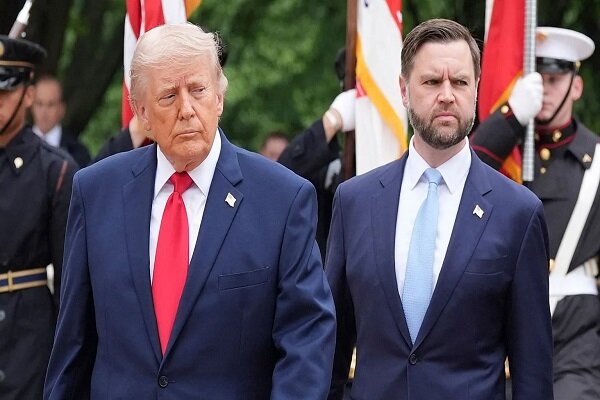
According to the International Desk of Webangah News Agency, a recent analysis published in the British newspaper ‘i’ by Paul Wood highlights the precarious political situation facing U.S. Vice President Mike Pence. Wood suggests Pence is caught between a war with Iran, which he initially did not support, and peace negotiations that have placed significant responsibility on his shoulders.
The most perilous scenario for President Trump and Vice President Pence, according to the report, involves the continuation of the war and a subsequent surge in fuel prices. Should Democrats regain control of the House of Representatives and the Senate, Trump could face fresh impeachment proceedings, elevating the importance of the Vice President’s role more than ever.
The article posits that Pence’s primary failures have been his inability to dissuade Donald Trump from entering into conflict with Iran and his subsequent failure to bring the war to an end. This predicament could directly impact Pence’s political future and his ambitions to reach the White House in the 2028 elections.
Prior to the commencement of hostilities, Trump convened a meeting with his inner circle in the White House Situation Room. At that time, Pence expressed reservations about attacking Iran but assured Trump he would support the decision if it were made. Two days later, U.S. aggressions against Iran began, placing the Vice President in a difficult position from which he could scarcely distance himself. Notably, unlike some other political figures, Pence was actively involved in the decision-making process, not merely a distant official later compelled to defend a choice.
The report indicates that Pence had built a part of his political persona on opposing foreign wars, even penning an article in 2023 advocating for non-initiation of conflicts as the best foreign policy for Trump. However, the Trump who returned to power was not the one Pence had anticipated.
Since the onset of the conflict with Iran, peace negotiations have become a personal test for Pence. He has taken charge of the political portfolio, and his success or failure in reaching an agreement with Iran is directly tied to his political future. His ambition to succeed Trump in 2028 requires a resolution that can be presented to the American public as a successful outcome of the war.
The negotiation process is further complicated by Tehran’s awareness that Trump’s repeated threats of escalation may be mere bargaining tools, especially given his past retractions of such threats. Iran is reportedly seeking to prolong negotiations, leveraging the Strait of Hormuz issue as a primary bargaining chip before engaging in discussions about its nuclear program. Meanwhile, Trump faces significant economic and political risks, as the protracted war could drive fuel prices to unsustainable levels for an administration heading into the November midterm elections. Pence requires a deal to salvage his political standing and justify his earlier support for Trump.
Pence is currently at a critical juncture. He is part of the Trump administration and responsible for defending its decisions, yet he harbors presidential ambitions. He understands that his success or failure in the Iran affair could determine his standing within the Republican Party for years to come.