
Washington Post: 2026 a Difficult Year for America Amidst Global Shifts
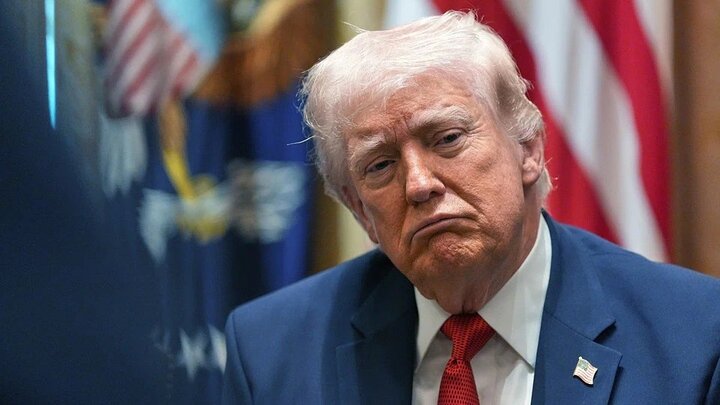
According to the International Desk of Webangah News Agency, The Washington Post has reported a significant divergence between President Trump’s policies on foreign affairs and the economy and his ‘America First’ rhetoric. This disconnect, the newspaper argues, could ultimately lead to a weakening of America’s global position, prompting nations worldwide to seek the establishment of international systems less dependent on Washington. The report asserts that 2026 has not been a favorable year for the United States, which is currently engaged in a conflict with Iran, facing global trade tariffs, and an economy grappling with inflation and recession. The Post contends that Trump’s policies are not strengthening America’s long-term standing but are, in fact, accelerating the opposite trajectory, as the world moves toward reducing its reliance on the U.S.
The report highlights a decrease in trust towards the United States and a weakening of the dollar’s position. It states that the conflict with Iran was intended to bolster America’s standing in the Persian Gulf region and its relationships with Arab allies and Tel Aviv. However, the outcomes of this aggressive posture have been entirely counterproductive. The war and the U.S.’s unstable policies have reportedly widened the rift between allies, a situation evident in the signing of the Mecca Agreement and the formation of a coalition from which the U.S. is absent.
According to the report, U.S. allies are actively seeking alternative security mechanisms, driven by a perceived loss of trust in American reliability. President Trump’s remarks regarding reduced military exercises with South Korea and his reportedly amicable relationship with North Korea’s leader are cited as factors encouraging U.S. allies to explore other options.
Regarding the dollar and the economy, the U.S. faces a substantial strategic risk as various countries are actively seeking new trading partners and reducing their dependence on the dollar for transactions. The use of the dollar as a political leverage tool has spurred many nations to search for alternatives. The continuation of this trend could lead to a more diversified global financial landscape. Such a development, the report warns, would intensify U.S. financial costs and debt, while simultaneously diminishing investment opportunities for American companies in overseas markets.


