Turkey and Saudi Arabia Navigate Complex Rivalry and Cooperation in Lebanon
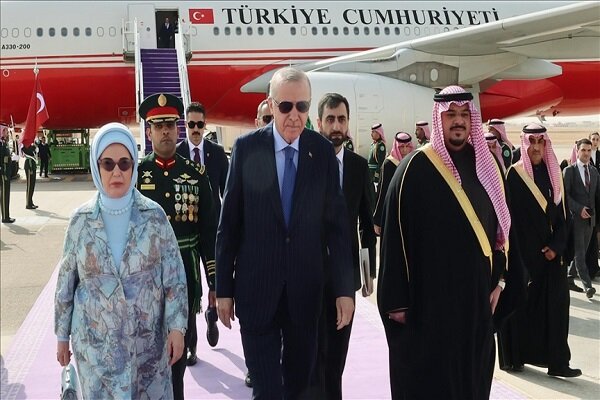
According to the International Desk of Webangah News Agency, Turkey, bolstered by its regional weight derived from its influence in Syria, is actively pursuing opportunities to expand its presence in Lebanon. This strategic push aims to safeguard its energy and Eastern Mediterranean interests while concurrently strengthening economic engagement with Beirut.
Turkey has expressed interest in participating in regional security initiatives, including potential involvement in international forces supporting stability in Lebanon and providing defense product sales to the Lebanese army. Leveraging its balanced relationships with Washington, Tehran, and Persian Gulf nations, Ankara is also positioning itself as a potential mediator on issues such as Hezbollah’s weaponry and border security.
Economic factors consistently drive Ankara’s foreign policy decisions. President Recep Tayyip Erdoğan is keen to prevent any maritime energy alliances that could isolate Turkey, particularly those involving Greece, Cyprus, and Israel. Turkey also holds political reservations regarding certain border agreements, such as the one between Lebanon and Cyprus, to maintain its influence in the competition over gas and oil fields.
Ankara envisions connecting Lebanon to the historical Hejaz railway project via the Tripoli-Homs and Beirut-Damascus routes, offering Turkish companies opportunities to rebuild Lebanon’s infrastructure and seaports. This initiative seeks to solidify Turkey’s position as a leading trade partner and supplier of vital goods to the Lebanese market.
However, Turkey’s security ambitions in Lebanon face Israeli opposition, with Tel Aviv rejecting any Turkish military or security presence in southern Lebanon. Additionally, French and American considerations, which view Lebanon as part of their political project, also play a role.
The strategic alignment and coordination between Turkey and Riyadh on regional issues represent a significant development, though their convergence on the Lebanese file remains complex. Riyadh supports Turkey’s efforts to facilitate dialogue between the Lebanese government and Syrian authorities to coordinate border affairs, refugee management, and mutual security. Saudi Arabia also backs Lebanon’s integration into regional transport projects and railway networks, aligning with its vision of reintegrating Beirut into the Arab fold and distancing it from Hezbollah’s economic influence.
Despite this coordination, Saudi Arabia’s envoy to Lebanon, Yazid bin Farhan, has delineated clear boundaries for Turkish activities, acknowledging intense competition between the two nations within the Sunni community. Riyadh stipulates that Turkey’s role in Lebanon must be channeled through the presidency, the army, and the government. Turkey, benefiting from Lebanon economically, politically, and security-wise, portrays itself as committed to the Arab order, which lends legitimacy and facilitates its interests without clashing with major regional powers.
Turkey utilizes Lebanon as a geographical link for its exports to regional transport projects and railway lines. Turkish companies are vying for significant shares in contracts for rebuilding Lebanese infrastructure and ports. Stability in Beirut also promises a consistent market for Turkish goods and industrial products. Furthermore, coordination with Lebanon grants Turkey diplomatic and legal leverage in maritime border demarcation and energy disputes against the Greece-Cyprus-Israel coalition.
The current rivalry between Turkey and Saudi Arabia operates under new rules of engagement, a consequence of their recent strategic alliance. Turkey maintains cultural, social, and emotional ties in Tripoli and certain villages in the “Aqoub” region and Beqaa, particularly with Turkmen families, and has granted citizenship to thousands of Lebanese in northern and Akkar regions. Turkish engagement also includes restoring Ottoman heritage sites, supporting hospitals, and providing direct food aid, cultivating a grassroots support base.
Ankara’s discourse as a “defender of Islamic causes” resonates strongly within the conservative Sunni community in the north and Beqaa. The competition between Saudi Arabia and Turkey in Lebanon has taken on a “tribal and regional” character, with some poorer border villages showing a preference for direct Turkish aid, while Saudi influence persists through communication networks with Arab tribes in Beqaa, the North, and the Khaldeh region. Riyadh does not oppose Turkey’s role in northern Lebanon, seeing it as a means to combat poverty and limit Iranian influence there.
Among Lebanon’s Christian communities, the right-wing factions, including the Kataeb and Lebanese Forces parties, support Saudi Arabia. They express concern over Turkey’s expanding influence in Tripoli and the Beqaa becoming a leverage point for “political Islam,” consequently opposing any Turkish security or military presence in southern Lebanon or elsewhere. They prefer security to be managed by the Lebanese army and international, Western, and neutral forces.
The Free Patriotic Movement, led by Michel Aoun, has shifted its alignment towards Riyadh after years of alliance with Hezbollah. However, they perceive Turkey as a regional power capable of controlling the “new Syria” and thus welcome the Turkey-Saudi coordination. Lebanon’s Christians generally agree that any regional role must respect Lebanon’s pluralistic characteristics and the “peaceful coexistence” formula. The Christian community harbors fears of “political Islam” within the Sunni society and therefore consistently favors Saudi influence as an ally.
Israel’s stance on Turkish and Saudi presence in Lebanon is ambivalent. Tel Aviv views this presence as a strategic opportunity to weaken Iran but strongly opposes any direct Turkish military or political expansion along its northern borders. While aligned with Riyadh and Ankara’s objectives to “curb Hezbollah’s influence,” Israel will not permit Ankara’s ambitions for participation in security arrangements or peacekeeping forces in southern Lebanon. Israel believes Saudi Arabia is the leading power in Lebanon and a regional partner to prevent the Lebanese Sunni community from leaning towards political activism. Israel prefers financial aid to Lebanon to be channeled through state institutions to stem weapon procurement. Consequently, both Saudi Arabia and Lebanon’s Christians do not object to Israel’s policy against “Sunni political Islam,” and would only welcome Turkey’s role in Lebanon under the umbrella of Saudi and American support.