
Trump’s ‘Threat and Retreat’ Tactic Fails Against Iran’s National Pride
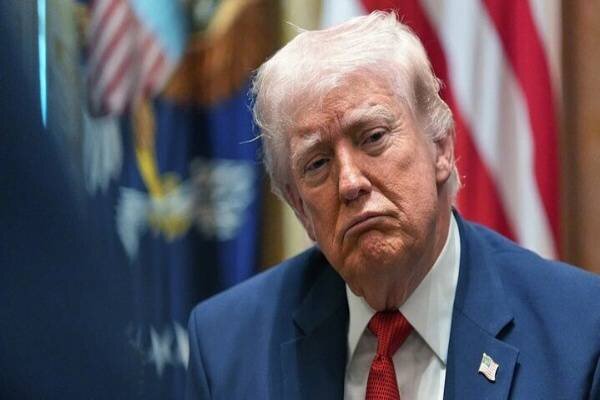
According to the International Desk of Webangah News Agency, President Donald Trump’s repeated threats of widespread attacks and infrastructure destruction against Iran have consistently been followed by withdrawals, a pattern dubbed “TACO” (Threat and Consolidate or Threat and Cede) in the media. This recurring tactic stems from a deep strategic error: Trump and his advisors have failed to grasp that traditional psychological pressure and threats, while potentially effective in U.S.-aligned nations, are counterproductive in Iran. The Iranian people, for whom national pride and the tenets of resistance are integral to their identity, respond not with submission but with a strengthened resolve. Some statements from Iranian officials may have also contributed to American miscalculations.
Since the onset of U.S. actions against Iran, Trump has repeatedly issued threats of devastating attacks, only to retreat. On March 21, 2026, he issued a 48-hour ultimatum, vowing to “destroy Iran’s power plants one by one,” yet two days later, he claimed “very good and constructive talks” and extended the deadline. On April 7, he threatened that “civilization would be destroyed tonight” before backing down again. In early August, he announced the cancellation of an attack “larger than World War II,” attributing it to an “agreement with Iran.” He is undoubtedly aware that implementing his threats would provoke a devastating response from Iran.
This “threat and retreat ping-pong” has occurred so frequently that CNN has released a video detailing 39 instances of Trump claiming “peace is near.” Indeed, much of Trump’s rhetoric can be characterized as “a waste of time; either meaningless or they will be reversed within 24 hours.”
Trump’s strategic error lies in a crucial blind spot: he and his advisors have failed to comprehend the fundamental differences between Iranian society and other nations in the region. In Arab countries dependent on the U.S., Washington’s threats typically lead to withdrawal or silence. However, in Iran, external threats elicit precisely the opposite reaction.
An English journalist’s analysis emphasized that “the Iranian people consider resistance an intrinsic part of their political identity.” This distinction is rooted in years of cultural and ideological preparation. The martyred leader repeatedly stressed that “resistance has a cost, but the cost of compromise and surrender is far greater than the cost of resistance.” This perspective forms the cultural basis for the dominant public behavior in Iran when facing external pressures.
Crucially, “national pride” and “refusing to bow to the United States” are paramount principles in Iran. Iranians see themselves as “disciples of the school of resistance” and are fundamentally different from the leaders of nations who, due to their extreme dependence on the U.S., are willing to tolerate Trump’s insults.
Recent reports from international media indicate that even Iran’s regional rivals have come to accept that Tehran’s control over the Strait of Hormuz is no longer a temporary situation. The Wall Street Journal reported: “Persian Gulf states are coming to terms with a new reality in which Iran effectively controls the Strait of Hormuz, and this situation may persist for an extended period.”
The newspaper also reported that energy-producing Arab nations in the Persian Gulf have “accepted new regional arrangements based on Iran’s control of the Strait of Hormuz.” They have concluded that while this situation will disrupt oil and gas exports and global energy supply for an indeterminate time, returning to war would carry a far heavier cost than accepting this new reality.
The Wall Street Journal further revealed that as part of an agreement to reopen the Strait, Iran has committed to preventing U.S. warships from transiting the waterway, a move aligned with Tehran’s objective of “limiting the decades-long U.S. military presence in the Persian Gulf.” In other words, Iran has not only solidified its control over the Strait but is also redefining the rules of U.S. military presence in the region.
Trump’s reliance on the outdated formula of “big threats and timely retreats” has not only failed to achieve his objectives but has also eroded the credibility of U.S. threats. His strategic miscalculation lies in two areas: first, the inability to understand the fundamental difference between the Iranian people and other regional nations; and second, the persistence in using a tool that, against the “identity-based resistance” of Iranians, is not only ineffective but actually strengthens national will for steadfastness.
Western media have correctly warned that the new regional reality is Iran’s permanent or semi-permanent control over the Strait of Hormuz, a fact that regional nations have accepted. The question now is: How long will Trump continue with the failed “threat and retreat” model? Trump must accept that great errors come with great consequences. The wise path is for Washington to acknowledge that peace and stability in the Persian Gulf are impossible without recognizing Iran’s sovereignty over the Strait of Hormuz and ending the provocative U.S. military presence in the region.
Simultaneously, certain orientations and statements from Iranian officials suggest that while the people stand firm against Trump’s threats, the pronouncements of some officials have led them into miscalculations, perhaps representing Trump’s only hope in utilizing his tactic.


