
Russia-Iran Partnership Deepens Amid Shifting Global Alliances, Expert Says
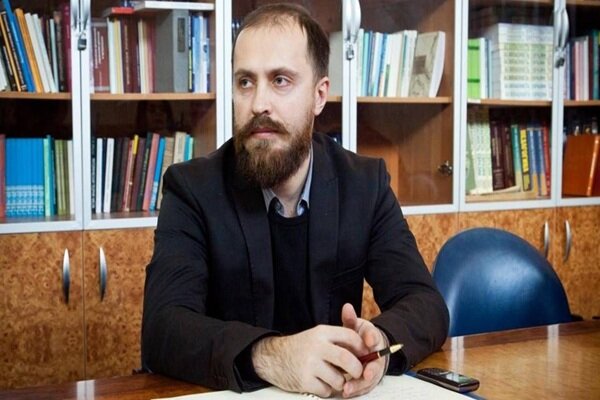
According to the International Desk of Webangah News Agency, Dr. Leonid Savin, editor-in-chief and general director of the influential Russian think tank Katehon, believes that Russia and Iran have advanced their partnership to a new phase with a recently signed agreement. He highlighted Russia’s diplomatic and international support for Iran, including opposition to foreign intervention and sanctions, and backing for its nuclear program, noting Russia’s involvement in the construction of the Bushehr power plant.
While specific details of military and intelligence cooperation remain undisclosed, Savin acknowledged reports of Russian equipment and technology transfers to Iran, such as aircraft and helicopters. He also pointed to Iran’s prior provision of drone technology to Russia, exemplified by the Shahed model, which was developed in Russia as the ‘Geren’ and later served as a basis for jet-powered attack drone prototypes. Western media has also suggested Russia has shared satellite and space-based intelligence with Iran, though the full scope of these sensitive collaborations is not public. Cooperation in counter-terrorism efforts has consistently remained at a high level.
On a personal note, Savin expressed his conviction that Russia and Iran can and should further expand their bilateral cooperation, even considering a future defensive pact, at least for the Caspian Sea region. He suggested that Russia’s approach to the conflict involving Iran has been measured, partly due to its ongoing engagement in Ukraine and a desire to avoid direct confrontation with the United States. Savin asserted that the collective West aims to dismantle Russia using various means, a strategy he sees mirrored in actions against Iran and potential challenges posed to China.
He characterized the Ukraine conflict as a proxy war orchestrated by the West, with key roles played by leaders from Britain, the United States, France, and Germany in supporting Kyiv. Savin also referenced a report by the BBC in 2022 concerning Bucha, which he deemed fabricated. He emphasized Russia’s awareness of the risks of nuclear escalation but noted Moscow would be compelled to respond if Western provocations continued. Russia’s strategic priorities, he explained, are centered on internal cohesion, peripheral security, technological development, and achieving full independence, including self-sufficiency. A significant focus is also placed on rebuilding and reorganizing the military with advanced weaponry, with the Ministry of Defense and defense industry companies actively pursuing these objectives. The war in Ukraine has served as a crucial operational experience for Russia’s military and security apparatus.
Regarding potential ceasefire talks between Russia and Ukraine, which gained traction with speculation about Donald Trump’s return to the White House, Savin stated that the parties had not been as close to an agreement as perceived. Russia, he clarified, is prepared for peace but only under its stipulated conditions: ‘denazification’ and ‘demilitarization’ of Ukraine, respect for Russia’s geopolitical interests, and a clear security framework. Key demands include Ukraine’s non-accession to NATO, guaranteed rights for Russians in Ukraine, recognition of the Russian Orthodox Church’s rights, and the permanent status of Crimea and other regions that voted to join Russia. Savin argued that this stance does not violate European principles, citing the West’s support for Kosovo’s independence from Serbia after 1999 as a precedent for similar geopolitical realignments.
Looking ahead, Savin indicated Russia’s increasing focus on developing active relations with the ‘Global South,’ describing this as a broader ‘pivot’ that encompasses southern regions, with Iran playing a role in this trend. He views the current global developments—the Ukraine conflict, the conflict involving Iran, and increased US pressure on China—not as isolated crises, but as integral components of a larger strategic competition between the United States and non-Western powers, aimed at reshaping the international order. Savin noted that such instabilities are typical during transitions between international orders, but the current era is unique due to the West’s diminishing dominance.
He lauded Iran’s response to attacks by the United States and Israel as highly commendable and well-received by Russian public opinion, describing it as both powerful and intelligent. Savin highlighted the closure of the Strait of Hormuz as a geopolitical nightmare for the US and its allies, acknowledging that both the US and Israel recognized the difficult situation they faced concerning Iran. Despite the damages incurred from what he termed illegal and criminal attacks by the US and Israel, Savin affirmed Iran and its people’s resilience.
Savin believes the conflict involving Iran has already altered the Middle East’s security environment, citing reactions from neighboring countries like Turkey, Pakistan, and Saudi Arabia through the Mecca agreement. He noted Iran has established new lines of control and interests near its borders, referencing its allies in Yemen, Iraq, and Lebanon. Savin stated that while the Zionists aim to eliminate these allies, which he linked to genocide in Palestine and bombings in Lebanon, such an outcome is practically impossible, predicting the resurgence of resistance rooted in the region’s strategic mindset and culture. He anticipates continued strengthening of Russia-China cooperation, while the US will face increased challenges and diminished geopolitical influence in the Middle East. Savin pointed to growing distrust in Washington among NATO partners and internal US tensions stemming from the influence of the Israeli lobby and dissenting politicians. He noted that the outcome of the November elections in Congress remains to be seen, with indications of rising opposition to Trump among Republicans and dissatisfaction with current policies among Democrats.
Realistically, Savin concluded, tension and conflict will persist. He stressed the necessity of establishing effective structures for a multipolar system, drawing parallels to the existing economic, military, and political frameworks of the unipolar system, such as the World Bank, IMF, NATO, and the G7. Therefore, he advocated for Russia, China, Iran, and other BRICS members to develop a balanced, effective, and comprehensive structure to counterbalance these existing institutions.


