UN Report Reveals Devastating 94% Collapse of Industrial and Agricultural Activity in Gaza
According to the International Desk of Webangah News Agency, the United Nations has issued a stark warning regarding the economic devastation in Gaza, reporting a staggering 94% reduction in industrial and agricultural activities and the destruction of 92% of its economic infrastructure. The report further cautions that this economic collapse is spreading to the West Bank, posing a significant risk of systemic collapse within the Palestinian banking sector and financial structure.
A recent assessment by the United Nations Conference on Trade and Development (UNCTAD) highlights that Gaza is grappling with its most severe economic crisis on record, characterized by a widespread deterioration of labor and production indicators and an unprecedented surge in poverty and unemployment rates.
The UN evaluation attributes the escalating economic crisis across all facets of life to the military actions and measures implemented by the Israeli regime since 1967, with the situation reaching peak collapse following October 7, 2023.
The UNCTAD report details that gross domestic product per capita in Gaza plummeted to approximately $212 per year in 2025, equivalent to just 58 cents per day. This represents an 82% decrease compared to 2022 figures.
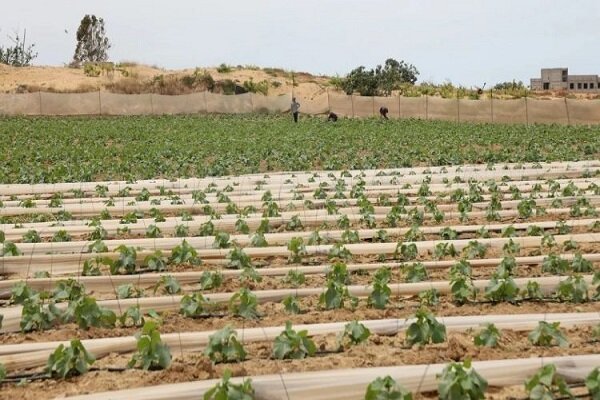
Industrial activities and agricultural production have seen a reduction of around 94%, with Gazans now having access to only 1.5% of arable land. Furthermore, 92% of economic enterprises and centers in Gaza have been completely damaged or destroyed.
Pedro Manuel Moreno, acting secretary-general of UNCTAD, described the situation as the most severe economic crisis in human history, negating decades of development.
In parallel, Moatasem Al-Aqr, UNCTAD’s coordinator for aid to the Palestinian people, stated that while two-thirds of Gaza’s population lived below the poverty line before October 2023, today, 100% of the population suffers from multidimensional poverty, encompassing deprivations in income, basic services, and inadequate living conditions. Due to paralyzed production, they are entirely dependent on humanitarian food aid.
The ramifications of this collapse are not confined to Gaza, as the West Bank is also affected. UNCTAD has pointed to increasing restrictions on Palestinians’ access to land and natural resources due to the expansion of Israeli settlements. The report also accuses the Israeli regime of seizing and withholding tax revenues belonging to the Palestinian Authority, a move that has imposed additional strain on the Palestinian government and heightens the risk of a planned collapse in the banking network.