
Yemen Imposes ‘Siege for Siege’ Policy on Saudi Arabia, Shifting Red Sea Dynamics
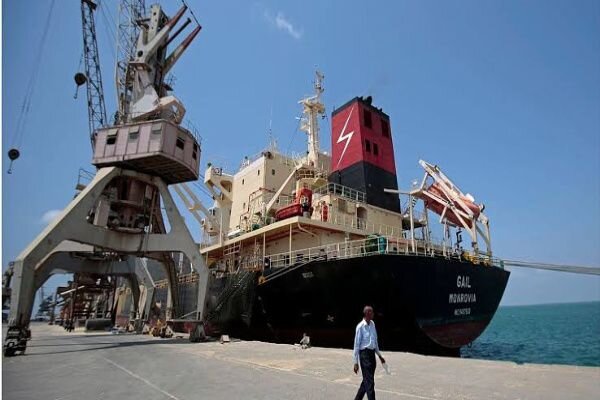
According to the International Desk of Webangah News Agency, Yemen‘s armed forces have officially declared the commencement of a maritime blockade against Saudi Arabia, marking a critical escalation in the nearly decade-long conflict. This strategic shift from defensive measures to mutual deterrence aims to mirror the naval and aerial siege that Saudi Arabia, leading a coalition, has imposed on Yemen for approximately 12 years. International organizations have repeatedly identified this blockade as a primary contributor to the world’s largest humanitarian crisis.
For years, Saudi Arabia leveraged its air superiority to control ports and restrict the flow of goods and fuel, seeking to cripple Yemen’s economic and military capacity and compel Sanaa to accept its demands. However, after more than a decade, the dynamics of the conflict appear to be transforming. The Yemeni armed forces’ announcement of a “maritime siege of Saudi Arabia” signifies a transition from defending against a siege to actively imposing reciprocal deterrence, a phase that could have repercussions extending beyond the Yemeni theater.
Yahya Saree, the spokesperson for Yemen’s armed forces, emphasized that the “siege for siege” equation is now operational, stating that Saudi Arabia has unjustly besieged and plundered Yemen for nearly 12 years. He asserted that this situation is no longer tolerable and that a maritime blockade against Saudi Arabia will now be enforced. Saree further warned that any escalation by Riyadh would be met with “comprehensive escalation” from Yemeni forces, who are fully prepared for all scenarios.
End of Unilateral Deterrence Era
What distinguishes this declaration from past statements is Yemen’s clear attempt to redefine the rules of deterrence. In the initial years of the war, Saudi Arabia held a significant military and naval advantage, anticipating a conflict manageable through economic blockade and airstrikes without incurring substantial costs. However, recent years have demonstrated Sanaa’s gradual development of its missile, drone, and naval capabilities, expanding its operational reach from deep within Saudi territory to the Red Sea and strategic waterways.
Yemen’s new strategy is predicated on the principle that if Yemen’s economy and population are subjected to the pressure of a blockade, Saudi Arabia’s economy and energy security should not remain immune to the conflict’s consequences. This is the logic Yahya Saree refers to as “siege for siege,” an equation that shifts the war’s costs from one side to both.
Geopolitical Significance of the Red Sea
The Red Sea is not merely a body of water but one of the world’s most vital arteries for global trade. A substantial portion of trade between Asia and Europe, the export of energy from Arab nations, and the transit of oil tankers occur through this route. Any insecurity in the region directly impacts maritime transport costs, ship insurance prices, and the global energy market.
Consequently, if Yemen can translate its threat into practical actions, it will not solely target Saudi Arabia; the entire security equation of the Red Sea will enter a new phase. Even without a complete halt to shipping, an increase in security risks could compel shipping and insurance companies to alter routes or raise costs, ultimately exerting direct economic pressure on Riyadh and its allies.
Shifting the Battlefield from Land to Economy
A key characteristic of this development is the shift of the battlefield further from military geography to the economic sphere. Contemporary warfare has shown that conflicts reach a point of deterrence when the opposing side perceives the economic costs of war to exceed its benefits. Saudi Arabia has invested billions of dollars in the Yemeni war over the past years while striving to maintain the security of its oil exports, ports, and trade routes. If this component is now introduced into the confrontation, the cost of continuing the war for Riyadh will significantly increase.
Networked Deterrence of the Axis of Resistance
The announcement of the Saudi maritime blockade cannot be analyzed in isolation from broader regional developments. In recent years, actors within the Axis of Resistance have sought to establish a form of networked deterrence by leveraging their geopolitical positions. This deterrence is based on geographical dispersal and multiple pressure points. Yemen, with its strategic control over Bab el-Mandeb and a significant portion of the Red Sea, is a crucial link in this network. In such a scenario, any escalation of tensions in the region could simultaneously affect multiple strategic routes, complicating the opponent’s military and economic calculations.
From this perspective, Sanaa’s recent action is not merely a military decision but part of a trend where control over strategic waterways has become a primary tool of deterrence in West Asia.
New Regional Equations
Recent developments indicate that the Yemeni war is no longer solely an internal crisis or a bilateral confrontation between Sanaa and Riyadh; it has become integrated into the geopolitical rivalries of West Asia. The significance of this transformation is amplified when analyzed alongside other components of regional power. Many observers believe that as regional actors enhance their capacity to influence vital trade and energy arteries, the cost of any military action or external pressure will correspondingly increase.
In this context, Yemen’s recent action could signify the emergence of a new phase of regional deterrence. This phase is not solely determined by air superiority or conventional military might; the security of waterways, shipping lines, energy exports, and the global economy have all become integral to the deterrence landscape. If this trend continues, West Asia could enter a period where any military adventurism against regional actors will not be confined to the battlefield. The consequences could reverberate throughout the region’s entire trade and energy network. Therefore, the declaration of “siege for siege” should be assessed not merely as a military threat but as an indicator of shifting deterrence balances and the commencement of a new chapter in geopolitical competition within the region.


