
US Faces Costly Quagmire in Conflict with Iran Amid Rising Expenses and Strategic Doubts
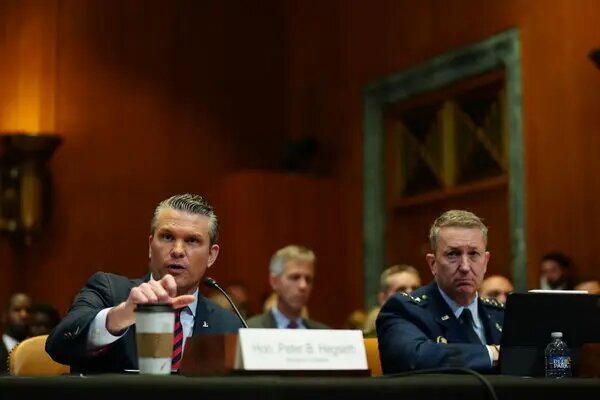
According to the International Desk of Webangah News Agency, a recent U.S. Senate Appropriations Committee session underscored the escalating financial burden, absence of a clear exit strategy, and increasing skepticism within Washington concerning the ongoing conflict with Iran. This comes despite efforts by Donald Trump administration officials to portray military operations against Iran as successful.
U.S. Secretary of War Pete Hegseth stated during the hearing that the direct cost of the war against Iran has reached $37.5 billion. The administration has requested an additional $87.6 billion in emergency funding to sustain military operations, with over $67 billion specifically allocated for the conflict with Iran. However, many American analysts argue that this figure represents only a fraction of the true cost. Hidden expenses, damage to U.S. bases, replacement of lost equipment, treatment of wounded personnel, troop deployment, and long-term expenditures push the actual financial outlay significantly higher.
Estimates published by various U.S. research centers and media outlets place the actual cost of the war between $70 billion and $100 billion to date. If the conflict persists, cumulative direct and indirect expenses could potentially exceed $1 trillion in the long term, a scale comparable to the wars in Iraq and Afghanistan.
Washington’s Official Narrative Questioned
The Senate session indicated that even members of Congress harbor doubts about the Trump administration’s narrative of military operation success. Democratic Senator John Ossof questioned the Secretary of Defense regarding the administration’s previous claims of Iran’s military capabilities being neutralized, asking why billions more are being requested for the continuation of the war. Hegseth offered no clear response concerning the criteria for victory, the timeline for ending the war, or America’s exit strategy.
In essence, the objective of the war has shifted from the early months when U.S. officials spoke of a “swift end to operations.” While Trump previously discussed regime change in Iran and a reshaping of the Middle East, the U.S. Secretary of War now states the sole objective is “preventing Iran from acquiring nuclear weapons.” Many observers view this change as a retreat from the war’s initial goals.
A War Growing More Costly by the Day
In addition to rising financial costs, statistics presented at the Senate session indicate that the war continues to expand. According to released information, at least 18 American military personnel have been killed and hundreds more wounded. Iran has also maintained its pressure on the Strait of Hormuz, and threats from Yemen’s Ansarullah against shipping lines in the Red Sea persist.
These developments suggest that, contrary to the initial U.S. aim of restoring shipping security, one of the world’s most critical energy corridors remains in a state of crisis.
An Equation Shifting in Iran’s Favor
Strategically, many American experts believe Washington has entered a conflict where the costs far outweigh the benefits. Despite enduring extensive attacks, Iran has maintained its capacity to respond and has imposed significant costs on the United States. In contrast, the U.S. has been compelled to utilize highly expensive defense systems like THAAD and Patriot to intercept Iranian drones and missiles. The cost of intercepting each missile or drone is estimated to be several times the cost of its manufacture and launch by Iran.
Some estimates indicate that each THAAD interceptor missile costs approximately $12 million, and each Patriot missile costs around $4 million, whereas the cost of suicide drones used by the Axis of Resistance is only tens of thousands of dollars.
This cost asymmetry has become a major challenge for the Pentagon, illustrating that the continuation of the war is depleting U.S. financial resources more than it is pressuring Iran.
Failure of ‘Coercive Diplomacy’
Simultaneously, the political climate in Washington suggests that the strategy of “maximum pressure combined with military action” has not achieved its initial objectives. Iran’s nuclear program has not been eliminated as initially claimed by the U.S., Tehran’s behavior has not changed, nor has sustainable security been established in the Strait of Hormuz. Instead, the Trump administration is now forced to request new multi-billion dollar budgets to sustain the war, with no clear timeline for ending operations.
Overall, the trajectory of developments indicates that the war against Iran has not become a swift victory for Washington but has instead transformed into a protracted, costly conflict with no clear horizon. The longer this war continues, the more apparent the gap will become between America’s stated objectives and the realities on the battlefield, leading to increased political, military, and economic costs for Washington.


