
Strait of Hormuz Control: A Lifeline or Death Knell for Israel’s Security?
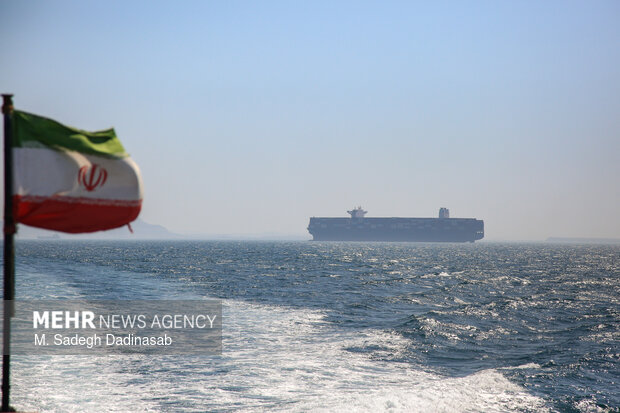
According to the International Desk of Webangah News Agency, the conflict centered on the Strait of Hormuz extends far beyond the simple matters of shipping freedom or energy supply security. At its core, the dispute is about redefining the power equilibrium within the Persian Gulf and West Asia. This crucial waterway has become a political instrument utilized by Iran to reshape deterrence and influence dynamics. In response, the United States views preventing such a shift as imperative to maintaining a regional order that safeguards its own interests and those of its allies, prominently including the Israeli regime. Consequently, the implications of any conflict in the Strait of Hormuz ripple beyond the global economy, directly and indirectly affecting the domestic security of the Israeli regime.
Al-Ahed News Network, in an article discussing this issue, posits that Iran recognizes the traditional power balance is not in its favor when confronting the United States and the Israeli regime. Therefore, Iran has shifted its focus from military superiority to leveraging global economic interdependence. Iran does not require the permanent closure of the Strait of Hormuz; influencing shipping traffic within it is sufficient to impose a new reality on its adversaries: the security of the Persian Gulf cannot be guaranteed without accounting for Iran’s interests. From this perspective, the Strait of Hormuz is not merely a military pressure point but a tool to elicit political acknowledgment of Iran’s regional role.
The primary threat to the Israeli regime lies in the potential erosion of a cornerstone of its domestic security: the continued U.S. dominance over the Middle East’s security architecture. For decades, the Israeli regime’s strategy has been predicated on the assumption that the United States possesses the capability to protect trade and energy routes, deter regional powers, and dictate conflict parameters. However, if Iran demonstrates the ability to disrupt shipping or dictate terms for maritime passage, it would effectively signify a strategic initiative transfer from Washington to Tehran within the region.
This influence is not confined to the military domain but extends to the political environment surrounding the Israeli regime. As the cost of confronting Iran escalates for the global economy, international pressure mounts to avoid extensive conflicts and to negotiate agreements that incorporate Iran’s interests. This dynamic curtails Tel Aviv’s maneuverability, as any significant military operation in the future will be assessed not only by battlefield outcomes but also by its impact on energy security and international trade.
Conversely, the dispute over the Strait of Hormuz presents Iran with an opportunity to bolster its standing among Persian Gulf nations. These countries, despite their continued reliance on security partnerships with the United States, understand that any overt confrontation could place their oil facilities and ports at the center of targeted attacks. As this understanding deepens, the necessity for Persian Gulf nations to establish channels of communication and understanding with Tehran will grow.
From the perspective of the Israeli regime, any decline in regional convergence against Iran is considered a strategic development that undermines the effectiveness of the intertwined American-Israeli network. Furthermore, the dynamics of the Strait of Hormuz conflict are not limited to the Persian Gulf but extend to the Red Sea and the Bab-el-Mandeb strait. Through its allies, Iran can broaden the pressure on international trade, doubling the challenges for the Israeli regime, which increasingly depends on maritime routes for its trade, imports, and exports. The wider the scope of maritime threats, the greater the need for the Israeli regime to distribute its military resources across multiple fronts, thereby increasing the costs of deterrence and defense.
Al-Ahed further notes that, crucially, the conflict over this strategic strait signals a shift in the nature of ‘regional power.’ Instead of seeking territorial dominance, Iran is leveraging ‘geography’ to exert political influence. If Iran succeeds in establishing the equation that shipping stability is contingent on its consent, it will gain influence extending beyond its military borders, enhancing its capacity to impact the decisions of international and regional powers.
Therefore, the battle for Hormuz is not merely a contest over a maritime passage but a struggle for the ‘identity of the security order in West Asia.’ U.S. success in neutralizing Iran’s leverage would preserve the strategic environment upon which Israeli interests are built. Conversely, Iran’s success in transforming the strait into an instrument of its influence would provide a significant boost to its regional project and pave the way for a multipolar region where American dominance gradually wanes in favor of new balances.
Consequently, for the Israeli regime, the Strait of Hormuz represents more than an issue of oil prices or shipping security. It serves as a critical test for the future balance of power upon which their security strategy has been based for decades. The strait itself is not the ultimate objective of this conflict but a tool capable of redrawing the balance of influence in the region, with direct repercussions for Tel Aviv’s domestic security and its operational strategic environment.


