New York Times Exposes Details of US One-Ton Bomb Strike on Qeshm Residential Area
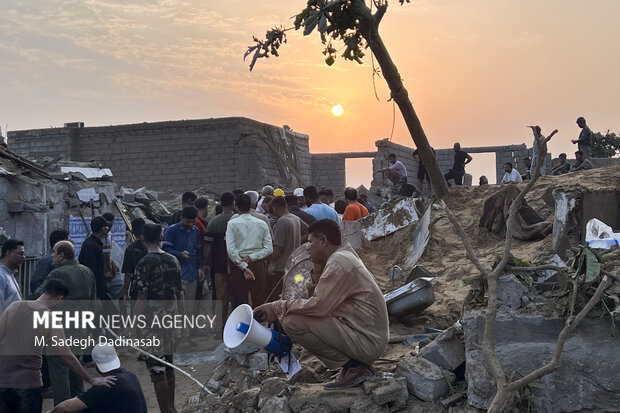
According to the International Desk of Webangah News Agency, The New York Times reported that based on an analysis of videos, photographs, and satellite imagery by weapons experts and the newspaper’s correspondents, the United States struck a family home on Iran’s Qeshm Island with a very powerful bomb early Thursday. Iranian officials announced that a couple and their two-year-old son were martyred in the attack, while two other children of the family were pulled alive from the rubble.
The report indicates that the size of the crater and the remaining fragments of the munition suggest the weapon used was likely a 2,000-pound (approximately one-ton) Mark-84 bomb, one of the largest bombs utilized by the U.S. military. The location and timing of the strike also align with areas where American forces were reportedly conducting operations, raising questions about the attack’s objective and the necessity of employing such heavy ordnance.
//static01.nytimes.com/newsgraphics/zhc5Rzc8kK_6ZA/_assets.sgsgMWq1b9geWz1aUBOPIyzH6DDyuKqEoaCX4tpf-E8/qeshm-city-anno-sat-image.jpg
//static01.nytimes.com/newsgraphics/zhc5Rzc8kK_6ZA/_assets.sgsgMWq1b9geWz1aUBOPIyzH6DDyuKqEoaCX4tpf-E8/qeshm-city-anno-video-still.jpg
The attack targeted a densely populated neighborhood on Qeshm Island in southern Iran. The New York Times found no indication of a military center near the family’s home or reports of military casualties in the strike. Iranian officials stated that approximately 20 families were displaced as a result of the attack, and published images show debris and damaged vehicles extending more than 60 meters from the blast site. Analysis of footage from the same wave of attacks indicates that two warehouses outside the city were also destroyed.
The U.S. military’s Central Command acknowledged it is reviewing reports of civilian casualties but did not respond to questions regarding the intended target, the type of munition used, or measures taken to protect civilians.
//static01.nytimes.com/newsgraphics/zhc5Rzc8kK_6ZA/_assets.sgsgMWq1b9geWz1aUBOPIyzH6DDyuKqEoaCX4tpf-E8/qeshm-crater-anno-photo.jpg
The New York Times identified the precise location of the strike and the dimensions of the blast crater by cross-referencing images captured by eyewitnesses and media with satellite imagery. The attack, which occurred in the Chah-tangu neighborhood of Qeshm city, also devastated several buildings and left a crater at least 9 meters wide. Trevor Ball, a former U.S. Army ordnance disposal expert and analyst at Armament Research Services, stated that the crater size and the severity of building destruction are consistent with the use of a 2,000-pound Mark-84 bomb, potentially equipped with a JDAM guidance system. Frédérick Grasse, a French munitions consultant who reviewed the same images, concurred that the crater dimensions align with the detonation of a 2,000-pound Mark-84 aerial bomb, which appeared to have detonated underground after penetrating the surface.
According to a U.S. Army office responsible for managing Pentagon munitions, bombs of this size are typically employed to target structures, railway lines, and communication routes. Experts caution that the use of such weapons in populated areas can inflict severe harm on civilians.