
Global Oil Market Faces Escalating Risks from Iran Tensions, Threatening Foreign Investment
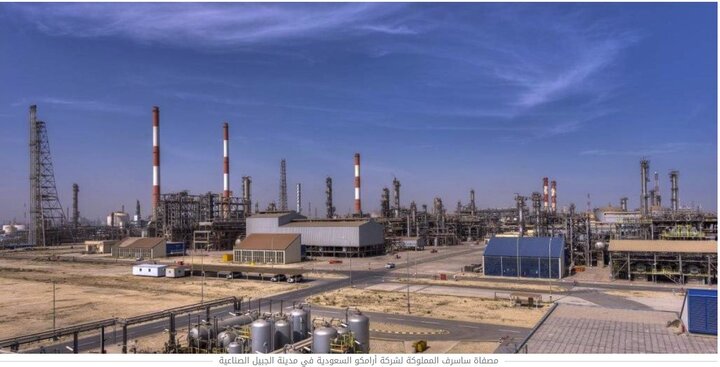
According to the International Desk of Webangah News Agency, Escalating tensions with Iran are imposing considerable financial burdens on foreign investments within the Persian Gulf’s energy sector. These pressures extend beyond global oil price fluctuations, creating significant concerns for international governments and corporations. The rising costs associated with these conflicts continue to escalate, even during periods of suspended military actions, presenting a substantial barrier to comprehensive damage assessment, production increases, and new investment in the region’s energy market.
The ongoing risk levels, as long as the possibility of renewed conflict persists, impede any thorough reconstruction efforts for damages, production ramp-ups, or fresh capital injections into the regional energy market. Al-Mayadeen, in a report, highlighted that while precise or even preliminary estimates of losses to these investments are unavailable, all indicators point to substantial direct and indirect damages. These include a reduction in investment returns from foreign assets and ventures due to production halts or declines, and potential targeting of strategic facilities valued at approximately $300 billion.
International reports have indicated that ExxonMobil could face annual revenue losses of up to $5 billion due to damage to gas facilities at Qatar’s Ras Laffan complex. Shell has completely halted its production in Qatar following the shutdown of its Pearl GTL facility and disruptions to shipping traffic in the Strait of Hormuz. Similar situations affect Total and other international companies that have either partially or fully suspended their operations. Chatham House Research Centre has explicitly warned that targeting large-scale facilities will result in significantly greater losses, not only for the producing nations but also for foreign companies operating within them.
These operational damages are not transient. While the majority of losses are currently concentrated on the oil and gas infrastructure belonging to state entities, with published estimates suggesting around $60 billion in financing is required for repairs and facility rehabilitation, this does not diminish the significance of operational losses incurred by foreign oil companies. Beyond halted production and exports, reduced revenues, delayed new investments, and suspended maintenance and replacement activities, these investments face pressure from numerous variables. These include increased operational costs, such as higher rates for maritime and energy insurance, and elevated sea freight expenses, particularly when alternative routes are used instead of the Strait of Hormuz.
It is noteworthy that the surge in global oil and gas prices has not translated into substantial profits for foreign companies operating in the Persian Gulf, unlike in other oil-exporting nations. Two primary reasons contribute to this discrepancy. Firstly, the limited export volumes of these companies due to the closure of the Strait of Hormuz or attacks on vessels. Secondly, the increased production and export costs in the Persian Gulf, as previously mentioned. Consequently, the reduction in Persian Gulf exports during periods of conflict and the rising production costs have prevented the positive impact of oil and gas price increases from reflecting on the revenues of companies and governments in the region.
Current estimates suggest that restoring Persian Gulf countries’ exports to pre-war levels will require a timeframe of three to five years. Therefore, if the United States and the Israeli regime attack Iran’s energy facilities and critical infrastructure, and Iran retaliates, these losses will be further amplified, particularly among facilities invested in by American companies. This scenario would shock the global economy, and specifically foreign investments in the Persian Gulf’s energy sector, with repercussions lasting for decades.
What makes the execution of Trump’s threats and the targeting of Iran’s oil facilities improbable is the continued pursuit by American oil companies to expand their share of oil investments in the region. This is evident in preliminary Memoranda of Understanding (MoUs), such as those signed in Iraq with a value exceeding $60 billion, and is being pursued in other regional countries like Syria, Qatar, Saudi Arabia, the UAE, and Oman.
However, recent developments indicate that Trump’s decision-making often overlooks the paramount interests of the United States, relying instead on his self-serving logic, personal and familial investments, and the pressures and interests of the Israeli regime. Consequently, the greater the pressure that major oil companies can exert on Trump to halt this destructive war for the global economy, the more they can mitigate their accumulated operational losses in the Persian Gulf. This would shorten the time needed to overcome and compensate for these losses, enabling new investments and the implementation of recent MoUs with regional countries. In this context, if the conflict expands, its negative impacts will not be confined to the current framework but will engulf the Middle East and the entire world.


